Government Rejects WASPI Compensation Despite New Evidence and DWP Failures
No Payouts for WASPI Women Despite DWP Failures

Government Firmly Rejects WASPI Compensation Payouts Despite Fresh Evidence

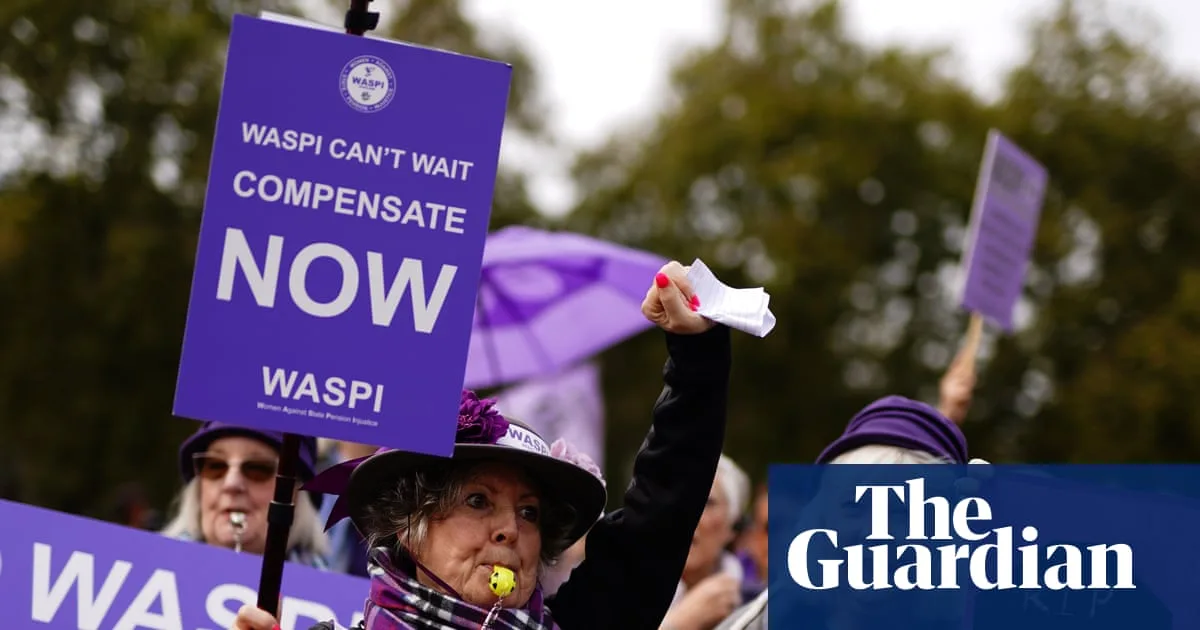
In a contentious announcement that has ignited widespread anger, Work and Pensions Secretary Pat McFadden has definitively stated that millions of women born in the 1950s will receive no financial compensation, despite new evidence emerging and a subsequent government review. The decision, delivered to the House of Commons, confirms the government's position against payouts for the Women Against State Pension Inequality (WASPI) campaigners, setting the stage for a protracted legal battle.

Minister Cites Awareness and Practicality in Rejection

Pat McFadden argued that a compensation scheme would be fundamentally unfair to taxpayers, asserting that an overwhelming majority of the affected women were already aware of the impending changes to their state pension age. He detailed that public information campaigns were extensive, spanning leaflets, educational initiatives, GP surgeries, television, radio, cinemas, and online platforms.

"The evidence shows that the vast majority of 1950s-born women already knew the State Pension age was increasing," McFadden told MPs. He emphasised the impracticality of verifying individual circumstances for millions of women, questioning whether someone genuinely lacked knowledge or would have acted differently upon receiving a letter years earlier.

The Secretary also dismissed the notion of a flat-rate compensation scheme, which could cost up to £10.3 billion, deeming it inappropriate as it would predominantly benefit those who were already informed of the changes.

Campaigners' Fury and Legal Threats Escalate

WASPI campaigners have reacted with fury, accusing the government of displaying "utter contempt" for the affected women, Parliament, and the Parliamentary Ombudsman. Angela Madden, chairwoman of the WASPI campaign, lambasted the decision as a "disgraceful political choice" made by a powerful few who disregard the harm suffered by millions.

"The Government has kicked the can down the road for months, only to arrive at exactly the same conclusion it has always wanted to," Madden stated. She highlighted that the Parliamentary and Health Service Ombudsman had recommended MPs establish a compensation scheme immediately, a call the government has now definitively rejected.

Madden further criticised the government's financial priorities, noting that billions have been found for policies outside their election manifesto, suggesting compensation is not considered a priority. WASPI is currently seeking legal advice, with all options, including potential court action, remaining firmly on the table.

Historical Context and Apology Without Redress

The controversy stems from failures at the Department for Work and Pensions (DWP) to properly communicate the decision to increase the state pension age for women from 60 to 65, and subsequently to 66. This lack of effective communication left many of the worst-affected women unable to plan for their future, plunging some into financial hardship and poverty.

In 2024, the government apologised for a 28-month delay in sending notification letters but rejected any financial redress. The recent review was prompted by the emergence of a 2007 research report on the effectiveness of letter communications, which was not available during the initial decision-making process.

While McFadden reiterated the government's apology for the delay in sending letters, he maintained that the evidence, including the 2007 findings, suggests most women would not have read or recalled an unsolicited pensions letter even if it had been sent earlier. He also agreed with the Ombudsman that no direct financial loss was incurred from the delay, focusing the debate on the impact of the communication failure itself.

Implications and Ongoing Battle

The government's firm stance leaves 3.6 million women without the compensation of £1,000 to £2,950 that campaigners had demanded. WASPI had prepared for a judicial review in December, but legal proceedings were paused awaiting the outcome of this latest review. With the review now concluded and compensation denied, a messy court showdown appears increasingly likely.

Campaigners have raised over £250,000 to fund their legal challenge, underscoring their determination to pursue justice through every available parliamentary and judicial avenue. The decision underscores deep-seated tensions over pension policy, government accountability, and the treatment of women affected by significant state pension reforms.




