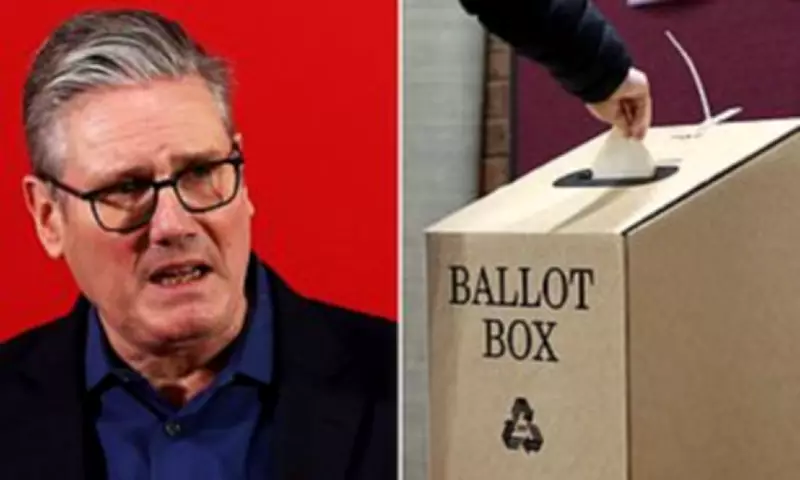
There is escalating discussion within the Left-wing establishment regarding the potential appointment of a 'caretaker leader' for the Labour Party, a move designed to facilitate Sir Keir Starmer's resignation. The underlying argument suggests that this approach would prevent the party from being forced into hastily selecting a new leader who might be even less favourable than the current incumbent. Instead, Labour could take its time to carefully vet and choose a successor who poses minimal risk of alarming the nation, ensuring their background, including personal files and email records, is thoroughly scrutinised for any embarrassing revelations.
The Heirs of Blair-Mandelson Machine
Ironically, Labour's inner circles, who are the modern-day successors of the old Blair-Mandelson political apparatus, likely hope to utilise the intervening months to bolster the prospects of their preferred candidate for the leadership role. Various supposedly reassuring veteran figures are being considered for the caretaker position, though it is improbable that any of these distinguished individuals would willingly associate themselves with such a contentious scheme.
Practical and Constitutional Impediments
The notion of a caretaker leader is fraught with absurdity and is almost certainly unworkable for numerous reasons. Currently, Labour cannot even guarantee victory in a by-election in its safest parliamentary seat, highlighting its precarious position. It is exceedingly difficult to envision the Parliamentary Labour Party accepting a leader who sits in the House of Lords, an institution Labour has consistently sought to undermine and which many of its members would eagerly abolish.

Resurrecting former figures like Ed Miliband or Hilary Benn would appear desperate and unconvincing. However, these concerns are relatively minor compared to the profound arguments against any such manoeuvre. The very term 'caretaker' signals the inherent flaws in this plan; Labour cannot be effectively managed by a temporary figure if Starmer departs. Instead, the party can only be disciplined and made fit for government through a genuine respect for the electorate and a willingness to compromise on principles in pursuit of power.
Labour's Inherent Nature and Leadership Needs
Labour is not akin to a National Trust property requiring gentle maintenance and protection from leaks or pests. It is a dynamic political party, characterised by intense internal factions and frequent conflicts among its radical members. To become a viable governing force, Labour must temper its natural ferocity and chaos, which can only be achieved under strong leadership that commands authority and maintains a firm grasp on reality.
A temporary caretaker, installed without a robust electoral campaign, would lack the internal credibility and force necessary to manage the party's volatile dynamics and prevent self-destruction. This leadership vacuum would exacerbate existing tensions rather than resolve them.
The Presidential System and Mandate Issues
Constitutionally, a Prime Minister derives their right to govern from the support of the House of Commons, with the King obliged to appoint a party leader who appears to command such backing. However, the television age has transformed the relationship between voters and the Premier into a more personal and direct connection, mirroring the American presidential system.
General Elections now heavily focus on the leader's personality and experience, making a personal mandate crucial. Gordon Brown's tenure in Downing Street was undermined by his lack of such a mandate, illustrating the risks of foisting an unelected leader on the nation. Therefore, Labour cannot impose either a supposed 'caretaker' or a new Premier who emerges solely from its internal leadership election process without broader electoral validation.
Conclusion: The Inevitability of a General Election
If Sir Keir Starmer steps down, and it is increasingly difficult to foresee what might salvage his position, the only constitutionally sound and politically viable course of action would be to call an immediate General Election. This would ensure that any new leadership has the legitimate mandate required to govern effectively and address the country's pressing issues.