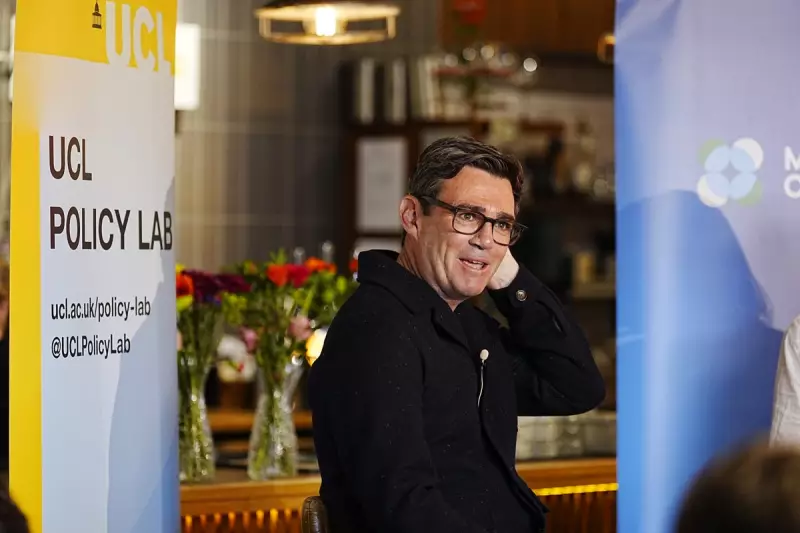
Labour Blocks Andy Burnham's Parliamentary Ambition Citing Financial and Political Concerns
Labour's National Executive Committee has formally blocked Andy Burnham from standing as a parliamentary candidate in the upcoming Gorton and Denton by-election, citing significant concerns about the financial implications and potential political disruption. The decision, made by a ten-member sub-group chaired by Home Secretary Shabana Mahmood, represents a significant intervention in the party's candidate selection process.
The Official Rationale: Avoiding Costly Elections
In an official statement, Labour explained that their decision was primarily motivated by financial considerations. The party emphasised that allowing Burnham to stand would trigger an immediate mayoral by-election in Greater Manchester, creating what they described as "an unnecessary election" that would consume substantial public funds and party resources.
The party statement clarified: "Directly elected mayors and police and crime commissioners must seek the express permission of Labour's ruling body, the National Executive Committee, before seeking nomination as a Labour candidate for the Westminster parliament. This rule was put in place to avoid the party incurring unnecessary costs of running two simultaneous political campaigns."

Labour further argued that resources would be better directed toward upcoming local elections and devolved parliament contests in Scotland and Wales, where Reform UK presents a significant electoral challenge. The NEC expressed confidence in retaining the Greater Manchester mayoralty but stated they "could not put Labour's control of Greater Manchester at any risk."
The Leadership Rivalry Dimension
Beyond the official financial reasoning, political observers note that Andy Burnham has long been perceived as a potential leadership rival to Prime Minister Keir Starmer. Speculation about Burnham's return to Westminster and possible challenge to Starmer's premiership has circulated for months, adding a layer of political tension to the NEC's decision.
Sources within the NEC indicated there was a "very clear majority" against allowing Burnham to apply for selection in the parliamentary seat. The party simultaneously praised Burnham's performance as mayor, stating he was "doing a great job as mayor of Greater Manchester," while effectively preventing his return to national politics.
Internal Party Divisions Emerge
The decision has exposed significant divisions within Labour ranks. Several senior figures, including Deputy Leader Lucy Powell and Cabinet Minister Ed Miliband, had previously advocated for local party members to determine Burnham's candidacy. Miliband had described Burnham as "a massive asset" to the party, with reports suggesting Deputy Prime Minister Angela Rayner also supported his return to parliament.
Labour MP Richard Burgon, secretary of the Socialist Campaign Group, launched a scathing critique of the decision, accusing party leadership of being "prepared to lose Gorton and Denton to Reform – just to protect narrow factional interests." Burgon called for an emergency NEC meeting to reconsider what he termed "weak leadership" that would "deepen the crisis the party is in."
Former cabinet minister Louise Haigh expressed disappointment with the decision, stating it was "incredibly disappointing" and warning that "we'll all come to regret this" unless the NEC changes course.
Defending the Decision
Business Secretary Steve Reed offered a defence of the NEC's position, emphasising democratic principles and electoral mandates. He noted that Burnham was elected to a four-year term as Greater Manchester mayor just two years ago, and voters "don't like elections that come mid-term."
Reed explained: "In a democracy, politicians are elected to serve a term. The mayor of Greater Manchester was elected for a four-year term. He's halfway through that term now. So we're not going to go back and ask the people of Greater Manchester, over two million of them who are entitled to vote, to elect somebody else to complete the next two years."
The Business Secretary confirmed that Labour would select a different candidate for the Gorton and Denton by-election, focusing their campaign on "tackling the cost of living and bringing investment to the local area."

This decision represents a significant moment in Labour's internal politics, balancing financial pragmatism against potential leadership tensions while exposing divisions within the party's senior ranks about candidate selection processes and political priorities.