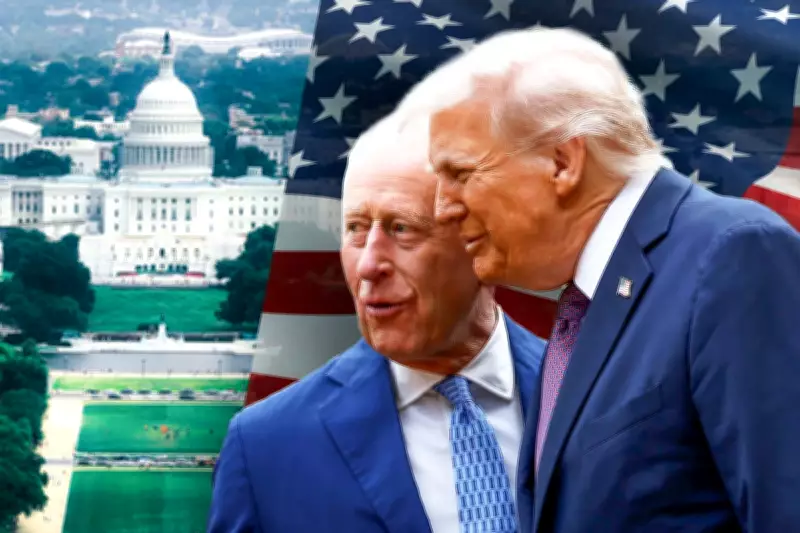
Royal Visit to Washington Confronts Unprecedented Diplomatic Peril
As King Charles III prepares for a historic visit to Washington this April—the first by a British sovereign in nearly two decades—the diplomatic mission is overshadowed by a confluence of crises that threaten to transform it into a moment of profound jeopardy for the monarchy. The fallout from his brother Andrew Mountbatten-Windsor's recent arrest, the divisive political climate of Trump's America, and the looming threat of a brutal advertising campaign against the King collectively risk turning a ceremonial occasion into an uncomfortable confrontation over power, accountability, and royal integrity.
Brother's Arrest Reignites Epstein Scandal Ahead of Visit
Just last week, Andrew Mountbatten-Windsor was arrested on suspicion of misconduct in public office, following an investigation into whether he abused his role as a UK trade envoy to pass confidential information to the late sex offender Jeffrey Epstein. This development has reignited the Epstein scandal precisely as Charles prepares to meet President Donald Trump, who was once a fixture of Epstein's social circle. The timing could not be more fraught, casting a long shadow over the visit and inviting awkward questions from lawyers for Epstein's survivors, members of Congress, and journalists.
US Representative Robert Garcia, who previously called for Mountbatten-Windsor to testify before Congress, described the arrest as an "enormous step forward" and questioned the US Department of Justice's lack of urgency. "It's time for the United States to end this White House cover-up," he stated, adding, "President Trump and his Epstein administration are not above the law." While the Palace has issued a statement expressing Charles's sympathies for abuse victims, many in Washington believe the King should publicly urge his brother to assist US authorities, placing Charles in a perilous position between family loyalty and public accountability.

Political Appeasement and Threats of Humiliation
For many observers, the King's visit is no longer a celebration of the Special Relationship but a show of political appeasement to a controversial administration increasingly leaning toward authoritarian instincts. Steve Schmidt, a former Republican strategist and founder of the anti-Trump Lincoln Project, is leading a growing chorus demanding Charles stay home, warning of "brutal" humiliation if he proceeds. Schmidt, now involved with The Save America Movement, promises an aggressive advertising campaign targeting the King, leveraging American free speech protections to create a public relations disaster.
"If the King comes to America in April, he is coming in support of a man who is defiling American values by choice," Schmidt asserts. "He will be greeted with an advertising campaign that will boggle the British imagination." He envisions billboards in Times Square featuring Charles, Camilla, Donald Trump, Melania Trump, Epstein, and Ghislaine Maxwell, alongside references to past scandals like "Tampongate." Schmidt emphasizes that the goal is not to disrespect the sovereign but to defend American liberty, yet the outcome could severely damage the Crown's credibility.
Historical Context and Diplomatic Shifts
Schmidt draws a stark contrast with the first visit by a British sovereign to the US, when Charles's grandfather George VI traveled in 1938. At that time, Franklin Roosevelt meticulously curated the visit to build an alliance against fascism, whereas Schmidt argues the current administration intends to use Charles as a propaganda tool. "Trump, who was a close associate and friend of Epstein, is hanging banners of himself off the Justice Department," he notes, referring to recent "leader-cult" style displays. With America marking its 250th anniversary amid domestic tensions and international unrest, Schmidt believes this is no time for a royal visit that could be perceived as endorsing an administration betraying democratic values.

Legal and Political Pressures Mounting
Lawmakers are poised to intensify scrutiny, with Congress lacking statutory power to compel foreign testimony but able to issue subpoenas if Mountbatten-Windsor enters US soil. A Mutual Legal Assistance Treaty could also petition British courts for depositions in criminal investigations. If Democrats regain control of Congress in November, polite requests may be replaced by subpoenas and televised hearings focused on the Epstein files, further complicating the royal family's position.
Domestically, Charles faces pressure from grassroots campaigns calling for boycotts of US products and even UK withdrawal from the 2026 World Cup. This forces the King into an impossible choice: acting as a diplomat to protect British business interests while risking alienation from younger subjects and US critics who view the Trump administration as repugnant. His refusal to address issues like the Greenland crisis, ICE killings, or his brother's predicament during the visit may appear as complicit silence rather than constitutional neutrality.
Personal and Familial Dimensions
Adding to the complexity, questions may arise about whether Charles will meet his estranged youngest son and half-American grandchildren during the trip, highlighting personal tensions within the royal family. As the April date approaches, the King's advisers must navigate a hostile atmosphere both in the US and UK, where the monarchy's role is under unprecedented scrutiny.
Ultimately, the visit poses a critical test: will Charles leverage diplomatic pomp and heritage to endear himself globally, or will he become a pawn in a crisis engulfing establishments on both sides of the Atlantic? For Schmidt, the answer is clear—the risks are too great. For the Palace, the path forward is fraught with uncertainty, as this moment of diplomacy threatens to redefine the monarchy's future in an era of heightened accountability and political polarization.