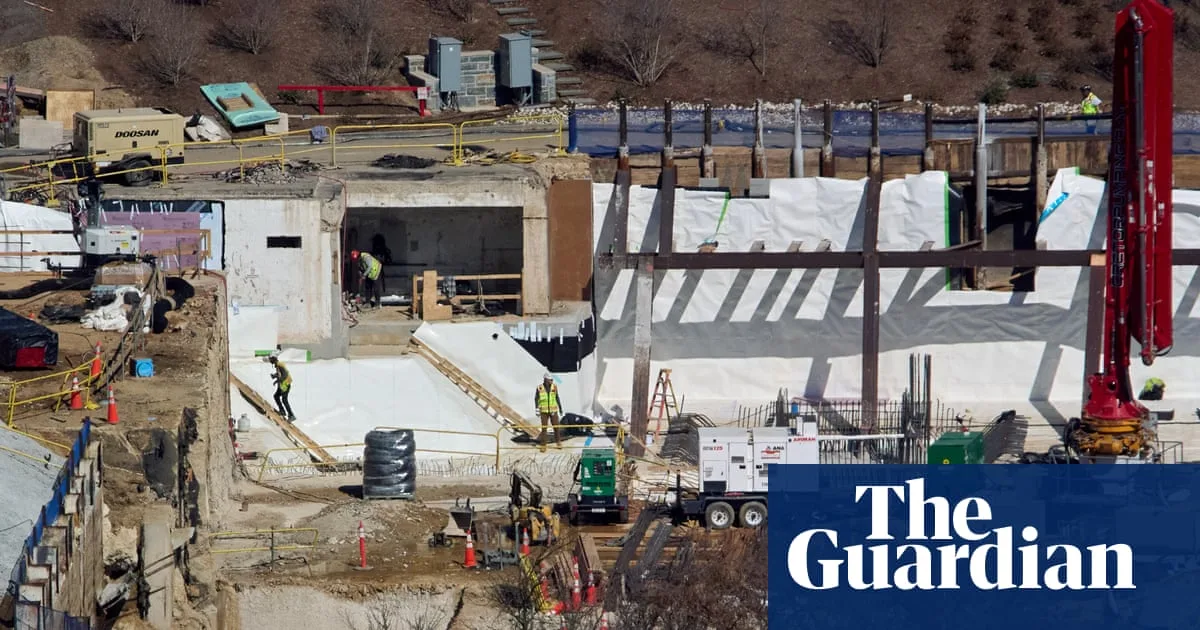
A federal judge has raised substantial legal questions regarding President Donald Trump's administration's authority to proceed with a $400 million ballroom construction project at the White House without explicit congressional approval. The proposed 90,000-square-foot facility is planned for the site of the recently demolished East Wing, sparking significant controversy and legal challenges.
Judge Leon's Skeptical Stance
During a hearing concerning a lawsuit brought by the National Trust for Historic Preservation, U.S. District Judge Richard Leon expressed strong reservations about the project's legality. He questioned whether President Trump possessed the statutory power to dismantle the historic East Wing and build a grand ballroom in its place without proper oversight or authorization from the US Congress.
The judge's skepticism became particularly evident when he sharply rebuked a lawyer representing the administration. After comparisons were drawn to minor renovations, such as the installation of a swimming pool during the Gerald Ford administration in the 1970s, Judge Leon stated, "Come on, be serious," indicating he viewed the ballroom project as fundamentally different in scale and significance.
Legal Battle Intensifies
The National Trust initiated legal action against Trump and several federal agencies in December, arguing that the project has advanced without the necessary approvals, environmental review, or congressional authorization. The preservation group contends that federal law specifically prohibits construction on federal parkland in Washington without express congressional authority.
Furthermore, the National Trust argues that the National Park Service violated federal law by issuing an environmental assessment instead of a full impact statement, and by releasing this assessment only after the 120-year-old East Wing had already been demolished.
Administration's Defense
The Trump administration has vigorously defended the project's legality, asserting it follows a long tradition of presidential renovations at the White House. In court filings, administration lawyers pointed to historical precedents including Franklin D. Roosevelt's original construction of the East Wing as justification for the current project.
Justice Department lawyer Jacob Roth affirmed during Thursday's hearing that the ballroom plans serve the public interest, describing the facility as essential for state functions and diplomatic events. The administration has argued that the design is still evolving and above-ground construction is not planned until April, rendering any injunction unnecessary at this stage.
Regulatory Process and Next Steps
Earlier this month, the National Capital Planning Commission held its first public hearing on the ballroom plans, following the White House's submission of an application to both the NCPC and the Commission of Fine Arts last month. This regulatory process continues alongside the legal proceedings.
Judge Leon has indicated he will issue a ruling in the coming weeks on the National Trust's request for a preliminary injunction, which aims to halt construction work while the lawsuit continues. Although the judge declined to issue a temporary restraining order in December, the current hearing represents a critical juncture in determining whether the project can proceed without congressional approval.
The White House and other federal defendants are urging the court to deny the preliminary injunction, arguing that stopping construction would disrupt important diplomatic preparations and state functions. Meanwhile, preservationists maintain that the scale and nature of the project require proper congressional oversight and environmental review before any further work can proceed.






