Hungary's Election: A Proxy Battle for Trump's Third Term and Putin's European Ambitions
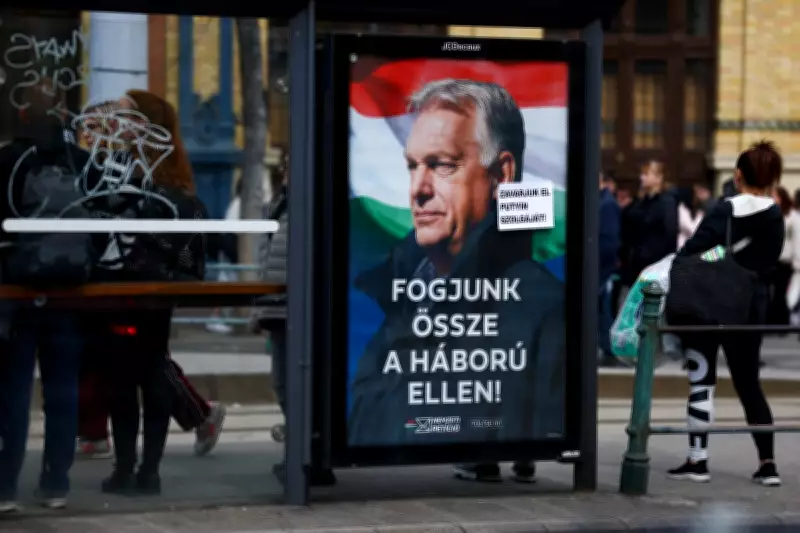
Seldom has Europe witnessed an election of such profound international significance. As Hungarian voters head to the polls today, the contest has evolved into a high-stakes proxy battle, with both Moscow and Washington aggressively intervening to secure another term for Prime Minister Viktor Orbán. This unprecedented alignment marks a dramatic shift in global politics, where traditional adversaries now find common cause in supporting Orbán's semi-authoritarian regime.
Unprecedented Foreign Interference in Hungarian Democracy
Never before has a sitting US vice-president campaigned so overtly for a foreign candidate as JD Vance did recently in Budapest. Simultaneously, Vladimir Putin has unleashed a torrent of promises and concessions, accompanied by an intense disinformation campaign and reports of Russian agents operating on Hungarian soil. This coordinated effort underscores Orbán's critical role in advancing a shared agenda: keeping the European Union fragmented and demonstrating that right-wing semi-authoritarianism can flourish in modern democracies.
Viktor Orbán's significance to the White House reveals a fundamental truth about international influence. Nations exert power not merely through military might or economic strength, but through ideological appeal. From Castro's Cuba to Lee Kuan Yew's Singapore, history abounds with examples of smaller states shaping global discourse. Orbán has meticulously crafted himself into the avatar of the global populist right, championing anti-migration policies, blood-and-soil identity politics, and anti-woke culture wars.

The Orbán Playbook: A Blueprint for Semi-Authoritarianism
What began with operatives like Steve Bannon and influencers such as Tucker Carlson making pilgrimages to Budapest has now escalated to the highest levels of leadership. Argentina's president Javier Milei recently headlined the CPAC Hungary conference, an offshoot of the US Conservative Political Action Conference, signaling the internationalization of Orbán's political model. Constantly citing Hungary as an exemplar means that Orbán's defeat would represent a significant setback for the global populist movement as a whole.
Orbanism has systematically tested the boundaries of democracy, creating a sophisticated semi-authoritarian system that stops just short of outright dictatorship. Through a network of oligarchs who have acquired substantial media holdings, coupled with state-controlled outlets, Orbán now commands approximately 80 percent of Hungary's media landscape according to Reporters Without Borders. For figures like Steve Bannon, who openly envision entrenching Trumpism into a potential third term, Orbán's success provides a crucial blueprint demonstrating that semi-authoritarian governance remains viable for MAGA aspirations.
Putin's Practical Imperative: Keeping Orbán in Power
Vladimir Putin maintains more immediate, practical reasons for ensuring Orbán's continued rule. According to a Bloomberg-obtained transcript from an October 2025 call, the Hungarian prime minister told Putin "I am at your service," comparing himself to a "mouse" ready to assist the Russian "lion." This self-deprecating characterization understates Orbán's substantial contributions to Russian interests. Beyond merely frustrating EU-Russia sanctions packages or blocking crucial loans to Kyiv, leaked audio recently revealed Hungarian Foreign Minister Péter Szijjártó offering to amend EU sanctions lists according to Russian preferences.
The Kremlin views Orbán's survival as essential to maintaining influence within European institutions. His defeat would mean losing Russia's primary advocate in Brussels, potentially accelerating EU funding to Ukraine and strengthening its battlefield position. This intersection of Russian and MAGA American interests reveals a shared objective: a weakened, divided Europe incapable of unified action.

The Strategic Convergence Against European Unity
Hungary's election embodies the recent US National Security Strategy, which explicitly advocates "cultivating resistance to Europe's current trajectory" and identifies "the European Union and other transnational bodies that undermine political liberty" as primary obstacles. This represents a radical reversal of generations of American foreign policy, with Trump's America now openly opposing European unity and preferring a continent of pliable vassal states rather than independent partners.
Today's Hungarian election therefore carries implications far beyond national borders. Hungarian voters possess the opportunity to reject not merely a political figure, but an ideological model that captivates both Trump and Putin. More importantly, they can resist the very vassalization that these powers seek to impose across Europe, making this election a crucial battle for the continent's democratic future.