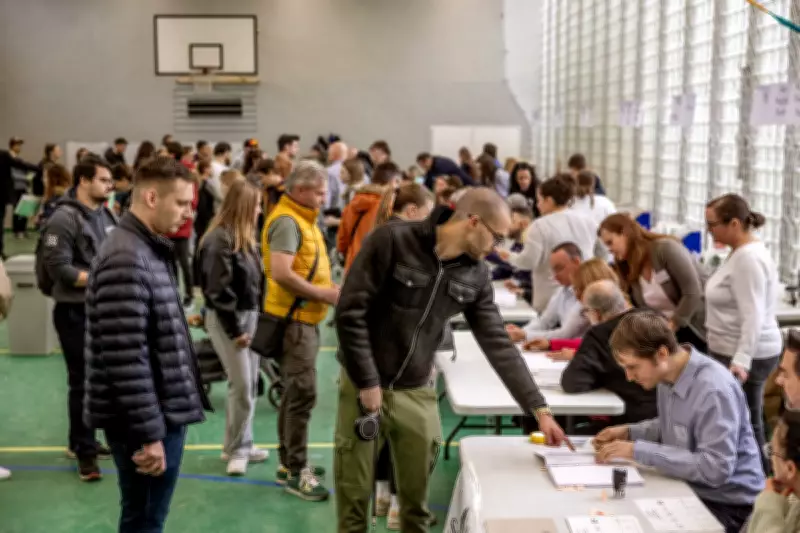
Hungary's Pivotal Election: Orban Faces Toughest Challenge in 16 Years
Hungarian voters are preparing to cast their ballots on Sunday in a parliamentary election that represents the most significant political challenge to nationalist Prime Minister Viktor Orban in his 16 years of continuous leadership. This crucial vote could potentially reshape Hungary's political landscape and its relationship with European institutions.
Polling Indicates Shift in Political Landscape
Current opinion polls reveal that Orban's Fidesz party is trailing behind the centre-right Tisza party, which is led by former Fidesz insider Peter Magyar. Magyar has built his campaign around a strong anti-corruption platform, directly challenging the establishment that has dominated Hungarian politics for nearly two decades.
The election comes at a particularly challenging time for Hungary, with the national economy struggling under the weight of persistent high inflation. Additionally, the European Union has withheld approximately €19 billion in funding due to ongoing concerns regarding the rule of law and corruption within the country.

International Support and Controversial Alliances
Orban's re-election campaign has received notable international support, most prominently from US Vice President JD Vance, who recently visited Hungary to bolster the Prime Minister's position. Orban has consistently emphasised his strong political ties with influential global figures, including Russian President Vladimir Putin and former US President Donald Trump.
These alliances have drawn widespread criticism across Europe, particularly regarding Orban's pro-Russian stance on the invasion of Ukraine. The Prime Minister has faced additional scrutiny for dismissing concerns about Russian drone incursions into NATO airspace, further straining Hungary's relationships with its European allies.
Economic Challenges and European Relations
The economic context of this election cannot be overstated. Hungary continues to grapple with significant inflationary pressures that have affected living standards across the country. The withholding of EU funds has created additional financial strain, making economic management a central issue in the campaign.
Peter Magyar's Tisza party has capitalised on these economic concerns while simultaneously highlighting corruption allegations that have plagued the current administration. This dual focus on economic recovery and governmental transparency appears to be resonating with Hungarian voters according to pre-election polling.
A Watershed Moment for Hungarian Democracy
Sunday's election represents more than just another political contest—it serves as a potential watershed moment for Hungarian democracy. After 16 years of uninterrupted leadership, Viktor Orban faces what many political analysts consider his most formidable electoral challenge to date.
The outcome will not only determine Hungary's domestic political direction but will also significantly influence the country's future relationship with the European Union and its position within the broader European political landscape. As voters prepare to make their decision, the entire continent watches closely, recognising that Hungary's choice could have ripple effects across European politics.