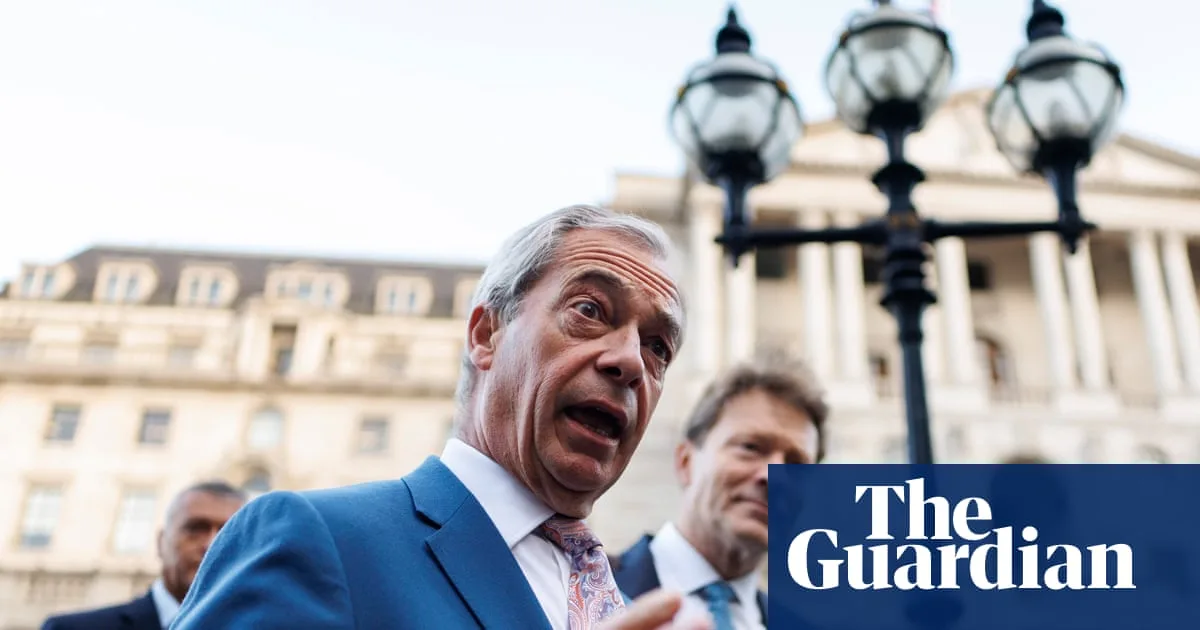
Nigel Farage, leader of Reform UK, has intensified calls for the Bank of England to halt bond sales and reduce interest payments to UK banks following a meeting with Governor Andrew Bailey. The meeting, held on Thursday at the Bank's Threadneedle Street headquarters, also included Reform MP Richard Tice.
Farage and Tice advocate for greater political control over the Bank, which has been independent since 1997. Tice stated that if Parliament, via the Chancellor, provided a different steer to the Bank, it could reduce the need for tax rises. He plans to request an urgent debate on the matter.
Shadow Chancellor Mel Stride criticised the approach, warning that politicising interest rates and undermining the Bank's independence could lead to instability and higher inflation. He emphasised that independent monetary policy was established to free interest-rate decisions from political pressures.
The Bank currently pays interest on reserves created during quantitative easing (QE) and is selling government bonds at a loss through quantitative tightening (QT), costing the Treasury. Bailey previously rejected Reform's arguments, stating that removing reserve remuneration would be akin to a tax on banks, which should be imposed by the elected government.
The Bank plans to sell £21bn in bonds over the coming year, a slower pace than before. Left-leaning think tanks, including the Institute for Public Policy Research, have also called for a windfall tax on banks to recoup gains from rising interest rates, estimating QT costs the Treasury £22bn annually.