Nigel Farage Confronts Davos Elites: 'We Will Not Be Dictated To'
Farage Tells Davos: 'We Will Not Be Dictated To'

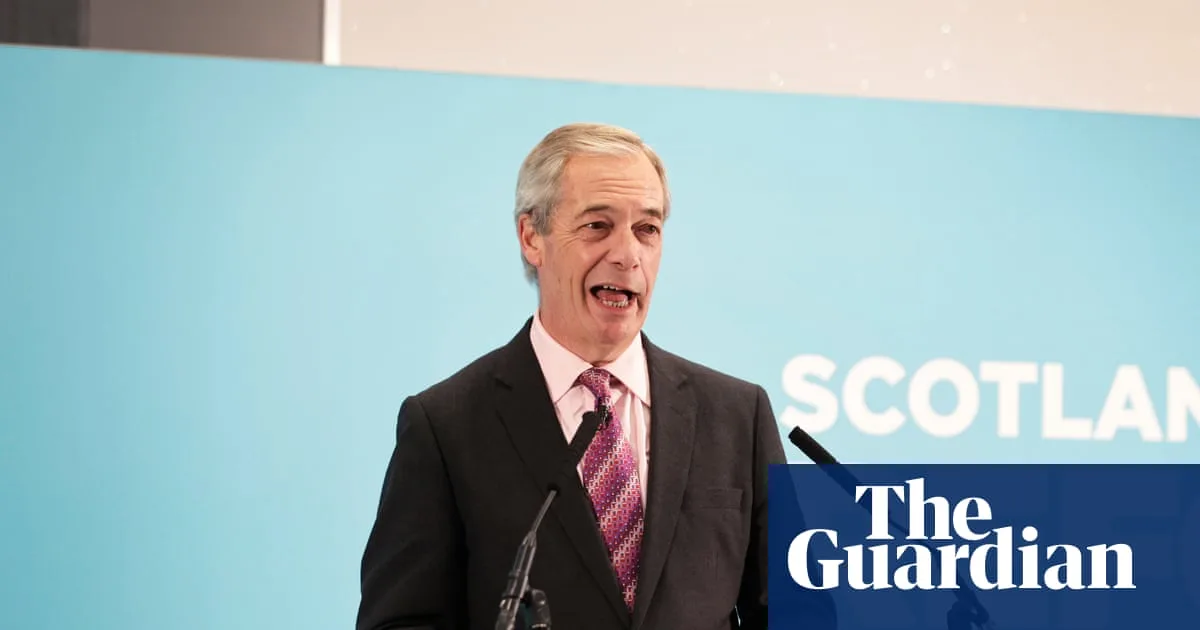
Nigel Farage delivered a robust and uncompromising message to the assembled global elite at the World Economic Forum in Davos yesterday, firmly stating that the era of being dictated to by international bodies is over. The Reform UK leader, attending the prestigious gathering of business and political leaders for the first time, declared that the world has undergone a permanent transformation.

A Defiant Stance Against Globalist Ideology

In a direct challenge to the established orthodoxy, Mr Farage told attendees that his party and the movement he represents will no longer accept instruction from supranational organisations. 'We will not be dictated to by you again,' he asserted, addressing the forum's influential delegates. 'We will not be lectured on climate change, we will not be lectured on the benefits of open borders, we will not be beholden to you.'

He did, however, strike a conciliatory note by suggesting a future of constructive engagement, but strictly on Britain's own terms. 'We will work constructively with you under a national interest framework,' he clarified, positioning national sovereignty as the non-negotiable foundation for any international cooperation.

Wide Pickt banner — collaborative shopping lists app for Telegram, phone mockup with grocery list

The Rise of National Interest Over Global Consensus

Speaking earlier at a Bloomberg News event on the sidelines of the forum, Mr Farage elaborated on this seismic shift in political thinking. He argued that the traditional globalist model, which advocates for uniform regulations and targets across nations, is now obsolete. 'The globalist idea we should all do the same thing, have the same regulations, have the same targets – and the EU is the epicentre of all of this for the globalists – that’s now for the birds,' he stated.

He identified the emergence of a powerful new political force: the primacy of the national interest. 'It’s a change of debate, there’s now something called national interest. And that’s the new politics that we’re seeing,' he explained, framing this as a fundamental realignment in how nations approach diplomacy and policy.

Davos Debut Amidst Election Speculation

Mr Farage's appearance at Davos comes at a pivotal moment in British politics, during the long run-up to a general election. Current polling suggests his Reform UK party could play a decisive role, with some projections even hinting at the potential for Mr Farage to enter Downing Street. His presence at the forum marks a strategic effort to engage directly with the international business community.

During his visit, he has been actively courting business leaders, hosting a roundtable discussion with top executives. He reported that these industry figures shared a perception that the present UK Government is 'utterly disconnected' from commercial realities.

A New Vision for Government and Business

Outlining his political vision, Mr Farage revealed ambitious plans to integrate business expertise directly into the heart of government. He proposed bringing captains of industry into ministerial roles and creating a significantly strengthened business ministry, with the explicit aim of turbocharging economic growth.

This represents a notable evolution in his stance. While he has historically been a vocal critic of Davos and the globalisation ideology it symbolises, he now perceives a change within the institution itself. He expressed surprise at the 'genuine debate' occurring on contemporary issues like artificial intelligence, cryptocurrency, and energy policy – a contrast to previous years where, in his view, discussions were dominated solely by climate change and diversity agendas.

A Permanent Shift, Not a Temporary Blip

Mr Farage firmly dismissed any notion that the world could simply revert to the pre-2016 status quo, before the election of Donald Trump as US President. He argued that the change is deeper and more widespread than a single political figure.

'I don’t think it’s just about Trump,' he reflected. 'I think Trump is an emblem of looking at things differently. I think you’re seeing it across Europe – things are changing.' His comments underscore a belief that the populist, national-interest-driven politics he champions is a sustained, continental trend, not a fleeting anomaly.

Pickt after-article banner — collaborative shopping lists app with family illustration

His intervention at Davos serves as a clear signal that, should his political fortunes rise, the UK's approach to global forums and international policy will be fundamentally reshaped around the core principle of national sovereignty, setting the stage for a potentially turbulent new chapter in Britain's relationship with the global elite.




