Farage Insists Reform Candidate Would Have Secured Victory With British-Only Voting
Reform UK leader Nigel Farage has declared that his party's candidate would have won last week's Gorton and Denton by-election if voting had been restricted solely to British citizens. The statement comes after the Green Party's Hannah Spencer emerged victorious, with Reform's Matt Goodwin finishing second and Labour placing third.
Proposed Voting Restrictions Spark Controversy
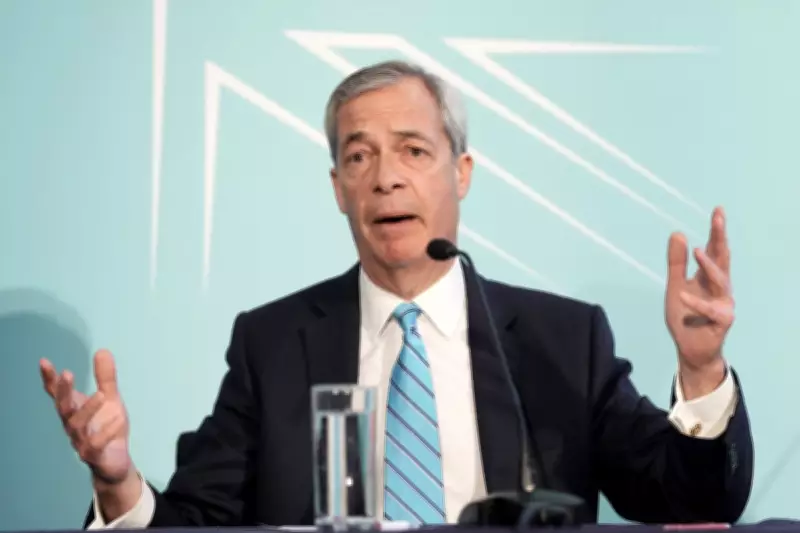
Speaking at a Westminster press conference on Monday, Farage revealed Reform UK's plan to limit voting in national elections to British citizens only, removing the right from Commonwealth citizens who qualify as UK residents. He expressed absolute conviction that among British-born voters, Matthew Goodwin would have topped the poll.
"I'm absolutely convinced that amongst British-born voters, Matthew Goodwin came first in that election last week," Farage asserted. "Of that, I have absolutely no doubt whatsoever."

Green Party Condemns "Dangerous, Racist Nonsense"
A Green Party spokesperson responded forcefully, labeling Farage's comments as "dangerous, racist nonsense from a party who were well beaten, seeking to delegitimise the election, Donald Trump-style." The spokesperson emphasized that in a democracy, everyone's vote carries equal weight, noting that Green support came from across all communities, including former Reform voters.
"Farage has no idea who did and didn't vote for him," the spokesperson continued. "'If you don't like the results of an election, change the electorate' is the refrain of sore losers and anti-democrats through the ages."
National Sovereignty Argument Behind Voting Policy
Reform UK has explained that Farage's belief that allowing Commonwealth citizens to vote "undermines national sovereignty" and shifts election focus to international rather than domestic issues drives their proposed policy change. When questioned about whether this could be perceived as an attempt to exclude voters unlikely to support Reform, Farage pointed to other nations with similar restrictions.
"I do believe for national elections they should be voted on by British voters only, absolutely," he stated. "Otherwise, we get a really, very, very perverse influence on our politics, where people are voting more about Gaza than they are about Gorton."
Reform UK Treasury spokesman Robert Jenrick noted that many countries, including the United States and Japan, already limit voting rights to citizens. Farage added: "We just want to be a normal country and normal countries protect their borders, protect their democratic systems, know what works and what doesn't."
Postal Voting Restrictions Also Proposed
Reform UK additionally aims to restrict postal voting, which is currently available to all eligible voters. Under their proposals, postal voting would be limited to the elderly, disabled, serving armed forces personnel, and those working overseas during elections. Farage expressed distrust in the current system, warning of "mass harvesting" of postal ballots.
"I don't trust the postal voting system. I don't trust the electoral register," he declared.
This skepticism echoes past complaints from Farage about postal voting during UKIP's loss in the 2015 Oldham West and Royton by-election and the Brexit Party's defeat in the 2019 Peterborough by-election. Reform UK MP Richard Tice similarly questioned postal ballot validity after his party's candidate lost the 2024 Rochdale by-election.
Election Fraud Concerns and Official Response
Despite these concerns, no postal voting fraud has been proven in any of these cases, nor have any convictions resulted. The latest Electoral Commission data from 2024 shows no evidence of large-scale election fraud in the UK, with 94% of allegations resolved locally through "words of advice" or police taking no further action.
Reform has requested police investigations into allegations of election fraud following reports of "family voting"—an illegal practice where two voters use one polling booth and potentially influence each other's votes. Election observer group Democracy Volunteers reported witnessing "concerningly high levels" of family voting in Gorton and Denton.

The Prime Minister's official spokesman addressed the issue, stating: "While the vast majority of people vote lawfully, any instance of family voting is unacceptable. It undermines confidence in our democratic process." The spokesman emphasized the importance of secret, coercion-free voting and noted that accompanying someone into a polling booth to influence their vote carries criminal penalties, including imprisonment.