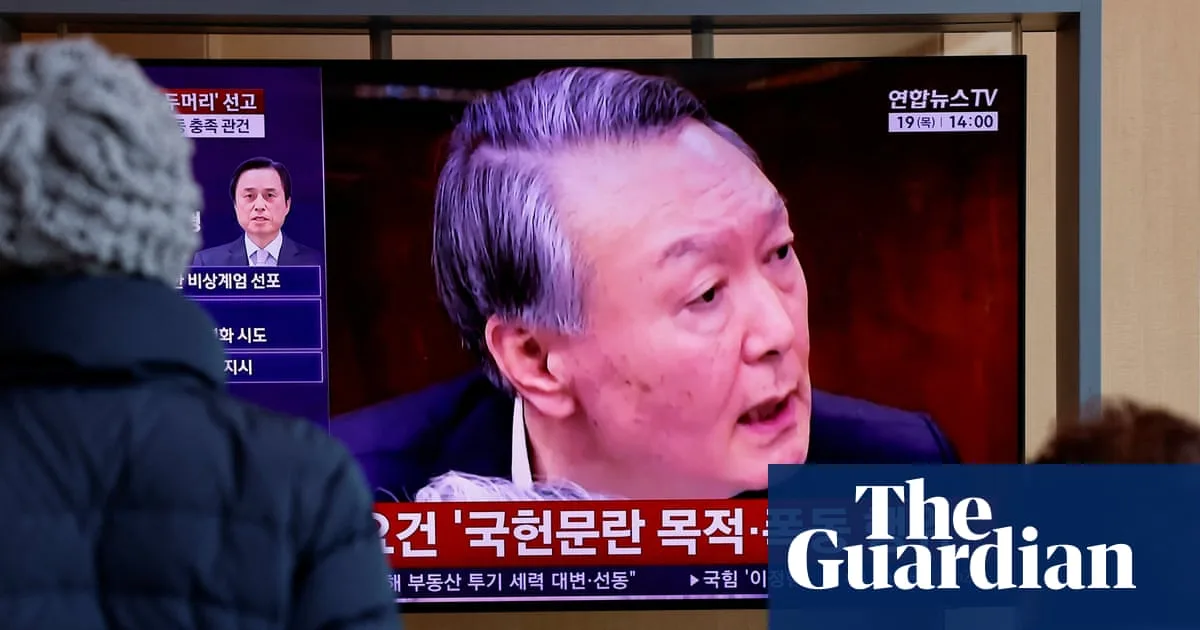
Former South Korean President Yoon Suk Yeol Receives Life Sentence for Rebellion
A South Korean court has delivered a landmark verdict, sentencing former President Yoon Suk Yeol to life imprisonment for rebellion. This conviction stems from his controversial imposition of martial law in December 2024, which the court ruled constituted an illegal power grab. The decision concludes ten months of intense legal proceedings that have plunged the nation into its most severe political turmoil in decades.
Key Events Leading to the Historic Conviction
The path to Yoon's conviction was marked by a series of dramatic events that unfolded over more than a year. Here is a chronological breakdown of the major developments:
- December 1, 2024: Prosecutors allege that Yoon instructed Defense Minister Kim Yong Hyun to implement "emergency measures" against liberal rivals in the National Assembly. This followed the opposition's use of their majority to impeach senior officials, prosecutors, and reduce government budgets.
- December 3, 2024: In a televised address around 10:30 p.m., Yoon declared martial law, denouncing the opposition-controlled legislature as a "den of criminals" and vowing to eliminate his "anti-state" opponents. Hundreds of heavily armed troops and police surrounded the National Assembly.
- December 4, 2024: Shortly after midnight, National Assembly Speaker Woo Won Shik announced on YouTube that the assembly would respond with "constitutional procedure." By 1 a.m., 190 lawmakers, including 18 from Yoon's People Power Party, unanimously voted to lift martial law. Troops began retreating, and martial law was formally lifted at 4:30 a.m. after a Cabinet meeting.
- December 7-14, 2024: Yoon survived an impeachment vote boycotted by most ruling party lawmakers. However, on December 14, the National Assembly impeached him with a 204-85 vote, leading Prime Minister Han Duck-soo to assume temporary leadership.
- December 2024 - January 2025: Prosecutors detained former Defense Minister Kim over his role in the martial law declaration. Yoon was banned from overseas travel as investigations expanded. Kim was formally arrested on December 11, with the Justice Ministry reporting he was prevented from suicide hours before a court issued a warrant.
- January 15, 2025: In a historic move, anti-corruption investigators and police raided the presidential compound and detained Yoon, making him the first sitting president to be arrested. This triggered a riot by supporters who broke into the court, resulting in around 90 arrests.
- January 26, 2025: The Seoul Central District Prosecutors' Office indicted Yoon for masterminding an attempted rebellion, accusing him of an illegal bid to seize the legislature and election offices to arrest political opponents.
- April 4, 2025: The Constitutional Court upheld Yoon's impeachment, removing him from office and triggering an election within 60 days. Democratic Party candidate Lee Jae Myung, Yoon's liberal rival, was elected as the new president on June 3.
- August 2025: Yoon's wife, Kim Keon Hee, was arrested on bribery and other charges. Special prosecutors later indicted her and former Prime Minister Han for abetting Yoon's martial law imposition, falsifying documents, and lying under oath.
- November 2025 - February 2026: Investigators added charges against Yoon for ordering drone flights over North Korea to stoke tensions and justify martial law. In January 2026, a special prosecutor demanded the death penalty. The court subsequently issued sentences: five years for Yoon on initial charges, 23 years for Han, 20 months for Kim Keon Hee, and seven years for former interior minister Lee Sang-min.
Final Verdict and Aftermath
On February 19, 2026, the Seoul Central District Court delivered the final blow, sentencing Yoon to life imprisonment on rebellion charges. Throughout the proceedings, Yoon remained unapologetic, insisting his actions were a legitimate exercise of presidential authority. His legal team expressed disappointment with the verdict and indicated they would consider an appeal after discussions.
This case has not only reshaped South Korea's political landscape but also set a precedent for holding high-ranking officials accountable. The conviction underscores the fragility of democratic institutions in the face of power struggles and highlights the ongoing tensions between conservative and liberal factions in the country.






