Senate Democrats Push for ICE Reforms in Funding Bill, Threatening Government Shutdown
Senate Minority Leader Chuck Schumer has demanded that legislation funding the Department of Homeland Security include significant reforms aimed at federal immigration agents, setting the stage for a high-stakes confrontation with Republicans. This move could lead to a partial government shutdown in the coming days as Congress races to avoid a lapse in federal funding after Friday.
Schumer's Call for Action Following Minneapolis Incident
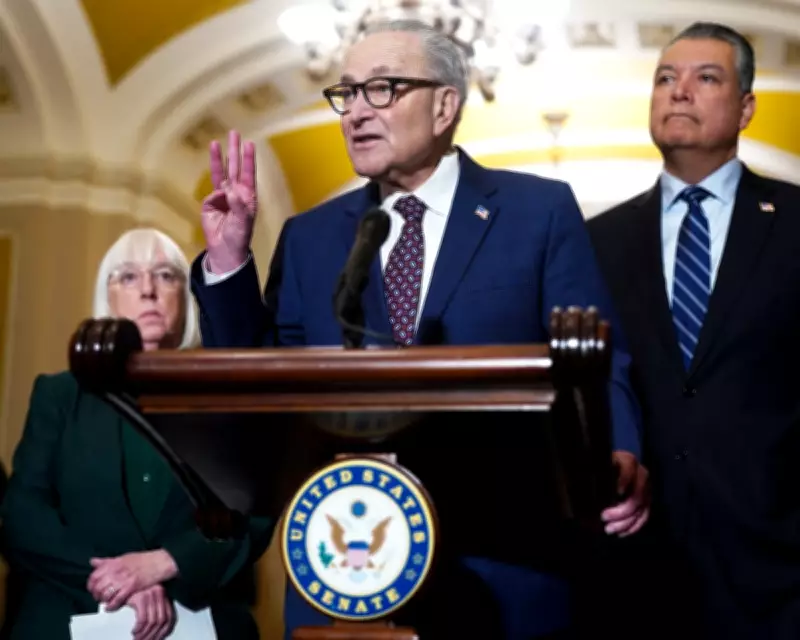
Speaking to the media at the US Capitol in Washington on Wednesday, Schumer announced that Democrats have united behind a set of policy goals designed to "rein in ICE and end the violence." This follows the weekend killing of US citizen Alex Pretti by federal agents in Minneapolis, which has intensified calls for accountability. Schumer emphasised that these reforms are "common sense and necessary" and reflect what Americans expect from law enforcement.
The proposed measures include a prohibition on patrols by Immigration and Customs Enforcement unless coordinated with local and state police, the imposition of a uniform code of conduct, mandatory independent investigations into violations, a ban on mask-wearing by federal agents, and requirements for body cameras and identification. Schumer warned that if Republicans refuse to support these changes, they are "choosing chaos over order" and prioritising ICE's protection over American lives.

Republican Response and Legislative Standoff
At a press conference held shortly before Schumer's announcement, Senate Majority Leader John Thune indicated a willingness to discuss ICE reforms with Democrats but affirmed the GOP's plan to proceed with votes on the spending bills on Thursday. Thune noted that the DHS funding bill already includes reduced funding for ICE compared to the Trump administration's request, along with provisions for body cameras and de-escalation training, which he described as concessions to Democratic demands.
Thune stressed that a government shutdown is not in anyone's interest and highlighted that failure to pass the DHS bill would not halt ICE operations, as it received funding from earlier legislation. However, it would impact other agencies under DHS, such as the Transportation Security Administration and the Federal Emergency Management Agency, which is currently responding to a widespread winter storm.
Potential for Partial Shutdown and Historical Precedents
Schumer's demands significantly increase the likelihood of at least a partial shutdown later this week, as any amendments to the DHS funding bill in the Senate would require reapproval by the House. Patty Murray, the top Democrat on the Senate Appropriations Committee, clarified that her party has no objections to the other five spending bills, which cover about 95% of the remaining budget for departments including labour, defence, and health and human services.
Murray asserted that Democrats are ready to avert a shutdown by passing those bills but insisted on separating the DHS legislation to address concerns about ICE and Customs and Border Protection, which she described as "out of control and endangering American citizens." This scenario echoes a similar standoff last September, when Democrats refused to vote for funding bills unless tax credits for Affordable Care Act plans were extended, resulting in the longest government shutdown in history.
Democratic Unity and Internal Divisions
With Republicans controlling 53 seats in the Senate and most legislation requiring 60 votes to overcome a filibuster, bipartisan compromise is essential. Most Democratic senators publicly support the party's strategy, and some have joined calls for Homeland Security Secretary Kristi Noem to resign over Pretti's death. However, internal divisions exist, such as with John Fetterman of Pennsylvania, who supports Noem's removal but has expressed hesitation about voting for a shutdown, particularly affecting the defence department.
As the deadline approaches, the political impasse underscores the deep partisan divides over immigration enforcement and government funding, with both sides positioning themselves for a critical showdown that could have far-reaching consequences for federal operations and public safety.