Nevada Democrat Faces Intense Criticism After Profanity-Laden Late-Night Social Media Outburst
Democratic Congresswoman Susie Lee of Nevada is confronting significant political backlash following an expletive-filled late-night social media tirade directed at former President Donald Trump's attendance at a pivotal Supreme Court hearing concerning birthright citizenship. The controversy erupted early Wednesday morning when Lee posted a message at 1:03 AM that read: 'So f***ing f***ed up. I'll pray they f*** him to his face. Sorry, I say f*** a lot these days.'
Trump's Unprecedented Supreme Court Attendance Sparks Heated Reaction
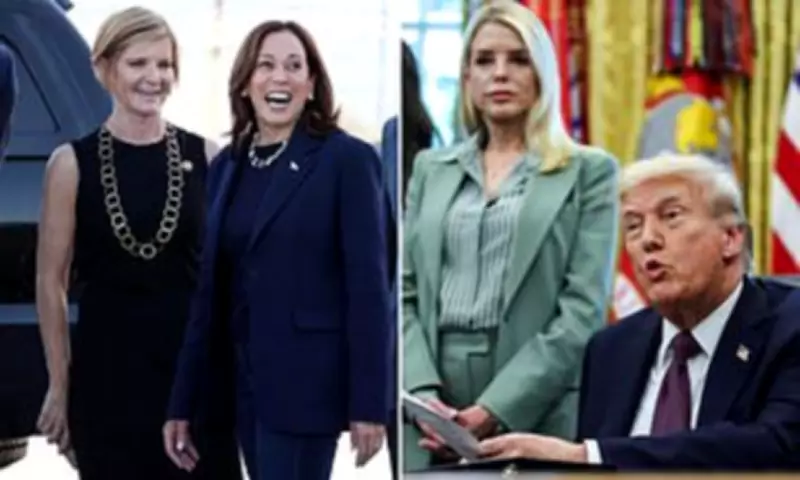
Lee's inflammatory remarks were prompted by reports confirming that Donald Trump planned to personally attend the Supreme Court oral arguments regarding his administration's executive order to end birthright citizenship. This appearance would mark the first instance in American history where a sitting president has attended Supreme Court proceedings in person. Trump indeed attended the hearing alongside Attorney General Pam Bondi, observing from the front row of the public gallery as conservative justices critically examined his administration's legal position.
Lee Deletes Post But Doubles Down on Constitutional Criticism
Although Representative Lee deleted the controversial social media post several hours after publication, she subsequently issued a follow-up statement defending her passionate response while acknowledging the strong language. 'Clearly my language touched a nerve - my nerve was touched by the attacks on our Constitution and its separation of powers. I took an oath to protect and defend it,' Lee wrote, reframing her outburst as a defense of constitutional principles rather than merely personal criticism of Trump.

Republican Committee Launches Scathing Attack on Nevada Democrat
The National Republican Congressional Committee (NRCC) swiftly capitalized on the incident, releasing a sharply worded statement condemning Lee's behavior. NRCC spokesman Christian Martinez declared: 'Democrat Susie Lee has become Nevada's fool, more focused on vulgar outbursts than doing the job she was elected to do. Hitting delete doesn't clean up her mess, it just proves she knows how embarrassing it is.' This response highlights how the incident has become ammunition in ongoing partisan battles ahead of future elections.
Historic Supreme Court Hearing Centers on Birthright Citizenship Challenge
The Supreme Court case itself represents a landmark constitutional challenge with profound implications for American immigration policy. The nine justices are deliberating whether Trump's Inauguration Day executive order from January 2025, which sought to terminate automatic citizenship for children born on U.S. soil to undocumented immigrants or temporary visa holders, possesses legal validity. This executive action was previously invalidated by lower courts as unconstitutional, leading to the current Supreme Court review.
Constitutional Debate Over 14th Amendment Interpretation Intensifies
At the heart of the legal dispute lies conflicting interpretation of the 14th Amendment, ratified in 1868 initially to guarantee citizenship to emancipated slaves but subsequently understood to confer automatic citizenship to all individuals born on American soil or its territories. The American Civil Liberties Union (ACLU), representing plaintiffs challenging Trump's order, argues that the amendment's plain language unequivocally establishes birthright citizenship. During oral arguments, U.S. Solicitor General John Sauer contended that contemporary global mobility necessitates reconsideration of this long-standing principle, stating: 'We're in a new world now. Some 8 billion people are one plane ride away from having a child who's a U.S. citizen.'

Chief Justice Roberts Expresses Skepticism Toward Administration's Position
Chief Justice John Roberts appeared notably skeptical of the Trump administration's legal arguments during the proceedings, describing a central component of Sauer's position as 'quirky' in what observers interpreted as an early setback for the presidential case. Roberts countered Sauer's 'new world' argument by emphasizing: 'It's a new world, but it's the same constitution,' underscoring the enduring nature of constitutional principles despite evolving social and demographic circumstances. The Supreme Court is expected to deliver its ruling on this consequential case by late June or early July, with potential to reshape American citizenship law for generations.