Delhi Police Face Legal Action in Himachal Pradesh After AI Summit Protest Arrests
A seemingly routine pre-dawn operation to arrest political workers linked to a protest at India's high-profile AI summit spiralled into a near-24-hour confrontation between the police forces of two states this week, culminating in legal action being taken against the arresting officers themselves.
Summit Protest Sparks Political Firestorm
Inaugurated by Prime Minister Narendra Modi, the India AI Impact Summit held in Delhi from 16 to 20 February drew delegations from over 100 countries alongside global technology leaders including Google's Sundar Pichai and OpenAI's Sam Altman. The event, however, was marred by a protest on its final day when members of the Indian Youth Congress, a wing of the main opposition party, removed their jackets to reveal t-shirts depicting Mr Modi with the slogan "PM is compromised".
The Delhi police described this as a "shirtless protest" and registered a First Information Report citing offences including rioting, criminal conspiracy, and unlawful assembly. The political reaction was swift, with BJP spokesperson Sambit Patra labelling the demonstration "topless, brainless, shameless" and Mr Modi accusing the Congress party of turning a global event into a platform for "dirty and naked politics".
Youth Congress president Uday Bhanu Chib defended the action, stating it represented "the voice of millions of angry unemployed youth" and was not against the AI summit itself, but rather a protest against what they termed a "compromised" prime minister.
Pre-Dawn Arrest Operation Goes Awry
Five days later, the dispute moved 400 kilometres north when a Delhi police team arrived at approximately 5am at a resort in Rohru, a small town near Shimla in the Himalayan state of Himachal Pradesh. Their target was three Youth Congress workers named in the FIR. The officers detained the suspects, seizing a digital video recorder from the resort's CCTV system and the vehicle they had arrived in.
By 6:15am, the three men had been formally arrested and placed in police vehicles for transport to Delhi to be produced before a court. However, the plan quickly unravelled when local Himachal Pradesh police intercepted the convoy near Shimla's interstate bus terminal, questioning the legality of the arrests and whether proper procedures had been followed.
Escalating Standoff Between Police Forces
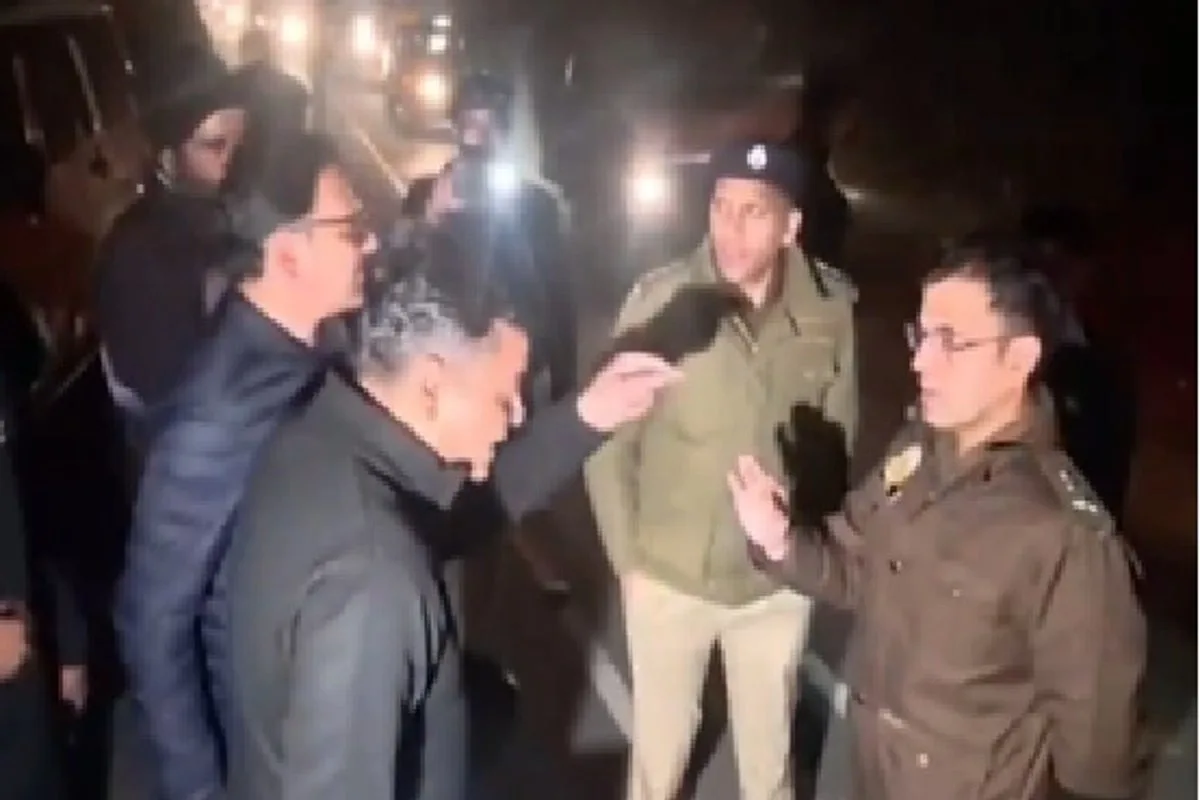
What followed was a series of highway interceptions and an unusually public clash between the two police forces. Video footage broadcast by NDTV captured Delhi police Assistant Commissioner Rahul Vikram telling local officers: "We've arrested three people. You are preventing a government employee from working."
A Himachal police officer responded: "We have filed a case against you. You are kidnapping three people. You should join the investigation." According to a Shimla police officer, "unpleasant scenes erupted again when the Delhi police personnel locked themselves inside their vehicles after being intercepted at the barrier, apparently to avoid joining our investigation."
After a standoff lasting several hours, the Delhi police convoy was escorted back to Shimla and taken to the district court. Shimla Superintendent of Police Gaurav Singh stated his force had received information that "15 to 20 unidentified individuals, dressed in plain clothes, arrived in vehicles and allegedly forcibly took away three guests staying at a resort" and had removed CCTV equipment "without providing any seizure memo or receipt".
Legal Procedures and Political Dimensions
On that basis, the Himachal police registered a case under sections related to wrongful confinement and kidnapping against the Delhi police officers. ACP Vikram countered: "I don't know in what capacity the Himachal police detained us. Two of the three suspects were directly involved in the shirtless protest and one was involved in the conspiracy."
The confrontation highlighted important legal procedures regarding interstate arrests. Indian criminal procedure requires police arresting someone in another state to produce them before the local magistrate and seek transit remand - judicial permission to move the accused across state lines.
After the convoy returned to Shimla, the arrested men were produced before the city's additional chief judicial magistrate, who granted transit remand permitting the Delhi police to take the accused to the national capital after hearing defence challenges to the operation's legality.
Prolonged Confrontation and Political Fallout
Even then, the standoff did not immediately end. The Delhi police vehicles were reportedly stopped twice more in the early hours of Thursday, with Himachal officers seeking access to digital evidence before allowing the convoy to proceed. The Delhi police refused, arguing the material was case property.
Shortly before 6am on Thursday, nearly 24 hours after the initial arrests, the Delhi police team was finally permitted to leave the state with the three detainees. The episode unfolded against a significant political backdrop, with Himachal Pradesh governed by the Congress party while the Delhi police report to the federal home ministry under Mr Modi's government.
Each side has since accused the other of breaching procedure. Naresh Chauhan, media adviser to Himachal Pradesh Chief Minister Sukhvinder Singh Sukhu, emphasised that "every action must be taken within the ambit of law". Meanwhile, senior BJP member Jai Ram Thakur called the entire standoff "shameful", according to the Times of India.
The incident represents a remarkable escalation from what began as a political protest at a technology summit, transforming into a prolonged confrontation between state authorities that raised serious questions about police procedures, interstate jurisdiction, and the intersection of law enforcement with political rivalries.






