Conservative Leader Announces Major Policy Shift to Prioritise Defence
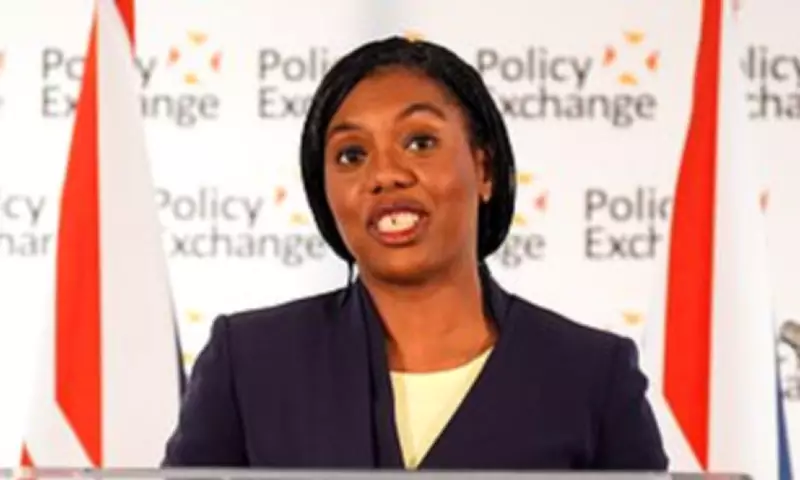
Conservative Party leader Kemi Badenoch has launched a scathing critique of Labour's Sir Keir Starmer, accusing him of possessing "the wrong principles and the wrong priorities" when it comes to national security and fiscal responsibility. In a significant policy announcement, Badenoch declared that a future Conservative government would restore the controversial two-child benefit cap, redirecting substantial savings to bolster Britain's military capabilities.
Weak Response to International Threats
Badenoch pointed to what she described as Starmer's "weak response to Iran" as evidence of Labour's inadequate approach to defence matters. "Even now, as our brave servicemen and women are under attack, Starmer is still dithering," she asserted, noting that Britain's allies have grown "rightly furious" with this perceived indecisiveness.
The Conservative leader contrasted this with her party's commitment to "always act in the national interest" and prioritise "the defence of the realm – the first duty of any government." This fundamental difference in approach forms the core of the Conservatives' new policy direction.

Funding Defence Through Welfare Reform
The centrepiece of Badenoch's announcement is the restoration of the two-child benefit cap, which she estimates will save the Treasury £3.2 billion annually. Under her plan, half of these savings (£1.6 billion) would be allocated directly to strengthening the Armed Forces, while the remaining £1.6 billion would be used to reduce the national deficit.
"Every pound the government spends must come from somewhere," Badenoch emphasised. "If we are serious about protecting Britain, we must be honest that there is a trade-off. The era of an endlessly rising welfare bill paid for by a shrinking defence budget should be over."
Criticism of Opposition Parties
Badenoch offered sharp criticism of other political parties' approaches to defence funding:
- Labour: "Still can't explain how it will reach three per cent of GDP on defence."
- Liberal Democrats: "Think we should borrow more money to fund defence."
- Greens: "Want to leave Nato."
- Reform: "Has defended the two-child benefit cap, then abandoned it, then suggested bringing it back to take 5p off the price of a pint. This is not serious."
The Conservative leader also highlighted what she saw as Labour's contradictory fiscal approach, noting that Shadow Chancellor Rachel Reeves "could tell us exactly how she's going to pay for record benefits spending, but not how she'll fund our Armed Forces."
Commitment to Difficult Choices
Badenoch made clear that this policy represents just the beginning of tough decisions her party is prepared to make. "Some political parties avoid difficult choices, promising everything to everyone. The Conservatives do not," she stated. "And I'm very clear there will be more difficult choices like this in the future."
Positioning her party as uniquely prepared for contemporary challenges, Badenoch concluded: "In a more dangerous world, the Conservatives are the only party prepared to take the tough decisions needed." This announcement signals a significant shift in Conservative policy priorities, placing defence spending at the forefront of their fiscal planning through controversial welfare reforms.