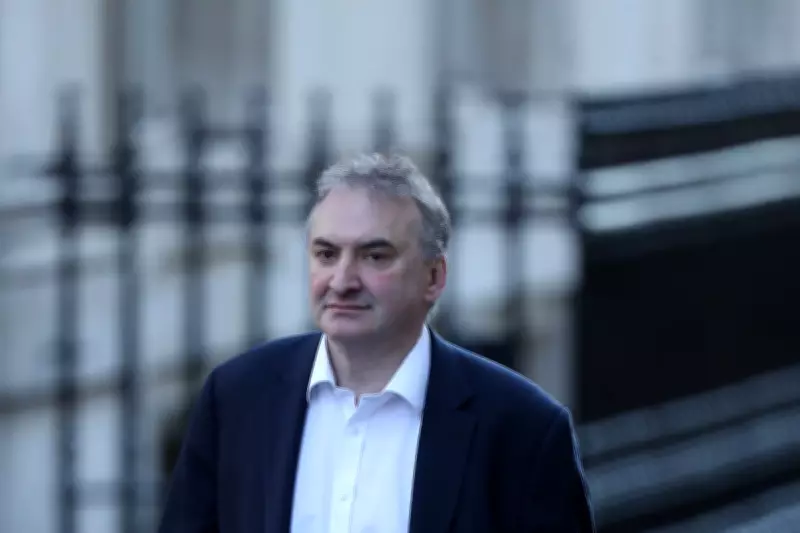
Cabinet Secretary Chris Wormald Expected to Depart Starmer's No 10 Team
In a significant development within the corridors of power, Cabinet Secretary Chris Wormald is anticipated to become the latest senior figure to exit Prime Minister Keir Starmer's Downing Street team. This move comes after a tenure of just over a year, marking an exceptionally brief period in the pivotal role. The departure is unrelated to the recent Mandelson scandal but reflects broader strategic shifts within the government.
Why Chris Wormald Is Leaving His Post
Chris Wormald was appointed in December 2024 by Keir Starmer as a "safe pair of hands" following years of political turbulence in Downing Street. However, his scepticism towards reforming the civil service in alignment with ministerial preferences has reportedly led to his impending exit. The prime minister is now seeking a cabinet secretary more closely attuned to his vision, despite Wormald's initial appointment under Starmer's administration.
This situation echoes past transitions, such as when Simon Case replaced Mark Sedwill during Boris Johnson's premiership, highlighting a recurring pattern of leadership changes driven by governance styles. The current political climate, marked by recent turmoil in No 10, provides Starmer with an opportunity to further reshape his team, aiming for a more cohesive and effective operation.

Antonia Romeo: The Prospective Successor
Antonia Romeo, the permanent secretary at the Home Office, is widely reported to be in line to replace Wormald. A highly respected figure, Romeo has been considered for the top civil service role previously and brings a diverse background to the table. Unlike many of her predecessors, she is not a lifelong civil servant, having transitioned from a career in the private sector at strategic consultancy firm Oliver Wyman before joining as a civil service economist in 2020.
Her credentials include a PPE degree from Oxford, advanced qualifications from the London School of Economics, and an Advanced Management Programme diploma from Columbia Business School. Prior to her current role, Romeo served as permanent secretary at the Ministry of Justice for four years and at the Department for International Trade, along with a stint as consul general in New York. Her appointment could help break up the "boys' club" atmosphere in Downing Street and bring fresh perspectives to the role.
The Role of the Cabinet Secretary and Governance Challenges
The cabinet secretary serves as the prime minister's principal non-party-political adviser, tasked with ensuring efficient and ethical government. This involves managing the civil service and collaborating with the chief of staff, political advisers, and ministers. However, the role's effectiveness often depends on the incumbent's ability to navigate complex political landscapes.
Romeo is expected to align with Starmer's vision for reshaping the Downing Street machinery, potentially offering a more dynamic approach compared to Wormald's cautious stance. One of her principal competitors, Ollie Robbins, head of the Foreign Office team, has been tainted by involvement in Mandelson's appointment and his role as a Brexit negotiator under Theresa May, making Romeo a stronger candidate.
Can Romeo and Starmer Achieve Smoother Operations in No 10?
The odds of achieving a seamlessly run No 10 remain challenging. Historical issues, such as the Partygate scandal and the chaos during the Johnson-Cummings era, underscore the difficulties of operating a quasi-presidential, centralised system within a cabinet and parliamentary framework. In her report on Partygate, Sue Gray criticised the dysfunctional interactions between No 10, the prime minister's office, and the Cabinet Office during the pandemic, suggesting the creation of a prime minister's department with its own permanent secretary—a proposal that never materialised.
Starmer's appointment of Darren Jones as "chief secretary to the prime minister" last year was a novel attempt to address these challenges, but the fundamental issue of integrating political strategy, policymaking, career civil servants, and special advisers persists. This problem has lingered since Lloyd George established the Cabinet Office in 1916 to manage the exigencies of the Great War, indicating that structural reforms may be necessary for lasting improvement.

As Chris Wormald prepares to depart, the focus shifts to whether Antonia Romeo can bring the needed changes to streamline Downing Street's operations and support Starmer's governance agenda effectively.