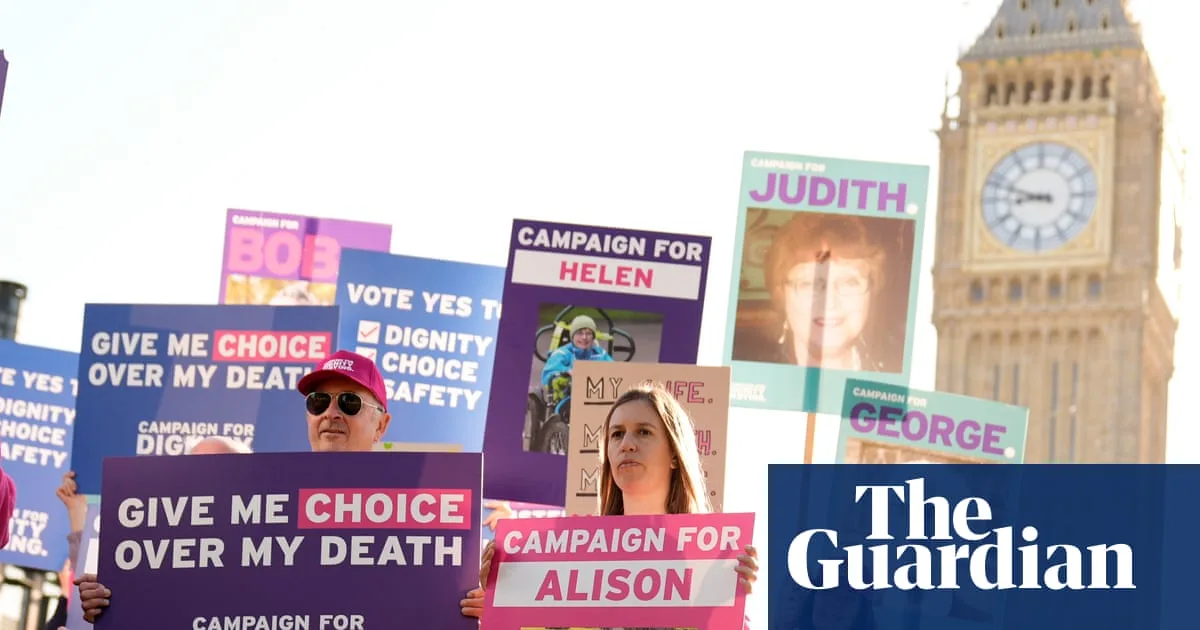
Assisted Dying Supporters Weigh Rare Parliamentary Tactic to Overcome Lords Block
Campaigners for assisted dying legislation are contemplating an extraordinary parliamentary manoeuvre to circumvent opposition in the House of Lords, with the potential invocation of the Parliament Act to ensure their Bill becomes law. This dramatic step could be triggered if the Terminally Ill Adults (End of Life) Bill fails to gain approval from peers before the King's Speech scheduled for May.
Legislative Scrutiny Amidst Accusations of Filibustering
The proposed legislation, which secured backing in the House of Commons last year, is presently undergoing detailed examination in the upper chamber. However, with the parliamentary clock ticking down, advocates of the measure have levelled accusations of filibustering against certain Lords opponents. They point to the unprecedented tabling of more than 1,000 amendments to the private member's Bill as evidence of deliberate obstruction.
Critics of the Bill counter that they are merely fulfilling their constitutional duty, arguing that the legislation in its current iteration is not sufficiently safe and requires substantial strengthening to protect vulnerable individuals.
Sponsor's Warning and Exploration of Options
Former justice secretary Lord Charlie Falconer, who is steering the Bill through the Lords, issued a stark warning on Thursday. "If opponents think this issue will just go away if it's talked out in the Lords then they are wrong," he stated emphatically.
Lord Falconer revealed that, in collaboration with Kim Leadbeater MP who introduced the Bill in the Commons, he has sought expert advice on potential pathways forward. "It is clear to me that, while we would strongly urge the Lords to come to a conclusion while there is still time, the Parliament Act is an option," he explained. "One way or another, Parliament has to come to a decision on this. The elected chamber has voted for it. By a very large margin, the public support it."
He further emphasised the human dimension, adding: "And thousands of families with personal experience of the cruelty and injustice of the current law are depending on Parliament to deliver on the promise to legislate."
The Parliament Act: A Rare but Precedented 'Nuclear Option'
Supporters express confidence that the Parliament Act would be applicable should the Bill be presented for a second time. This legislative mechanism permits Bills that have been approved by the Commons in two successive parliamentary sessions, but rejected by the Lords, to pass into law without requiring the consent of peers.
Proponents of the assisted dying legislation note there are historical precedents for deploying the Act concerning matters of conscience. To date, only seven Bills have been enacted using the powers under section 2 of the Parliament Act, a notable example being the Hunting Act of 2004.
Fierce Opposition and Warnings of Consequences
A source aligned with Labour MPs and peers who oppose the Bill characterised threats to utilise the Parliament Act as "the act of a bully who knows they are losing the argument on the substance."
They condemned the proposed legislation as "dangerously flawed" and asserted it would "hurt vulnerable people." "Nearly all the professional and expert groups consulted on this have raised massive concerns about danger it poses to vulnerable people, none will say it is safe," the source contended. "MPs who passed this Bill in the Commons knew this, with many asking the Lords to fix the problems."
The source issued a grave warning: "People need to be very clear, using the Parliament Act to force this through would mean that none of the known issues with the Bill would be fixed. Every MP who voted to force it though would bear responsibility for the inevitable suffering and deaths of vulnerable people."
The stage is now set for a high-stakes constitutional and ethical confrontation as the deadline for the King's Speech approaches, with the future of assisted dying legislation hanging in the balance.




