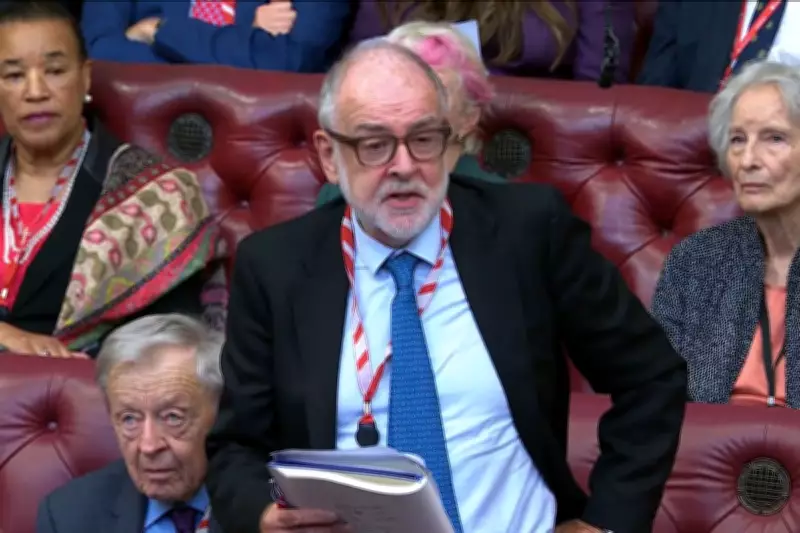
Assisted Dying Bill Faces Parliamentary Showdown as Falconer Urges End to 'Smoke and Mirrors'
A prominent supporter of legalising assisted dying has called on opponents to cease what he describes as parliamentary "smoke and mirrors" tactics, as the contentious legislation faces a critical juncture in the House of Lords. Former justice secretary Lord Charlie Falconer, who is sponsoring the Terminally Ill Adults (End of Life) Bill, has accused a minority of peers of deliberately obstructing progress through procedural delays rather than engaging substantively with the proposed law.
Parliamentary Impasse and the Nuclear Option
The Bill, which was approved by the House of Commons in June, has encountered unprecedented scrutiny in the upper chamber, with peers tabling more than 1,000 amendments – a record number for a private member's Bill. With the current parliamentary session due to conclude before the King's Speech in May, supporters are now openly discussing the potential use of the rarely-invoked Parliament Act to bypass Lords opposition.
This legislative mechanism allows Bills that have been approved by the Commons in two successive sessions, but rejected by the Lords, to pass into law without peers' consent. Only seven Bills have previously been enacted using these powers, most notably the Hunting Act 2004. Supporters argue there are clear precedents for using the Act on matters of conscience.

Falconer's Direct Challenge to Opponents
Lord Falconer has made a direct appeal to his parliamentary colleagues, stating: "The constitution says if the Commons passes something, and the Lords block it – which is what's happening – then the way the Commons, who are elected, get their way is if they pass it again, second time in the same form, then it gets through without the Lords."
He continued with a pointed message: "'Don't do that', I'm saying to the Lords. If you want to make changes to make it better, start engaging with the detail. The majority of peers are trying to do that."
The former justice secretary has written to fellow peers outlining specific areas where he intends to propose amendments to strengthen the legislation. These include tightening protections for individuals with eating disorders, clarifying how advertising bans for assisted dying services would operate, ensuring medical practitioners must explicitly opt-in to participate, and enhancing safeguards for young adults aged 18-25.
Opposition Voices Raise Serious Concerns
Critics maintain they are fulfilling their constitutional duty to scrutinise legislation they consider fundamentally unsafe. Nikki da Costa, former director of legislative affairs for two prime ministers and a vocal opponent of the Bill, highlighted that the legislation has prompted significant professional concern.
"This Bill managed to provoke two royal colleges – psychiatrists and physicians – from four years of neutrality to saying that this Bill, while they're neutral on principle, that this Bill is unsafe," da Costa stated. "This Bill is dangerous for the vulnerable and people will be failed. So, you've got a situation where Lord Falconer wants the Lords as a scrutinising chamber to stop doing the work and just wave it through."
Threat of Constitutional Confrontation
A source close to Labour MPs and peers opposed to the legislation described threats to invoke the Parliament Act as "the act of a bully who knows they are losing the argument on the substance." The source warned: "Nearly all the professional and expert groups consulted on this have raised massive concerns about the danger it poses to vulnerable people, none will say it is safe."
They added a stark warning about potential consequences: "People need to be very clear, using the Parliament Act to force this through would mean that none of the known issues with the Bill would be fixed. Every MP who voted to force it through would bear responsibility for the inevitable suffering and deaths of vulnerable people."

Search for Parliamentary Resolution
Lord Falconer has rejected characterisations of the Bill as fundamentally defective, though he acknowledges room for improvement. "If there are defects in this Bill, and I accept it can be improved but I don't think it's a defective Bill, then make the changes," he argued. "If I resist the changes, then vote them through. The Lords is a sensible place. What the Lords does well is look at things and change them if they're wrong."
With the parliamentary clock ticking toward the session's conclusion, the assisted dying debate has escalated into a constitutional confrontation between the elected Commons and the scrutinising Lords. The coming weeks will determine whether compromise can be reached through detailed amendment or whether supporters will resort to the parliamentary nuclear option to enact this deeply divisive legislation.