Andy Burnham's Westminster Ambitions: Could the 'King of the North' Return to Lead Labour?
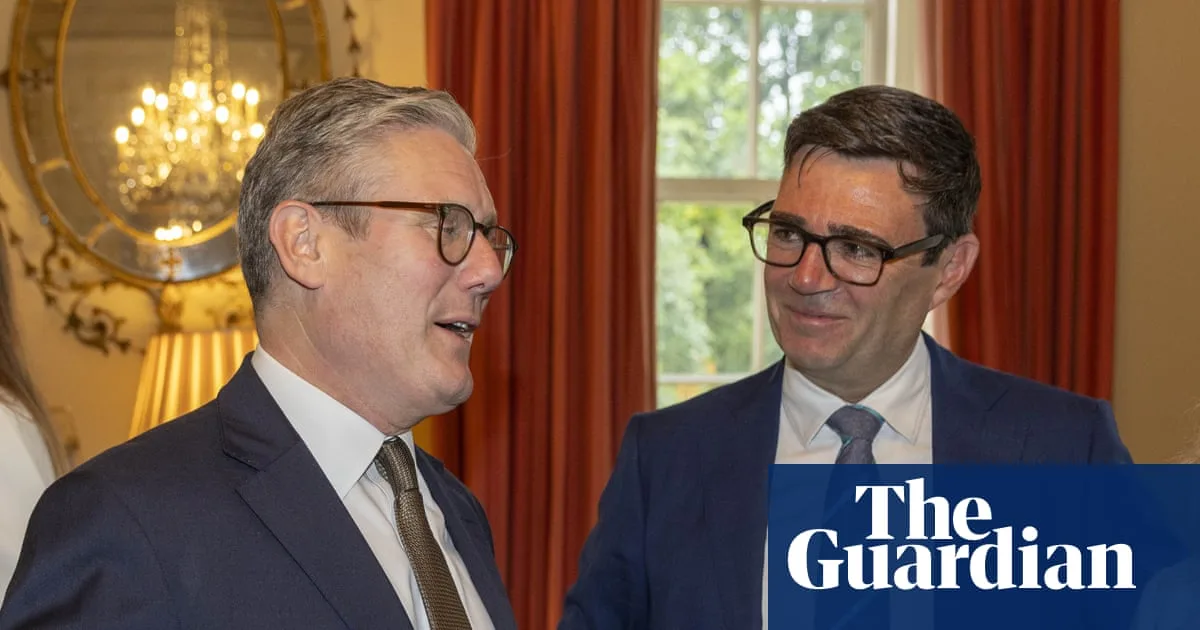
With Sir Keir Starmer's Labour Party facing dismal poll ratings and the growing threat from Reform UK, political attention has turned northwards to Greater Manchester Mayor Andy Burnham. The upcoming by-election in the traditionally safe Labour seat of Gorton has reignited speculation that Burnham might make a dramatic return to Westminster, potentially positioning himself as the party's saviour in troubled times.
The Mayoral Path to Power
History shows that city mayors can ascend to national leadership, with notable examples including three US presidents and European leaders like Willy Brandt and Jacques Chirac. In Britain, Boris Johnson famously used his London mayoralty as a springboard to the premiership. The question now is whether Andy Burnham can replicate this journey from Manchester's Tootal Building to 10 Downing Street.
Burnham, who served as a minister under both Tony Blair and Gordon Brown before reinventing himself as Manchester's mayor, has already come close to the Labour leadership twice. Now dubbed the "King of the North" with approval ratings that marginally outperform his party nationally, he finds himself in a potentially pivotal position as Labour faces what some describe as "the Tory disease" - the belief that changing leaders can solve all problems.
A History of Near Misses
Burnham's leadership ambitions have followed a pattern of promising starts followed by disappointing conclusions. In 2015, he was the favourite to succeed Ed Miliband until Jeremy Corbyn's surprise inclusion on the ballot transformed the contest. Burnham ultimately received just 19% of the vote compared to Corbyn's 59%. His earlier 2010 leadership bid after Gordon Brown's resignation yielded an even more modest 9%.
These defeats revealed what colleagues describe as Burnham's unusual combination of personal sensitivity and extraordinary resilience. As he later reflected: "It's hard – especially being the frontrunner – but nothing is a given in politics. The defeat was bruising; leadership elections always are. Getting rejected by people you know was tough, but it epitomised the shallowness of Westminster."
The Manchester Transformation
Since becoming Greater Manchester's first elected mayor in 2017, Burnham has undergone a remarkable transformation. Shedding his New Labour image, he has reinvented himself as a distinctly Mancunian figure - smart-casual in appearance, emotionally authentic in his speeches, and fiercely protective of northern interests.
His passionate advocacy during the pandemic, particularly his clashes with Boris Johnson over regional lockdowns and funding, elevated his national profile. He has skilfully positioned himself as the voice of "people too often forgotten by those in power" while building cross-party regional alliances against Westminster.
The Current Political Landscape
Despite Starmer's recent difficulties, Burnham faces significant challenges in any leadership bid. He has carefully avoided ruling out a return to national politics while equally refusing to be drawn on specific ambitions. His political platform remains somewhat vague, centred on what he terms "Manchesterism" - a soft-left agenda that has yet to capture the national imagination.
Furthermore, while Burnham enjoys popularity in the North, there's little evidence he would fare better than Starmer against Nigel Farage's Reform UK, particularly in former "red wall" constituencies. As one observer noted: "Starmer is weak, but his enemies are divided. For the prime minister, that will do."
Building a Support Network
Burnham has been quietly constructing his political infrastructure through Mainstream, a grouping for "radical realists" that functions as both think tank and potential leadership campaign vehicle. He also played a significant role in Lucy Powell's successful deputy leadership campaign, demonstrating his continued influence within party structures.
Yet questions remain about whether Burnham represents a genuine alternative to Starmer's policies. As one critic asked: "How would he fix the public finances? Make the economy grow faster? Reform social security? Stop the boats? Placate Trump?" These are the substantial policy challenges any potential Labour leader must address.
The Northern Identity
Burnham has embraced his northern identity with professional dedication, though he stops short of the geographical claims made by some colleagues. Born in Aintree to a Protestant mother and Catholic father who bonded over Everton football club, Burnham represents an older Labour tradition - working-class, often with Irish Catholic roots, and socially conservative in instinct.
His political heroes include the late Paul Goggins and David Blunkett, placing him at some distance from the metropolitan liberalism of Corbyn and Starmer. This positioning could prove either an asset or liability in a party increasingly divided between its urban and traditional heartlands.
The Road Ahead
At 55, Burnham is younger than both Starmer and Farage, with what supporters describe as an "authentic" appeal that resonates beyond political bubbles. His escape from Westminster during Labour's Corbynite years may have spared him the party's internal traumas, while his Manchester mayoralty has provided valuable executive experience.
The Gorton by-election presents a clear opportunity for Burnham's return to Parliament. Should he succeed, he would immediately become a significant figure in any future leadership contest. However, as with his previous attempts, success is far from guaranteed. Burnham remains, in many ways, Labour's perennial "nearly man" - always in contention, never quite crossing the finish line first.
As political tensions rise and Starmer's position appears increasingly precarious, all eyes turn to Manchester. Whether Burnham chooses to make his move, and whether the Labour Party is ready to embrace its northern champion, remains one of British politics' most compelling unanswered questions.