Andy Burnham's Political Crossroads: From Manchester Mayor to Potential Prime Minister
With Sir Keir Starmer facing mounting pressure amid dismal polling figures, Labour finds itself at a critical juncture. The growing threat from Reform UK has intensified internal discussions about leadership alternatives, placing Greater Manchester Mayor Andy Burnham firmly in the spotlight. As a safe Labour seat becomes available in his northern stronghold, speculation about Burnham's Westminster ambitions has reached fever pitch.
The Mayoral Pathway to Power
History provides intriguing precedents for municipal leaders ascending to national leadership. Across the Atlantic, three American presidents – Andrew Johnson, Grover Cleveland, and Calvin Coolidge – transitioned from city governance to the White House. In Europe, notable examples include West Berlin's Willy Brandt becoming German Chancellor and Paris Mayor Jacques Chirac rising to the French presidency. Closer to home, Boris Johnson honed his populist credentials as London Mayor before reaching 10 Downing Street.
The upcoming by-election in Gorton, traditionally a Labour stronghold within Burnham's northern domain, presents a tangible opportunity for the mayor to emulate Johnson's trajectory. Burnham's political journey has been remarkable: a minister under Blair and Brown, twice-defeated leadership contender, and now the reborn "King of the North" enjoying stronger regional approval ratings than his party commands nationally.

Leadership Speculation and Political Calculations
For much of Starmer's previously unassailable tenure, Burnham's leadership prospects seemed laughable. However, last autumn's party conference revealed Labour catching what might be termed "the Tory disease" – the dangerous delusion that changing leaders solves fundamental problems. Burnham, having spent most of the past decade away from Westminster's corridors, emerged as the closest approximation to a fresh start.
Yet his response to mounting speculation proved characteristically ambiguous. Burnham wilted under intense media scrutiny, repeatedly failing to definitively rule out leadership ambitions. This hesitation reflects his complex position: torn between residual honesty, undeniable ambition (having contested the leadership twice before), and genuine uncertainty about timing.
The Manchesterism Agenda and Political Identity
Burnham's political philosophy remains somewhat nebulous, encapsulated in the amorphous term "Manchesterism." This vague "soft left" agenda has failed to capture widespread imagination, despite Lucy Powell's deputy leadership victory confirming membership preference for a leftward tilt. Burnham's ideological flexibility is evident throughout his career – from New Labour rising star to Corbyn's shadow home secretary, and now as Manchester's champion.
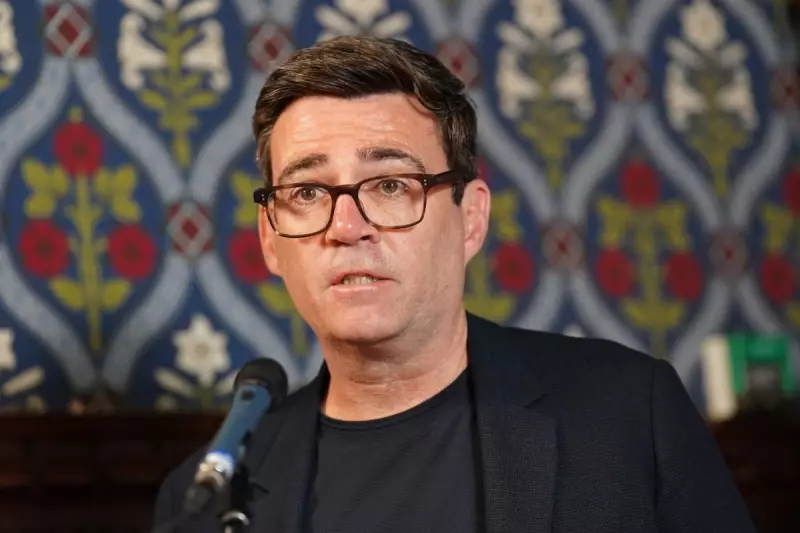
His transformation extends beyond politics. Once described by Alastair Campbell as needing "decent suits," Burnham has reinvented himself as a hip Mancunian figure – smart-casual attire, fashionable spectacles, and a neatly bifurcated monobrow replacing his Westminster business wear. This reinvention complements his impassioned, authentic speaking style that contrasts sharply with New Labour's former automatons.
Northern Champion or National Contender?
Burnham has skillfully positioned himself as the North's defender, declaring that Northern citizens won't be "treated as the canaries in the coal mine" for experimental policies. His broad, if fragile, cross-party regional front against government has elevated his national profile. Only London Mayor Sadiq Khan rivals his mastery of territorial politics within the United Kingdom's fragmented landscape.
Yet significant challenges remain. Burnham was sidelined as Johnson demolished the red wall in 2019, and there's no clear evidence he could withstand a similar assault from Nigel Farage's Reform UK. His understanding of populism exceeds his execution, though his careful references to "people too often forgotten by those in power" demonstrate political sensitivity.

Political Resilience and Future Prospects
Burnham's resilience is extraordinary given his political setbacks. His 2015 leadership defeat to Jeremy Corbyn (19% to 59%) followed an earlier 2010 contest where he garnered just 9% support. These experiences bred disillusionment with Westminster's "shallowness" and "fickleness," yet failed to extinguish his ambition.
At 55, Burnham is younger than both Starmer and Farage, sharing the latter's "authentic" appeal while maintaining stronger Labour credentials. His professional political background – parliamentary researcher, special adviser, minister – contrasts with his cultivated "professional northerner" persona. This duality has served him well in Manchester, where he has championed integrated transport, fought homelessness, and secured justice for Hillsborough victims.
The fundamental question remains: would Burnham govern more effectively than Starmer? Concrete policy alternatives on public finances, economic growth, social security reform, immigration, or international relations remain undefined. Burnham's strength lies in his symbolic representation of Northern interests and his distance from Westminster's recent failures, but translating this into a compelling national platform presents formidable challenges.
As Labour confronts its electoral dilemmas, Burnham stands at a crossroads. His return to Parliament appears increasingly plausible, but whether this represents his "final throw of the dice" or the beginning of genuine premiership prospects remains uncertain. The coming months will determine if the "King of the North" can transform regional popularity into national leadership, or if he remains Labour's perennial "nearly man."