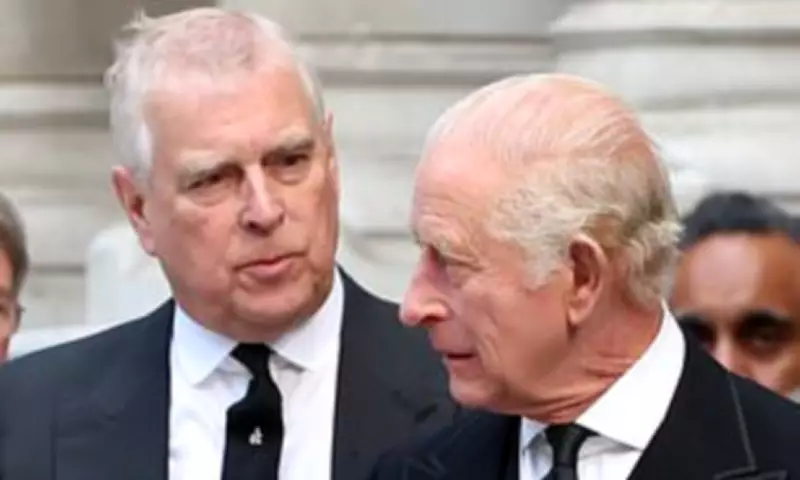
Royal Crisis Deepens as Andrew's Arrest Sparks Constitutional Concerns
The monarchy has been thrust into its most severe crisis in a generation, arguably the most tumultuous since the Abdication of 1936. Prince Andrew has left an indelible stain on his brother's reign and the memory of their mother, Queen Elizabeth II. Despite his banishment to internal exile in Norfolk, there has been no sign of contrition from the King's brother.
Sources close to the family reveal a shocking lack of remorse. "He has done nothing but complain since he got there," says a Norfolk insider. "It's extraordinary. He seemed more concerned about where to keep his horses and park his car than the Epstein scandal. Given that the King is footing all his bills, you might expect some gratitude, but he's been very rude. He is in another world."
Arrest and Its Aftermath
This attitude persisted right up to Andrew's arrest on Thursday on suspicion of misconduct in public office. The image of a Counsellor of State in handcuffs, as police searched two royal residences, was astonishing. Whether his 11-hour stint in a Norfolk police station has brought a reality check remains uncertain, but expectations are low.

Some have questioned the timing of the arrest, which coincided with Andrew's 66th birthday—typically a time for retirement and leisure. Instead, the golf-enthusiast, now referred to as "AMW" by Palace staff, faces a starkly different future. Comparisons have been drawn to the police search of Lord Mandelson's home without an arrest, raising eyebrows.
The source adds, "If anyone is tempted to feel sorry for Andrew, then don't." Even if the investigation yields nothing, Andrew's lack of remorse for the damage inflicted on the monarchy and his family ensures that the King is not finished with him.
Public Opinion and Royal Response
A recent YouGov poll shows the public emphatically believes the King must cast Andrew further into obscurity. The King is expected to act, with at least three options on the table, though timing and method require careful consideration.
Andrew's fall from Duke and Prince to plain "Mr" has been a boon for republicans. A 15-year saga rooted in sexual abuse accusations has evolved into a financial scandal, elevating it to a full-blown crisis. While this has caused serious reputational damage, it is not yet an existential threat to the monarchy.
Recalling the dramas of the 1990s—divorces, tax rows, the Windsor fire, Panorama, and the tragedy of Diana—these were worse as they touched the direct line of succession. This current crisis is not constitutional, but it has the potential to become one.
Constitutional Implications
The King is acutely aware of this risk. He has already taken decisive action, stripping Andrew of his dukedom, princely birthright, honours, and house four months ago, prompted by revelations about his lies regarding Jeffrey Epstein. The King emphasized his thoughts were with victims of sexual abuse, a cause championed by Queen Camilla.
However, as fresh revelations emerge, calls for more "action from the King" have mounted. This confuses the role of royalty with that of politicians. Monarchs do not offer running commentaries; their function is to ensure continuity, not effect change like politicians.
Expecting the King to address the nation in anger is unrealistic and potentially harmful. As the "fount of justice," he must avoid interfering with legal processes. His statement after Andrew's arrest made it clear his brother would face the full weight of the law. A royal broadcast could compromise investigations, risking case collapse similar to the Paul Burrell incident.
Succession and Legislative Changes
One key option is amending the line of succession. Andrew is currently eighth in line, a remote prospect barring catastrophe, but his presence on the list brings disrepute. Removing him requires legislation, possibly via a short Bill or amendment to the Succession to the Crown Act 2013, with Parliament's support indicated.
This change would also need consent from all the King's realms, from Canada to Tuvalu. The 2013 Act followed a Commonwealth summit consensus, suggesting a similar process could be straightforward if there's agreement—no realm would want Andrew as a potential monarch.

Constitutional expert Dr David Torrance notes this would conveniently remove Andrew's position as a Counsellor of State, a role he holds due to his place in succession. While other suitable Counsellors exist, such as the Prince of Wales, his inclusion is a sore point.
Ongoing Privileges and Political Pressure
Andrew still holds the title Duke of York until Parliament legislates it away. Previously, Palace arguments deemed such changes a waste of parliamentary time, but current public mood suggests MPs would relish the opportunity.
A Commons select committee is already investigating Andrew's lease on Royal Lodge. Other committees may examine his trade envoy role or police protection costs. With a potential Labour majority and republican-leaning backbenchers, conventions against "casting reflections" on the Royal Family could be challenged, risking a constitutional crisis.
The King and Prime Minister aim to avoid this, with firm measures ready once the current business resolves.
Family Dynamics and Future Steps
Questions are arising about why Andrew's daughters, Princesses Beatrice and Eugenie, have royal residences at St James's and Kensington Palaces as private citizens. Both pay rent, and the King is fond of his nieces, believing the sins of the father should not affect them.
However, as recipients of Epstein's largesse, they may face public scrutiny. Proactively stepping back, such as downsizing their royal pads, could reduce heat. The Princess Royal's children have no titles, and the Duke and Duchess of Edinburgh have rejected HRH status for theirs, setting precedents.
The late Queen often quoted from The Leopard: "If we want things to stay as they are, things will have to change." This advice is sound for the House of York's surviving members, but for their parents, it is far too late.