
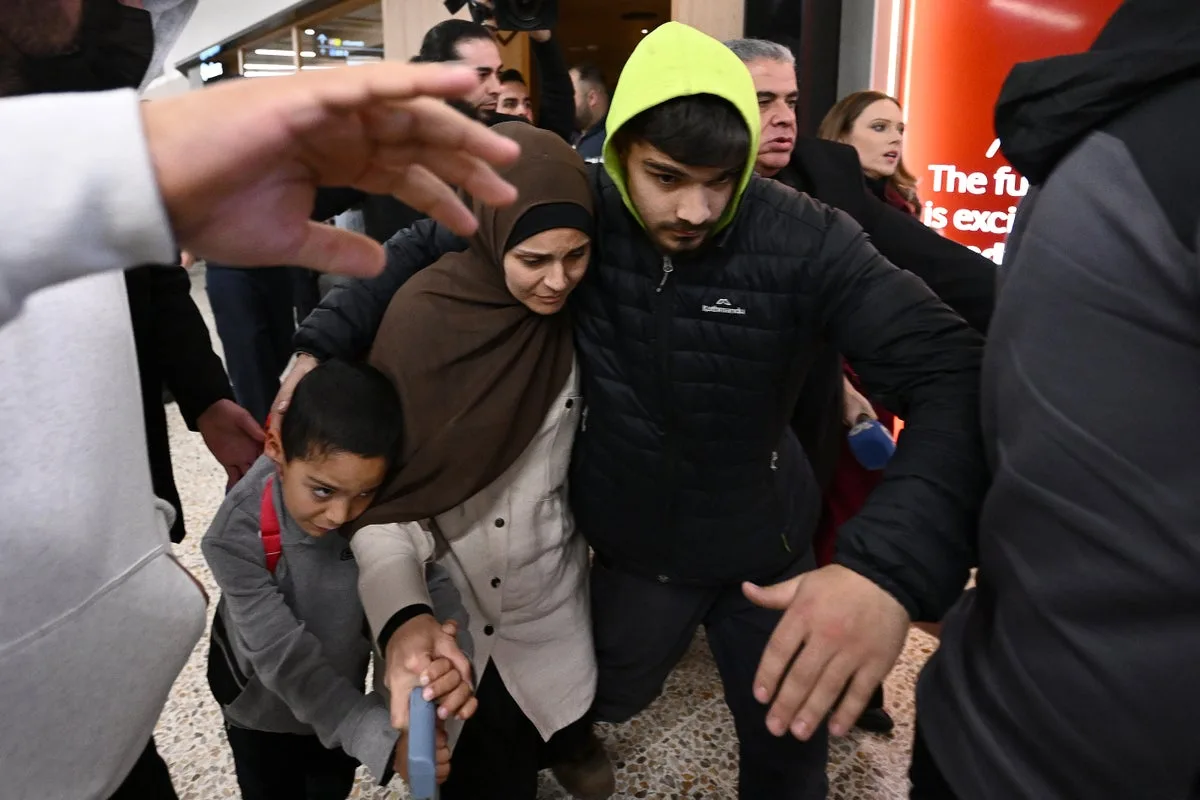
A group of 19 Australian women and children with links to the Islamic State (Isis) group have booked flights to return from Syria, and some could face charges, the Australian government confirmed on Tuesday. The cohort comprises seven women and 12 children, expected to arrive in Sydney and Melbourne on Tuesday, just three weeks after a similar group of 13 people returned to the country.
Home Minister Tony Burke stated that any of the 19 individuals could “expect to face the full force of the law” if they had committed crimes. “The government has not and will not provide any assistance to this group,” he said, describing them as people who made “the horrific choice to join a dangerous terrorist organisation and to place their children in an unspeakable situation.”
Australian law-enforcement and intelligence agencies have been preparing for their return since 2014, with long-standing plans in place to manage and monitor them. Mr Burke emphasised that the government’s priority is the safety of the Australian community. After this group’s departure, at least two Australians will remain in the Roj camp in northeast Syria, where individuals linked to Isis have been detained since the group’s defeat in 2019.
Earlier this month, three of four women from a previous repatriation flight were charged with slavery and terrorism offences and jailed. Among them, Kawsar Ahmed, 53, and her daughter Zeinab Ahmed, 31, were arrested in Melbourne over allegations that their family had bought a female Yazidi slave. Janai Safar, 32, was arrested in Sydney on charges of being a member of a terrorist organisation and entering or remaining in a region controlled by a terrorist group.
Australia has repatriated its citizens from Syrian detention camps on two previous occasions, while others have returned quietly without government assistance. A mother prevented from returning in February by a temporary exclusion order was not travelling with this latest group; such orders, created under laws introduced in 2019, can prevent high-risk citizens from returning for up to two years.




