Violent Clashes Erupt in Tirana as Anti-Government Protests Intensify
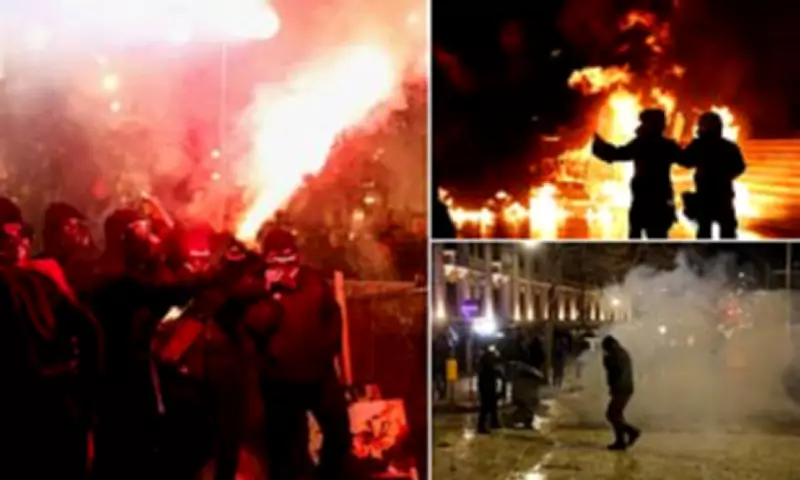
Central Tirana descended into chaos on Tuesday night as riot police confronted thousands of opposition supporters with tear gas and water cannons during a demonstration demanding the resignation of Albania's government. The protest, marked by violent exchanges, saw demonstrators hurling Molotov cocktails and flares at security forces, leading to significant injuries and multiple arrests.
Casualties and Arrests Following Confrontation
Police authorities confirmed that sixteen protesters required hospital treatment for burns and various other injuries sustained during the clashes. Additionally, thirteen individuals were arrested in connection with the unrest. The demonstration, which drew a massive crowd to the Albanian capital, represents the third major protest in recent months calling for Prime Minister Edi Rama to step down from power.
Corruption Allegations Fuel Public Anger
The protests have been triggered by mounting corruption allegations involving Deputy Prime Minister Belinda Balluku, who also serves as Minister for Energy and Infrastructure. Anti-corruption prosecutors have accused Balluku of interfering in public procurement processes for construction projects to favour specific companies. They have formally called for her parliamentary immunity to be lifted, a move that requires a vote by lawmakers.

Prime Minister Edi Rama has faced intense pressure to dismiss Balluku but has so far resisted these calls. The government's handling of the corruption scandal has galvanised opposition groups, who argue that the administration is undermining the justice system.
Security Measures and Historical Context
In anticipation of the protest, authorities deployed more than 1,300 police officers to maintain security in Tirana. Previous demonstrations have similarly turned violent, with protesters targeting police and government buildings with rocks and incendiary devices, prompting law enforcement to respond with tear gas and water cannons.
Political Figures and Analyst Perspectives
Opposition Democratic Party leader Sali Berisha, a former prime minister who has himself faced corruption charges, addressed the crowd and described the event as a 'peaceful uprising' at a critical juncture for Albania. Berisha accused Prime Minister Rama of 'declaring war on the justice system,' reflecting deep-seated political divisions.
Political analyst Mentor Kikia offered a sobering assessment, suggesting that major political change is unlikely to result from the protests. He noted that citizens are distrustful, having historically voted for the 'lesser evil' to remove the 'greater evil' from power. Kikia observed, 'The current perception is that if Rama leaves, Berisha will return. One left power because of corruption, the other must also leave power because of corruption.'
Broader Implications for Albania's EU Aspirations
Albania's political turmoil occurs against the backdrop of its ambition to join the European Union. The country is under close monitoring by the bloc as part of its accession process, with hopes to complete membership by 2027. However, international watchdogs consistently report that Albania continues to suffer from widespread corruption, posing a significant obstacle to its European integration goals.
The ongoing protests highlight the persistent challenges facing Albania's political landscape, where allegations of corruption and governance issues remain central to public discourse and international scrutiny.