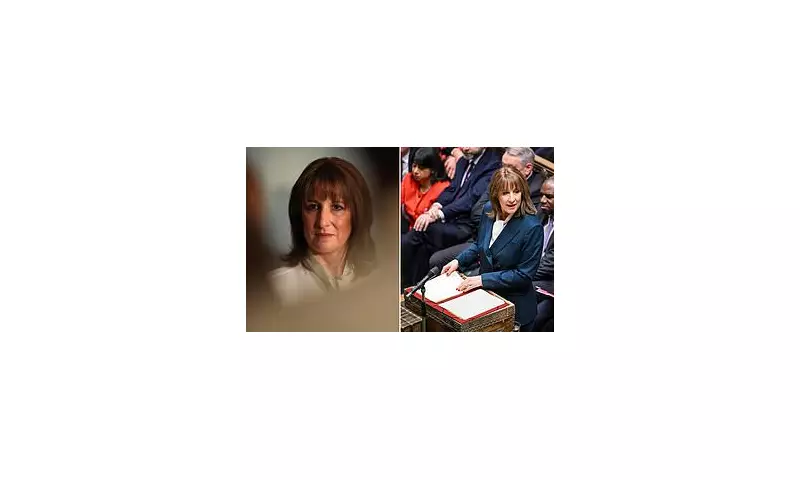
Chancellor Rachel Reeves is fighting for her political survival amid allegations she deliberately misled the public, financial markets and Parliament over a £26 billion budget black hole that threatens to end her career and potentially land her in jail.
The Budget Deception Unravels
The crisis began on September 17 when the Office for Budget Responsibility delivered unexpectedly positive news to the Treasury. The OBR informed Reeves that the £20 billion budget shortfall she believed Britain faced had dramatically shrunk to just £2.5 billion, thanks to improvements in real wages and inflation.
Despite this optimistic forecast, Reeves delivered a chilling analysis of the nation's finances on November 4, claiming she needed to 'deal with the world as we find it.' Her aides immediately briefed that income tax rises were inevitable, causing panic among Labour backbenchers and voters.

Market Chaos and Secret Briefings
When Reeves abruptly reversed the tax decision after facing internal rebellion, government bond yields soared as markets reacted to her apparent loss of nerve. At this critical moment, a Treasury insider contacted Bloomberg journalist Alex Wickham to reveal the confidential OBR forecast, insisting the tax U-turn was an economic rather than political decision.
This unauthorized disclosure of sensitive market data represents a potential criminal offence, with Financial Conduct Authority rules stating that market manipulation can carry custodial sentences of up to ten years and unlimited fines.
A Pattern of Deception
Reeves faces accusations of multiple lies, having repeatedly promised during the election campaign and in last year's Budget that she would not raise taxes on working people. She specifically stated: 'I have come to the conclusion that extending the threshold freeze would hurt working people' and 'I'm not coming back with more borrowing or more taxes.'
Yet she subsequently extended the tax threshold freeze, implementing precisely the measure she had condemned. Shadow Chancellor Mel Stride has now written to FCA head Nikhil Rathi demanding an investigation into potential market manipulation.
Historical Knowledge and Political Motives
Reeves cannot claim ignorance of market regulations. In 2005, while working at the Bank of England, she authored a paper titled 'Do financial markets react to Bank of England communication?' where she noted that 'transparency is not always good' and acknowledged that speeches can sometimes materially influence market prices.
Labour MPs are questioning her motives, with some suggesting she was building a 'war chest' of fiscal headroom to fund pre-election tax cuts, effectively using taxpayers' own money to buy votes. As one minister remarked: 'This fiscal headroom line is rubbish. What she wants is a huge reserve she can splash on tax cuts in the run-up to polling day.'
The Chancellor now faces an impossible choice - if she admits authorising the sensitive briefing, she faces condemnation, but if she denies involvement, she confirms an unauthorized leak occurred, triggering a full investigation. With criminal sanctions potentially including prison time, Rachel Reeves may lose not just her job but her liberty.