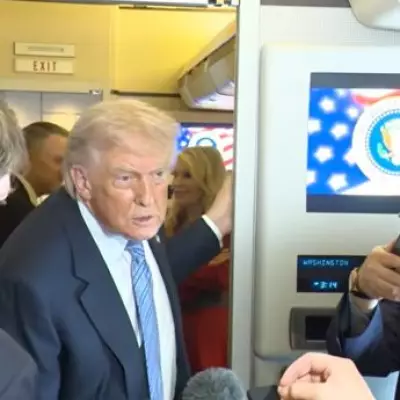
The first weeks of 2026 have plunged the United States into a profound constitutional and political crisis. President Donald Trump's actions since his return to office, including the invasion of Venezuela and threats against Greenland and Colombia, have moved speculation about his removal from the fringes to the centre of political discourse.
The Unprecedented Presidency
Trump's second term has been marked by a series of radical departures from precedent. In the initial fifteen days of 2026, he has not only initiated military action abroad but also openly defied international law, smeared victims of state violence, and threatened to deploy the military against domestic protests.
This follows a first year back in power characterised by rolling out the red carpet for Vladimir Putin, deporting individuals to foreign detention facilities, attempting to rewrite the history of the January 6th Capitol attack, and repeated efforts to manipulate the 2026 midterm elections. His musings about a potential third term and using war as a pretext to cancel future votes have shattered norms, forcing a serious examination of how his presidency might be constitutionally terminated before 2029.

The Constitutional Mechanisms for Removal
There are two primary legal avenues for removing a sitting president: impeachment and conviction, or invocation of the 25th Amendment. Both face immense political hurdles in the current climate.
The impeachment process begins in the House of Representatives, where a simple majority is needed to bring charges. Given the current composition of 218 Republicans to 213 Democrats, at least eight Republican representatives would need to rebel. Conviction, however, requires a two-thirds supermajority in the Senate. With 53 Republicans, 45 Democrats, and two independents, an unlikely 20 Republican senators would need to vote to convict—a monumental challenge given Trump's enduring grip on the party base.
The 25th Amendment presents another, even more complex path. Section 4 allows for the involuntary transfer of power if the Vice President and a majority of the cabinet declare the president unfit. They would notify the Speaker of the House and the President pro tempore of the Senate, making the Vice President the Acting President. However, Congress must then confirm this decision with a two-thirds vote in both chambers, recreating the same high bar as impeachment.
The Daunting Political and Succession Realities
Even if removal were achieved, it would not trigger a new election. Power would transfer down the line of succession: first to Vice President JD Vance, then to Speaker Mike Johnson, and then to Senate President pro tempore Chuck Grassley—all staunch Trump allies. This has led to extreme speculation within Democratic circles about the possibility of a dual impeachment of both Trump and Vance, should they regain the House in November. Such a move, however, would carry immense risk and be widely perceived as a political coup.
The integrity of the upcoming midterm elections is itself in question. Trump has already begun a controversial mid-decade redistricting effort in states like Texas, potentially securing five more House seats. He has also ordered a premature census that excludes undocumented people from apportionment counts and floated banning postal voting.
The most alarming scenario, now discussed openly, is the possibility that Trump may simply refuse to leave office if impeached, if the 25th Amendment is invoked, or when his term ends. His actions surrounding the 2020 election and the January 6th insurrection have established a precedent for rejecting legitimate political outcomes. The question then moves beyond constitutional procedure to whether state institutions, including the military, would enforce a removal order against a president commanding significant popular and militant support.
These are not normal times. The established mechanisms for presidential removal were designed for a political reality far removed from the current one. Their efficacy now depends less on legal text and more on the courage of politicians and the resilience of American democratic institutions under unprecedented strain.