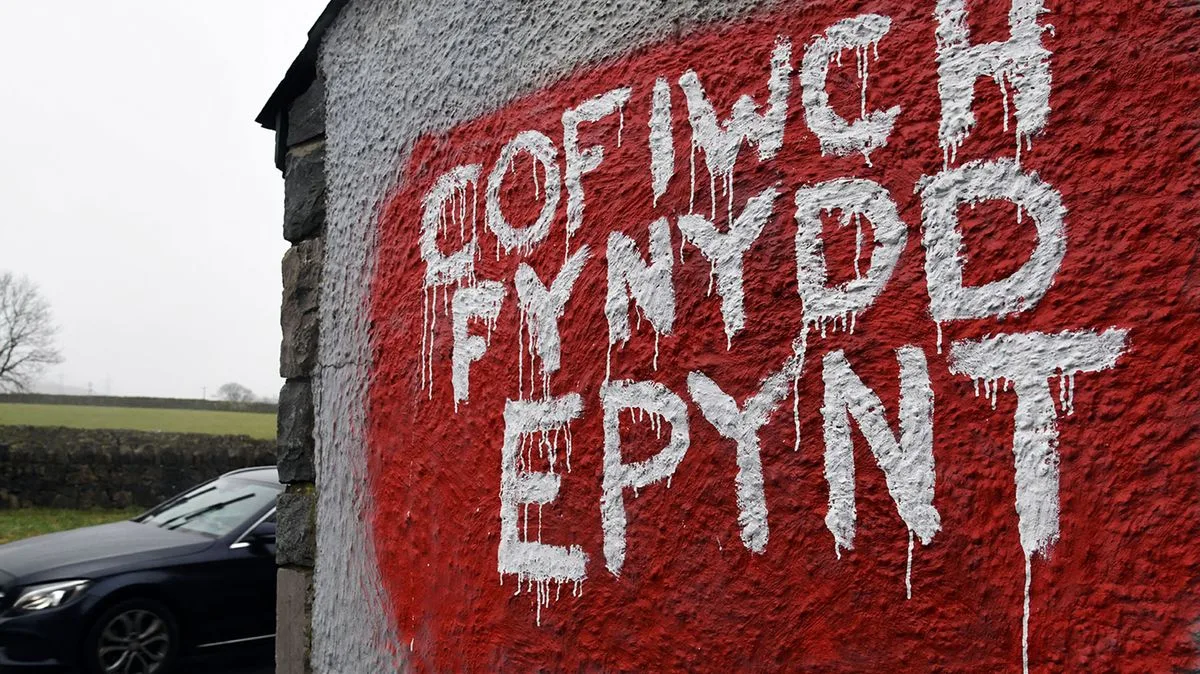
Nestled in the remote hills of mid Wales lies a silent, empty landscape where the echoes of a lost community still whisper on the wind. This is Mynydd Epynt, a 30,000-acre plateau that was once a bustling, close-knit village, home to over 200 people. Today, it is the Sennybridge Training Area, a live firing range for the British Army, and a poignant monument to a community erased by wartime necessity.
The Sudden Eviction of a Centuries-Old Community
In September 1939, shortly after the outbreak of the Second World War, an Army officer arrived to survey this secluded Welsh-speaking area. By Christmas, every one of the 54 farming families received a devastating notice. They were informed they had until the end of April 1940 to leave their ancestral homes forever.
The Ministry of Defence had compulsorily purchased the land, deeming it essential for military training. Residents were told their sacrifice was vital for the war effort and promised compensation. With bombs already falling on Britain, the War Office urgently required more space for artillery practice and manoeuvres.
For a brief period in early 1940, the community held hope their protests might succeed. However, as Nazi forces advanced across Europe, the government in London dismissed their heartfelt pleas. The order was final: they must find new homes, new land for their livestock, and a new future elsewhere.
A Heartbreaking Exodus and Broken Promises
The evacuation marked the brutal end of a way of life that had endured for generations. With few local alternatives, many families were forced to leave the area entirely. Some clung to the belief their exile would be temporary, that they would return when peace was declared.
One resident, Thomas Morgan, reportedly returned daily to light a fire in his hearth to protect the stonework until he could come home for good. His ritual ended only when two soldiers approached him with crushing news. "We've blown up the farmhouse. You won't need to come here anymore," they told him.
Bethan Price, a descendant, shared that her great-grandmother left the key in her front door, faithful she would return. Another woman was so distressed she insisted on taking her front door with her when she left. The community's chapel, Capel y Babell, held its final St David's Day service in March 1940. By June, the school and chapel were closed for good.
The Landscape of Loss: What Remains Today
On 1 July 1940, heavy artillery bombardment began on the empty homes. Elwyn Davies, who was ten at the time, recalled his grandmother securing a new home in Carmarthenshire only for her old house to be flattened a week later. "They flattened everything," he said.
Iowerth Paete, a curator, documented the exodus, remembering carts piled high with belongings and an elderly woman weeping in a chair outside the home she was forced to abandon.
Today, nearly all original buildings are gone. The Drovers Arms pub and the gravestones at Capel y Babell cemetery stand as rare, lonely sentinels. The land is still owned by the MoD and remains an active training ground. Ben Lake MP, grandson of the last baby born on Epynt, calls it "a significant but often overlooked chapter in the history of Wales."
Visiting a Ghost Town in a Live Firing Range
While public access is restricted, you can walk parts of the Epynt Way, where sheep roam artillery ranges and red kites soar above troops on exercise. Visitors are warned that the sound of the wind is punctuated by booming mortars. The advice is clear: if you see military debris, do not touch it.
The story of Epynt never gained the prominence of other Welsh displacements like Capel Celyn. Opposition at the time felt like undermining the war against Hitler. Now, 84 years on, the memory fades, much like the names on the weathered gravestones of the 19th-century chapel—the last physical testament to a community sacrificed for defence.




