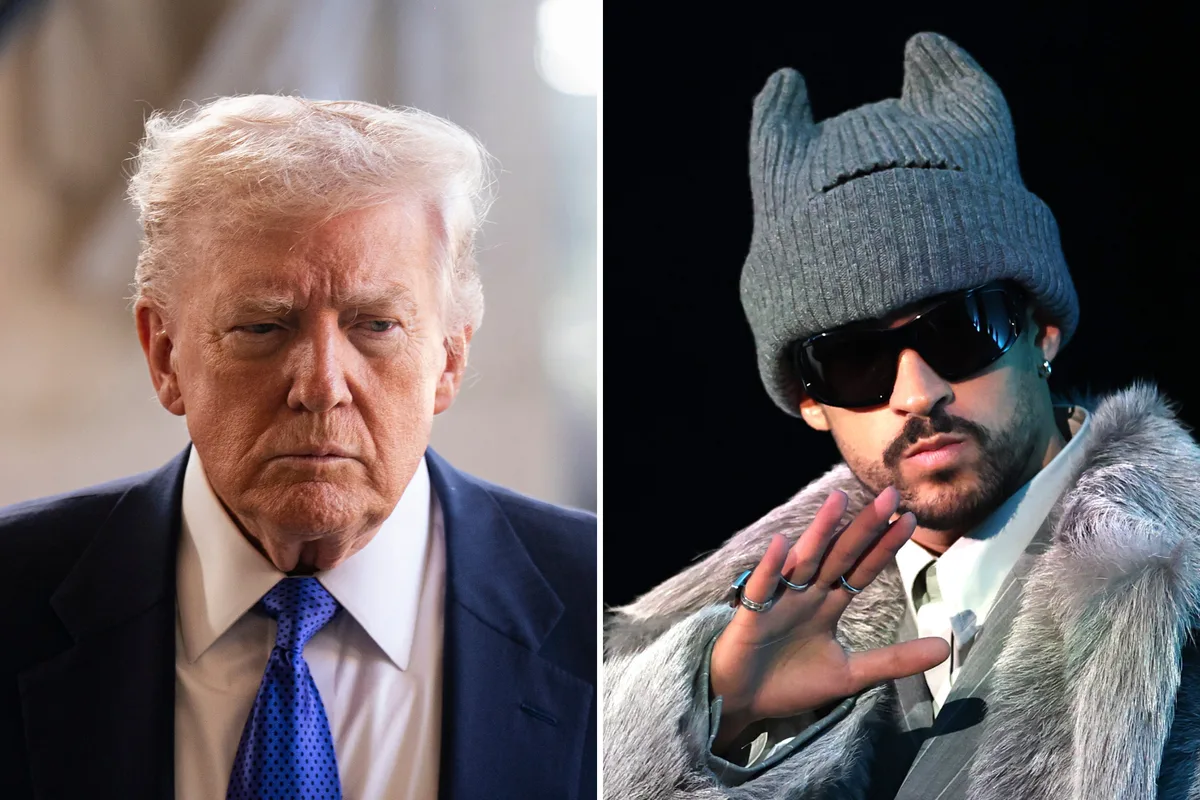
A new poll suggests that more Americans believe Puerto Rican artist Bad Bunny represents the United States better than President Donald Trump. Conducted by Yahoo/YouGov after the Super Bowl, the survey found that 42 percent of U.S. adults chose Bad Bunny, while 39 percent selected Trump.
The poll comes after Trump criticised Bad Bunny's Super Bowl halftime performance, calling it “one of the worst, EVER!” in a Truth Social post. The performance, watched by over 128 million people, made history as the first Super Bowl halftime show headlined primarily in Spanish.
Despite conservative backlash, 44 percent of respondents approved of the performance, compared to 35 percent who disapproved. The poll, which surveyed 1,700 Americans from February 9-12, revealed stark partisan divides: 78 percent of Democrats viewed Bad Bunny favourably, versus just 12 percent of Republicans.
Bad Bunny's set celebrated Latin American heritage, featuring scenes of Puerto Rican life, flags, and surprise guests including Lady Gaga and Ricky Martin. A message displayed during the show read: “The only thing more powerful than hate is love.”
Turning Point USA, a conservative group, organised an alternative “All-American Halftime Show” headlined by Kid Rock, which drew 6.1 million concurrent viewers on YouTube. Trump did not mention this event in his criticism of Bad Bunny's performance.