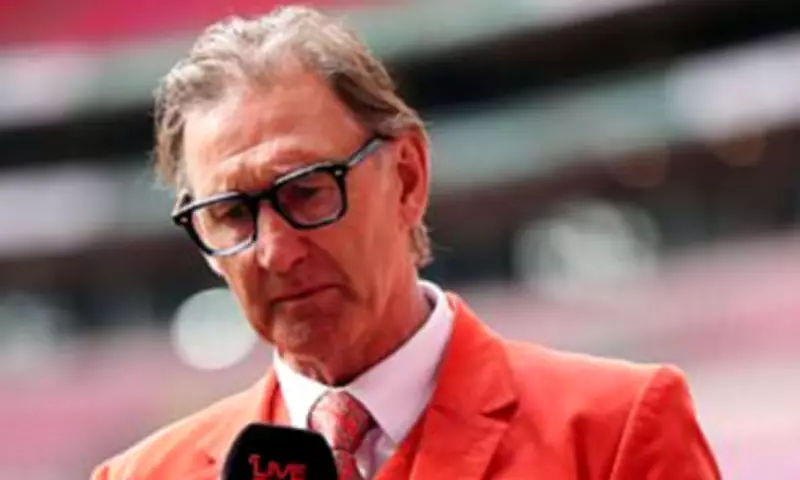
Tony Adams sits at the head of a table in a downstairs room of a Marylebone townhouse, dressed in a striking purple suit and crisp white shirt. The former Arsenal captain appears dapper, flamboyant, happy, and remarkably well. Approaching his 60th birthday later this year, Adams has made a conscious decision against a lavish celebration with former teammates and family. Instead, he plans an intimate evening with a dozen individuals who have supported his remarkable journey to recovery from alcoholism.
A Dual Anniversary of Transformation
This year marks not only Adams' 60th birthday but also a profoundly significant personal milestone. On August 16th, he will celebrate 30 years of sobriety, three decades since publicly announcing his alcoholism following a devastating 44-day drinking binge after England's Euro 96 elimination. Adams speaks with unflinching honesty about the destruction his addiction wrought upon his body and life. "I'm really proud that I've not pissed the bed for 30 years, guys," he states emphatically. "I'm incredibly proud."
Commemorating Recovery Through Literature
The legendary defender, who captained Arsenal under both George Graham and Arsène Wenger and led England during Euro 96 under Terry Venables, has released a new book titled '1996' to commemorate this anniversary. Co-written with longtime collaborator Ian Ridley, who first documented Adams' struggles in the seminal autobiography 'Addicted', this publication serves as both a commemoration and celebration of recovery.

The Changing Landscape of Sports Addiction
When Adams discusses addiction in contemporary sports, he recognizes fundamental shifts in the nature of these struggles. Through his pioneering work with the Sporting Chance Clinic and Six support network, which provide mental health and addiction assistance, Adams observes that while some athletes still battle alcoholism, the current landscape is increasingly dominated by prescription painkiller dependencies and gambling addictions.
"We've seen that Tramadol has become an issue with rugby players," Adams reveals. "We've had a couple of suicides recently. There have been issues with jockeys and a young footballer, all Sporting Chance clients. The figures are still on the rise. It's the new generation. It's like all this awareness, everyone coming forward, starting to talk about this stuff, and we just haven't got the resources to deal with it."
Confronting High-Profile Cases
When asked about Tiger Woods, whose recent car accidents have been linked to medication for chronic back pain, Adams responds with characteristic directness. "I see an addict," he states plainly. "To be completely honest with you. And if he wants to come to my rehab, then there's a place in the room. If he wants to change, make a change... There's a man that... are we indulging him? I think people are starting to say: 'Look, you've got a problem here.'"
The Gambling Epidemic in Football
Adams identifies gambling as a particularly insidious problem within football and society at large. "Gambling is an epidemic," he asserts. "Okay, you can have your sponsorship in football, but every 14 seconds on television, there's an advert for a gambling company. I'd stop the advertising and I'd say there should be a three-to-five-year plan for ending gambling-related sponsorship."
He explains how responsible gambling messages backfire with addicts: "When you see the adverts that say 'this is a protection warning' and 'gamble responsibly', all the addict sees is 'gamble'. To a gambling addict, they see an advert that says 'gamble responsibly' and they think 'I'm going to have a bet.'"
Family Patterns and Personal Revelations
Adams acknowledges that his own addiction struggles were partly hereditary, revealing in '1996' that his son from his first marriage, Oliver, also developed alcohol dependency and is now in recovery. "My grandfather was a really serious drunk, angry, used to go down the pub and come home," Adams recalls. "As a small child, I had panic attacks at school. I got all the wrong messaging, that I was to toughen up and suppress, suppress, suppress. And I think that's where my problems came from."

Regarding his son's recovery journey, Adams shares: "He came to me, April 23, St. George's Day, a couple of years back and said, 'Dad, I'm f*****. I'm done.' So I took him to a meeting and introduced him to a sponsor. And he wanted it. He's moved to Portugal and he's set up an Alcoholics Anonymous meeting on the beach every Saturday. It's beautiful."
Reflections on Arsenal's Success
As his former club contends for its first league title in 22 years, Adams wonders whether his alcoholism during the 1990s contributed to Arsenal's championship drought between 1991 and 1998. "You're only as sick as your secrets," he reflects. "When I went to the guys in 1996 and told them, they went: 'Well, we've been telling you that for the last couple of years, you've become a running joke.' We won the league in 91 and then we didn't win it again until I sobered up."
A Celebration of Recovery and Hope
Adams' 30th sobriety anniversary on August 16th and his book release represent what he describes as "a celebration of recovery. And it's hope, and it's someone that's living a fantastic life because he's got recovery. It was such a pivotal year for me. I changed from this character, this bully, this captain, with the mask on, and then all of a sudden I'm meditating, and dropping pearls of wisdom to the other lads from religious books."
He concludes: "I think this will be the end. There's no need for any more writing now. As a guy, I'm going to go into the sunset and live a fantastic life. But I thought it would be good to document it. The people who read it will be the people who need it. It's what happened to a man. It's the year that changed my life. So celebrate it – we're living free now."