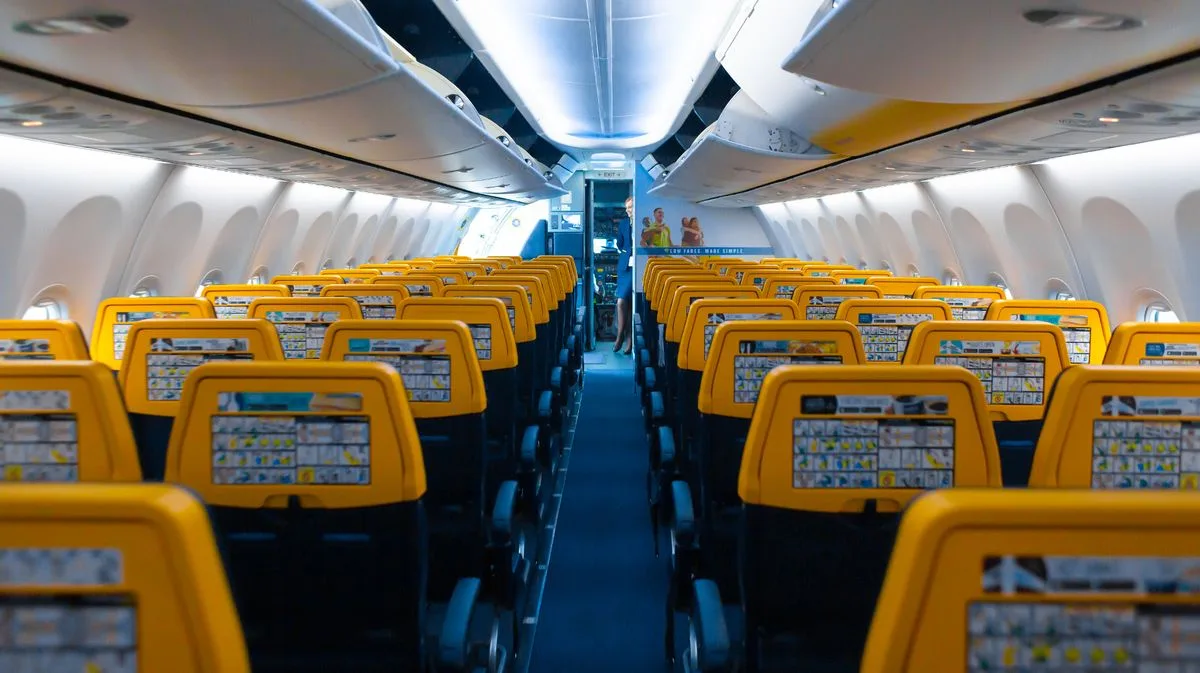
Pilot Reveals Why Lights Are Dimmed During Take-Off and Landing
Pilot Explains Reason for Dimming Lights on Flights

In case you didn't know, there is a simple reason why lights must always be dimmed during take-off and landing. Now, one pilot has shared the explanation behind this safety procedure.

Why Lights Are Dimmed During Take-Off and Landing

There are numerous safety measures flight attendants must adhere to before take-off. From securing your seatbelt to ensuring your window blinds are up, it is essential for passengers to comply with these regulations for a seamless journey.

One of the procedures before hitting the runway and touching down is dimming the lights. While you might not have spotted this small step, others recognise that cabin crew always reduce the lighting during these two phases of a flight. Some theories on social media suggest this is to minimise light pollution in the sky, but that is not the case.

Wide Pickt banner — collaborative shopping lists app for Telegram, phone mockup with grocery list

Pilot and author of Cockpit Confidential, Patrick Smith, said this is due to a precaution in case of an emergency. He stated: "Dimming the lights allows your eyes to pre-adjust to darkness, so that you are not suddenly blinded if something happens and the power goes out, and you are dashing for the doors in darkness or smoke. The emergency path-lighting and signs will also be more visible. And it makes it easier to see outside, which helps you to maintain at least a basic sense of orientation - i.e. which way is up."

Another pilot, known as Rohan Bhatnagar, supported this information in a post on Quora. He said: "It is a safety procedure for the aircraft. The probability of crashing is higher during take-off and landing. During a crash when the lights go out, it takes time for the human eye to adjust to a complete blackout, so the lights are dimmed such that in case of an emergency, the passengers can be evacuated quickly. It is also dimmed so that in case of emergency, the fluorescent directing lights in the aisle come on and are clearly visible to the passengers."

Pickt after-article banner — collaborative shopping lists app with family illustration

Other Key Reasons for Dimming Lights

  • Emergency paths: Reduced cabin lighting makes emergency exit signs and floor path markers easier to see.
  • Night vision adjustment: It can take around 10-30 minutes for your eyes to adjust to darkness, so these dimmed lights mean they are already adjusted to dark conditions.
  • External assessment: Lower light levels help passengers and cabin crew see potential danger outside, such as engine fire or smoke.
  • Power conservation: Although this is minor, decreasing lights helps to conserve engine power during critical high-power moments like take-off and landing.