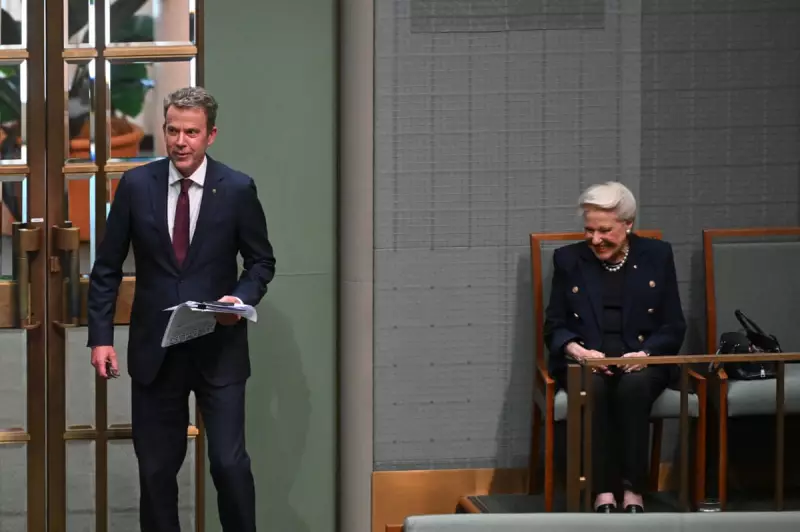
Despite sweeping behavioural standards being implemented in Australia's parliament, crossbench MPs have issued a stark warning that question time remains plagued by bullying and a disturbing 'mob mentality' that requires immediate action.
The Ejection Tally: Who's Being Removed
Official data obtained from the speaker's office reveals a concerning pattern of conduct, with 21 MPs from both the Coalition and Labor parties ejected from question time on 31 separate occasions during the first half of the 48th parliament. The ejections were executed under standing order 94a, which mandates removal for disorderly behaviour.
The most frequent offenders, each removed three times, include prominent opposition figures: shadow treasurer Ted O'Brien, shadow energy minister Dan Tehan, and shadow attorney general Andrew Wallace. The pattern emerged clearly between 26th November and the following six months of parliamentary sessions.

MPs Defend Their Conduct
The ejected MPs have defended their robust approach to parliamentary scrutiny. Dan Tehan argued that the government consistently fails to answer questions properly, particularly regarding their 2022 election promise to reduce power bills by $275. He challenged crossbenchers to increase their efforts in holding the government accountable.
A spokesperson for Ted O'Brien stated the shadow treasurer takes his responsibilities seriously and will continue to challenge what he described as a 'bad government'. Andrew Wallace expressed no surprise that shadow ministers responsible for energy, law and economy led the ejection tally, vowing not to remain silent while what he termed a 'hopeless Labor Government' impacts Australians' living standards.
'They can throw me out of question time every day, but I will continue to fight for my community and the Australian public every single day that I'm given the honour of serving them,' Wallace declared.
Crossbench Concerns Over Workplace Culture
Independent MP Zali Steggall, serving her third term as member for Warringah, highlighted that identifying the source of disorder isn't always straightforward. She revealed that sometimes an entire section of a political party contributes to the problematic behaviour.
Steggall spoke from personal experience, recalling a heated 2024 incident involving then opposition leader Peter Dutton, during which she told him to 'stop being racist' before withdrawing the comment. She described the opposition's 'barrage of yelling and interjections' as embodying a 'mob mentality' clearly designed to 'harass and intimidate' her into silence.
'It's disrespectful and respect gives no regards to the safety of others in the chamber. In any other workplace, that would be considered unlawful conduct,' Steggall emphasised, noting that similar behaviour occasionally emerges from government backbenchers as well.
The independent MP has called for the speaker to be granted enhanced powers to banish MPs for intimidating, harassing or bullying behaviour. She suggested amendments to standing orders that would hold party leaders accountable for backbench unruliness, potentially even allowing for the temporary expulsion of entire parties.
'Parliamentarians need to lead by example. Freedom of speech should be encouraged in our workplace but it can't be used to excuse harmful behaviour and disorderly conduct,' Steggall asserted.
Speaker's Stance and Historical Context
House Speaker Milton Dick acknowledged he would prefer to see fewer ejections from the chamber due to disorderly conduct. 'But ultimately, if people are obstructing others to have their say, that's when I will invoke that standing order,' Dick stated, emphasising that every parliamentarian represents approximately 120,000 constituents deserving to have their voice heard.
Historical data spanning from the 43rd parliament commencing in 2010 through to the current 48th parliament demonstrates a consistent trend: whichever party occupies the opposition benches consistently records the highest number of ejections. Some observers note that ejection numbers have historically varied depending on the patience and perceived impartiality of different speakers.

Calls for Meaningful Reform
Crossbench colleague Kate Chaney described question time as the 'public face' of parliament, arguing that behavioural standards must be visibly upheld when the public is watching. 'It's great that we finally have a code of conduct like every other workplace in Australia, but it won't build trust in politicians if it doesn't apply when the public is watching,' Chaney remarked.
Greens MP Elizabeth Watson-Brown was more scathing in her assessment, labelling question time a 'huge waste of time' and particularly criticising the prevalence of 'Dorothy Dixers' - soft questions from government backbenchers to ministers that often amount to self-congratulation. 'I'd absolutely support meaningful reform to question time to transform it into a true question and answer session to actually hold the government to account,' she stated.
The ongoing concerns about parliamentary conduct persist despite the federal parliament adopting a workplace behaviour code of conduct in 2023, enforced through sanctions by the Independent Parliamentary Standards Commission. However, behaviour within the parliamentary chamber itself remains exempt from these reforms, leaving standing order 94a as the primary mechanism for addressing disorderly conduct during sessions.