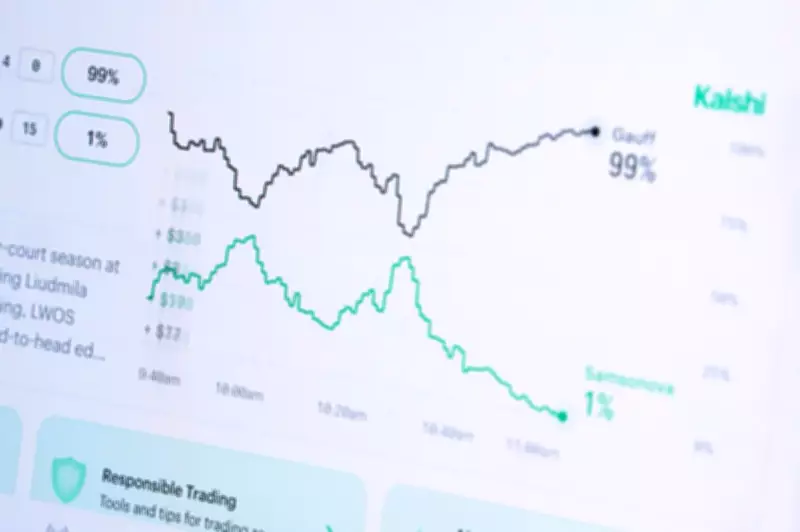
Online prediction markets have surged in popularity in recent years, but a report warns many casual users looking to make a quick buck are falling for a new generation of 'sucker bets'. Just 0.1% of users earn 67% of the profits on the largest platform Polymarket, according to fresh analysis by The Wall Street Journal which said just 2,000 accounts made a total of nearly half a billion dollars. And its rival operator Kalshi also has more losers than winners, with 2.9 unprofitable users for every profitable one based on data from last month.
Surge in Trading Volume
Both firms allow people to bet on the outcome of any number of real-world events, from unemployment figures to a movie's box office revenue. Total trading volume on both platforms surged to $24.2 billion last month, up from $1.8 million in April the year before, according to analytics firm The Block.
Casual Traders at Risk
Former Outback Steakhouse cook John Pederson is just one of the many Americans who saw the appeal, telling the WSJ he was low on cash and took out a loan to play the markets. Initially, he won big, turning $2,000 into $8,000 by betting on snowfall in Detroit before growing that to $41,000 with further bets on sports. However, he eventually fell foul of one area that experts particularly caution against - mention markets - in which users attempt to predict what a person will say during a public appearance. In January, Pederson placed his $41,000 on whether A$AP Rocky would say 'rapper' during an appearance on the Tonight Show with Jimmy Fallon. In a cruel twist, while the hip hop star did say the word during the full length interview on YouTube, it was edited out of the NBC broadcast so did not qualify under the market's rules. Instead of winning $168,000, Pederson lost it all.

Pro traders generally refuse to touch the mention markets, saying even millions of dollars-worth of data cannot help them. Critics say they often pay out less than expected and are frequently subject to 'long shot bias', where bettors are driven by excitement into overvaluing improbable outcomes.
Professional Traders Dominate
Instead, pro traders will pay big money for data streams from third-party users to try and gain an advantage when making predictions. Michael Boss, a former professional poker player who says he has made more than $668,000 on Kalshi sports betting, uses such streams to place 60 trades per minute and modify his bids 30 times a second. Up against that, casual traders trying to make a dollar 'have no chance', the statistician warned.
A Kalshi spokesperson told the WSJ that other financial markets show similar patterns of wealth concentration, and that more users make money on its platform than by day trading or on traditional sports betting. Polymarket declined to comment on the Journal's analysis.
Insider Trading Concerns
Critics of the prediction markets have also raised the spectre of insider trading, with claims insiders are even using the US war with Iran to turn a profit. In one example, Polymarket experienced $31 million in trade volume regarding whether or not the former Ayatollah Khamenei would still be in power come March 31. And last month, an army special operations soldier was accused of using inside information to place bets before the capture of former Venezuelan leader Nicolas Maduro earlier this year.
'We flagged this, referred it, and cooperated throughout the process,' Polymarket CEO Shayne Coplan posted on X at the time. 'This happens constantly behind the scenes, despite what many are led to believe.' Kalshi told the AP it had refused a similar bet from the same soldier, and supported calls for greater regulation. 'Not all prediction markets are the same,' Kalshi spokesperson Elisabeth Diana said amid growing calls for a crackdown in April following ceasefire bets. 'We support Congress and regulators taking action to police insider trading.'