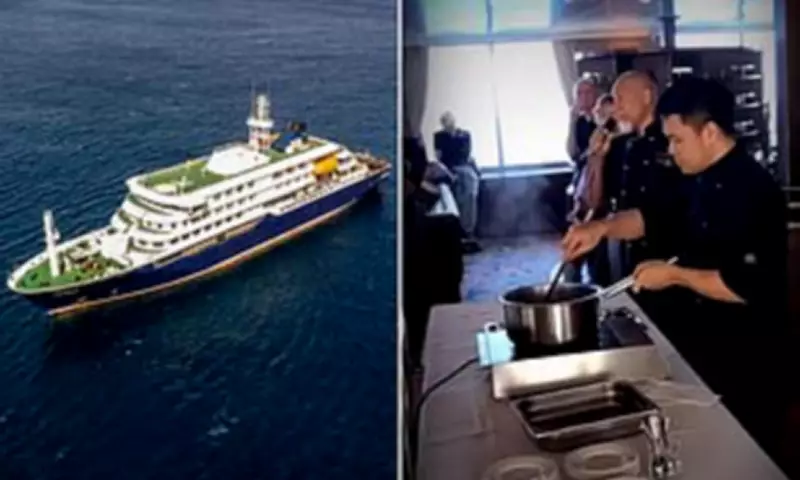
A Dutch widow who died on a stranded cruise ship has tested positive for the rat-borne hantavirus, as more than 20 British nationals remain trapped off the coast of Cape Verde. The MV Hondius vessel has been anchored in the Atlantic since Sunday following the deaths of three passengers due to an outbreak of the deadly disease.
Passengers and Crew Affected
In total, 23 British nationals—19 passengers and four crew members—are stuck on the ship, which set sail from Ushuaia in Argentina on March 10. The first casualty was a 70-year-old passenger whose body is currently on the island of Saint Helena, a British territory in the South Atlantic. His 69-year-old wife also fell ill and was evacuated to South Africa, where she died in a Johannesburg hospital. Both were Dutch nationals. A 69-year-old Briton was taken to Johannesburg and is being treated in intensive care.
It has now emerged that the Dutch widow tested positive for a hantavirus infection. The World Health Organisation (WHO) had initially only confirmed the infection of the British man. Around 150 people remain aboard the vessel following the deaths and illnesses.

Operator's Response
In a statement, the boat's operator, Oceanwide Expeditions, said it was dealing with 'a serious medical situation' onboard. It stated: 'Dutch authorities have agreed to lead a joint effort to organise the repatriation of the two symptomatic individuals on board MV Hondius from Cape Verde to the Netherlands.' The operator added that 'no authorisation' has been granted from Cape Verdean authorities to allow those requiring medical care to disembark.
Passengers face an agonising wait to learn if they have contracted the virus, which can take up to eight weeks to show symptoms. The WHO has confirmed six suspected cases of hantavirus infection. On April 27, a British passenger fell ill and was sent to South Africa for treatment, where he remains in intensive care. Another passenger, a German national, died on board on Saturday; his body has not yet been removed from the ship.
Urgent Medical Needs
Two people on the vessel, including a British crew member, are presenting 'acute respiratory symptoms' requiring 'urgent medical care,' according to Oceanwide Expeditions. A spokesman said: 'The disembarkation of passengers, medical evacuation and medical screening require permission from, and coordination with, the local health authorities. Local health authorities have visited the vessel and assessed the situation. The medical transfer of the two ill persons on board has not yet taken place.'
An Irish woman onboard, Ann Lane from Cork, shared an account of the distressing conditions. She told The Irish Times it was a 'real shock' after the first casualty was confirmed. She added: 'We initially thought this man may have just died in his cabin, perhaps suddenly. Nobody really expected anything else to happen after this poor man had died. He got sick before St Helena... and that man was deceased on the ship for several days before we got to St Helena. His wife left the ship at St Helena – both were supposed to be going to Johannesburg. But then she died.' Ms Lane said the ship's doctor, a 'younger, British man,' had now also fallen sick.
Communication Concerns
Another passenger, who wished to remain anonymous, told the Daily Mail the doctor onboard is a 'sweet and wonderful guy' who had been 'excited' at the expedition, calling it his 'vacation.' She also claimed Oceanwide had been communicating poorly with passengers, failing to update them directly in a timely manner.
According to the UK Government's hantavirus advice, symptoms typically appear anywhere from two to four weeks but can range from two days to eight weeks after exposure, meaning illness may develop in other passengers in the coming days or weeks. Around 40 per cent of cases result in death, according to the US Centers for Disease Control.

Understanding Hantavirus
Hantaviruses are a family of viruses spread by rodents, particularly through contact with their urine, droppings and saliva. They can cause diseases in humans ranging from mild, flu-like illness to severe respiratory illness or haemorrhagic disease. Early symptoms can include fatigue, fever, muscle aches and intense headaches. They are not usually spread person-to-person and are typically transferred only via bodily fluids and close contact. The risk of contracting the illness can be reduced by minimising contact with rodents.
There were 23 gastrointestinal outbreaks on cruise ships that called at U.S. ports last year, with 18 caused by norovirus, according to the U.S. Centers for Disease Control and Prevention. However, hantavirus is not typically associated with cruise ships and is not easily spread between people. Studies indicate hantaviruses have been around for centuries, with outbreaks documented in Asia and Europe. In the Eastern Hemisphere, it has been linked with hemorrhagic fever and kidney failure. It wasn't until the early 1990s that a previously unknown group of hantaviruses emerged in the southwestern United States as the cause of an acute respiratory disease now known as hantavirus pulmonary syndrome. The disease gained attention last year after late actor Gene Hackman's wife, Betsy Arakawa, died from a hantavirus infection in New Mexico.
Repatriation Efforts
The South African Department of Health said the Dutch male passenger suffered fever, headache, abdominal pain and diarrhoea, and died in St Helena, while his wife was taken to hospital in the Kempton Park area of South Africa after collapsing at an airport. A letter distributed to customers from Oceanwide Expeditions on Sunday, seen by the Daily Mail, informed them it was 'awaiting approval' for passengers to leave the ship. The letter said: 'As you are aware, we are responding to several cases of an unidentified virus. We regret to share that, overnight, a guest presenting severe symptoms has passed away. We are currently anchored offshore of Cape Verde and awaiting approval from the Cape Verde authorities to disembark, with priority given to those who require immediate medical care. At this stage, we do not have authorisation from the Cape Verde authorities to disembark.'
The letter went on to advise that all those onboard continue to 'follow best practices, wear face masks, maintain distancing, and, where possible, minimise contact with fellow guests.' It added: 'Please remain assured that we are applying pressure through all available channels, including at the diplomatic level, to provide urgent care to individuals presenting severe symptoms and to ensure all guests aboard can be properly supported within an adequate health screening process.'
Speaking on social media, a Turkish passenger on the ship said his 'Irish friend' was receiving treatment in South Africa but that, fortunately, his condition was 'improving.' He wrote: 'Normally, human-to-human transmission is not common. However, we are in a very complicated situation. Please keep us in your thoughts. We will complete this ocean crossing. Since we are not allowed to go ashore in Cape Verde, most likely we will head to the Canary Islands. We hope to be in good condition there.'
The hantavirus outbreak on the MV Hondius marks the fourth cruise ship outbreak this year, following a record 2025 where 23 reported illnesses reached a 10-year high. Last year, prices for a full trip on the MV Hondius vessel were between €12,500 for a bed in a shared cabin and €40,000 (£35,000, $48,000) for the most luxurious private cabin. According to several online ship-tracking sites, the ship was yesterday just off the port of Praia, the capital of Cape Verde. The vessel can accommodate around 170 passengers and has some 70 crew members.