Metropolitan Police Face Accusations of Bias in Protest Route Allocations
The Metropolitan Police is embroiled in a significant controversy after being accused of showing preferential treatment towards a far-right demonstration led by Tommy Robinson over a pro-Palestine march scheduled for the same day in London. This allegation has sparked widespread criticism from celebrities, politicians, and civil society leaders, who argue that the decision undermines principles of equality and justice in protest policing.
Celebrity Backlash and Open Letter Condemnation
Prominent figures including musicians Annie Lennox and Billy Bragg, actors Miriam Margolyes and Samuel West, as well as MPs and academics, have signed an open letter condemning the Met's actions. The letter explicitly states that the police "must not favour the far right over Palestine" and calls for an immediate reversal of the decision. It highlights concerns that blocking the annual Nakba Day commemoration from central London sends a dangerous message, potentially endangering participants and stifling legitimate protest.
Billy Howle, an actor who signed the letter, expressed shock at the police's decision, emphasising that it "will send shivers down the spines of every person of good conscience." The pro-Palestine movement had informed the Met in December of its intention to march on the nearest Saturday to Nakba Day, a tradition upheld for over a decade, but the route was rejected in favour of the "Unite the Kingdom" rally.

Contrasting Protest Routes and Safety Concerns
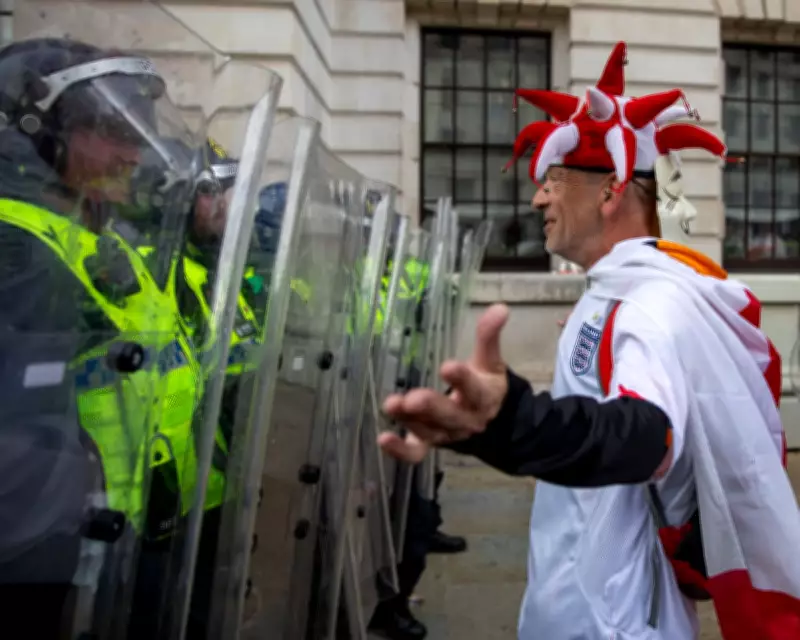
The "Unite the Kingdom" demonstration, organised by Tommy Robinson, whose real name is Stephen Yaxley-Lennon, is set to take place on May 16th in key central London locations including Kingsway, the Strand, Trafalgar Square, Whitehall, and Parliament Square. Robinson boldly proclaimed on social media that "London is ours on May 16th," adding to tensions surrounding the event.
In contrast, the Nakba Day march, which commemorates the mass expulsion of Palestinians, has had its preferred route through central London rejected by the Met. Organisers are now grappling with safety concerns, as the letter notes that far-right groups have previously engaged in "verbal and physical violence directed at the movement and the police." The route for the Nakba march remains unfinalised, with ongoing discussions about alternative locations to mitigate risks.
Police Justification and Broader Context of Protest Policing
A Met spokesperson defended the decision, stating that it was based solely on safety and security considerations, not political affiliations. They explained that the far-right event is anticipated to attract "very significant crowds" based on previous attendance, and Whitehall was deemed the most suitable location to accommodate such numbers safely. The force has expressed willingness to meet with Nakba Day organisers to agree on an alternative venue, emphasising a commitment to dialogue.
This controversy occurs amidst broader claims of increasing repression of Palestinian solidarity marches in the UK. Recent restrictions on routes and timings, along with arrests for specific chants or placards, have raised concerns about freedom of expression. Additionally, over 30 MPs have tabled a motion to reject government proposals requiring police to consider the "cumulative impact" of repeated protests, a measure drawn up in response to pro-Palestine demonstrations.
Separate Legal and Protest Developments
In a related development, the Met announced expectations of "criminal offences" at a separate Defend Our Juries demonstration in Trafalgar Square, opposing the proscription of Palestine Action. Although a high court ruling in February deemed the ban unlawful, leading to a temporary halt in arrests, the Met has resumed enforcement pending a government appeal. This highlights the complex legal landscape surrounding protest rights and police powers in London.

The ongoing disputes underscore deep-seated issues in how protests are managed, balancing security with the right to assemble. As tensions rise ahead of the scheduled demonstrations, the Met's decisions will likely continue to face scrutiny from both sides of the political spectrum, impacting public trust and the future of protest policing in the capital.