Mask Ban Laws: Public Safety or Political Suppression?
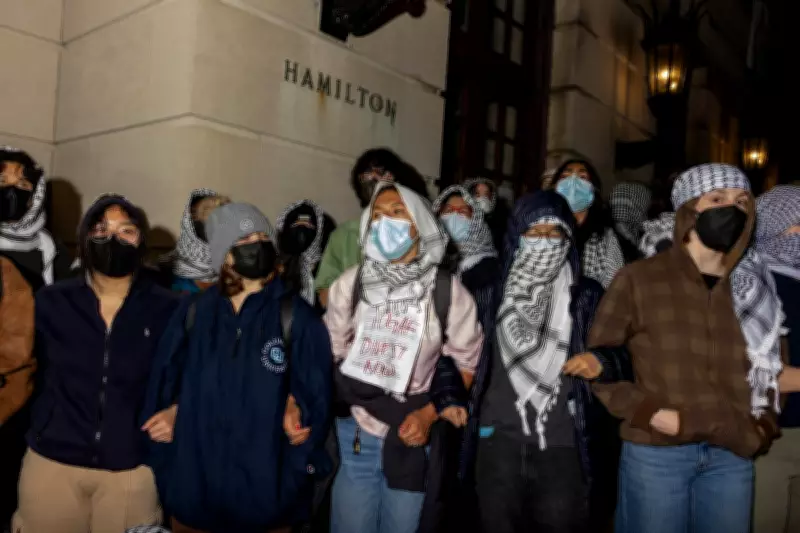
A series of mask ban laws has emerged across the United States following widespread Israel-Palestine protests on city streets and college campuses. While proponents argue these measures enhance public safety, activists and legal experts contend they represent coded attempts to stifle one side of the political debate, particularly pro-Palestinian voices.
The Rise of Mask Restrictions
From Ohio to Texas, and North Carolina to California, lawmakers and university administrators are implementing policies that prohibit face coverings in protest contexts. Ohio has warned public universities that protesters could face felony charges under an obscure anti-mask statute. Texas officials cited mask-wearing as partial justification for police responses to campus demonstrations. Meanwhile, eight University of Florida students faced misdemeanor charges that included wearing masks in public.
In June, North Carolina passed a mask ban despite gubernatorial objections, introducing enhanced penalties for crimes committed while masked and increasing punishments for activists blocking traffic. Most recently, the University of California system—the nation's largest—directed campuses to forbid students from wearing masks with "intent of intimidating any person or group" or to evade identification during law or policy violations.

Conflicting Perspectives on Safety and Suppression
Supporters of mask bans, including Nassau County Executive Bruce Blakeman, assert these measures will increase public safety and protect minority communities from vigilante violence. Blakeman, whose Long Island jurisdiction implemented one of the country's first mask bans this month, stated the legislation responds to "people who wore masks and engaged in antisemitic acts" and addresses broader criminal activities like shoplifting and bank robberies.
However, activists and legal experts argue these provisions could achieve the opposite effect. They warn mask bans might expose protesters to potentially violent police interactions, threaten immunocompromised individuals, and silence pro-Palestinian activism despite ostensibly neutral language.
Academic and Civil Liberties Concerns
Graeme Blair, a political science professor at UCLA and member of Faculty for Justice in Palestine, expressed deep concern about the University of California's policy. "They just have one goal. The UC administration would like to stop speech on campus about Palestine," he stated. "That's really cynical from a college administration."
Blair noted students have legitimate reasons to wear masks, including health conditions, ongoing COVID-19 risks, and protection from doxxing—where personal information is maliciously shared online. Sites like Canary Mission and various right-wing groups regularly target pro-Palestinian activists with online harassment campaigns.
The New York Civil Liberties Union criticized Nassau County's legislation, stating: "We'll say it again: masks protect people who express political opinions that are controversial. Officials should be supporting New Yorkers' right to voice their views, not fueling widespread doxxing and threatening arrests."
Expanding Bans and Historical Context
Violent incidents have prompted officials to consider expanding mask bans beyond initial jurisdictions. In Los Angeles, clashes at a synagogue hosting an Israel real estate event led Mayor Karen Bass to contemplate a mask prohibition. Similarly, New York Governor Kathy Hochul and Mayor Eric Adams supported face covering restrictions after a subway protest incident.
These proposals mark a significant shift in New York, where masks were banned in public spaces for 175 years until pandemic-era repeals. State Senator James Skoufis introduced legislation banning face masks in public demonstrations, arguing: "Everyone has a right to protest and express themselves freely, but no one has a right to assault or menace fellow New Yorkers while cowardly hiding behind a face covering."

Health Implications and Disability Rights
Mask policies raise particular concerns for disabled and immunocompromised individuals. Michelle Uzeta, deputy legal director at the Disability Rights Education & Defense Fund, explained: "We have opposed mask bans generally because they do have a negative impact on people with disabilities in particular, who are at greater risk of contracting infectious diseases including COVID-19."
Kaitlin Costello, a Rutgers professor who takes immunosuppressant medication, emphasized the intersection of health and political rights: "Solidarity needs to go across groups. The ability for disabled people to protest on any number of issues is a really important First Amendment right."
Historical Patterns and Political Timing
Mask laws possess a complex political history in the United States. Early versions from the 1940s and 1950s targeted Ku Klux Klan activities. More recently, mask rules have been discussed or deployed against Standing Rock, Occupy Wall Street, and Black Lives Matter protesters. Many restrictions were temporarily repealed during the pandemic, only for some states to explicitly ban mask-wearing in reaction to COVID mandates.
Xavier T. de Janon, director of mass defense at the National Lawyers Guild, observed the timing of current mask bans following highly visible left-leaning protests. He noted that increasingly bold demonstrations from masked white supremacists in recent years haven't triggered equivalent crackdowns. "The legislatures all these decades have not responded to them in this way," he stated. "It is because these protests are about Palestine."
As students return to campuses for the new semester and the war in Gaza continues, protests are likely to persist—and so will debates about whether mask bans protect public safety or suppress political dissent.