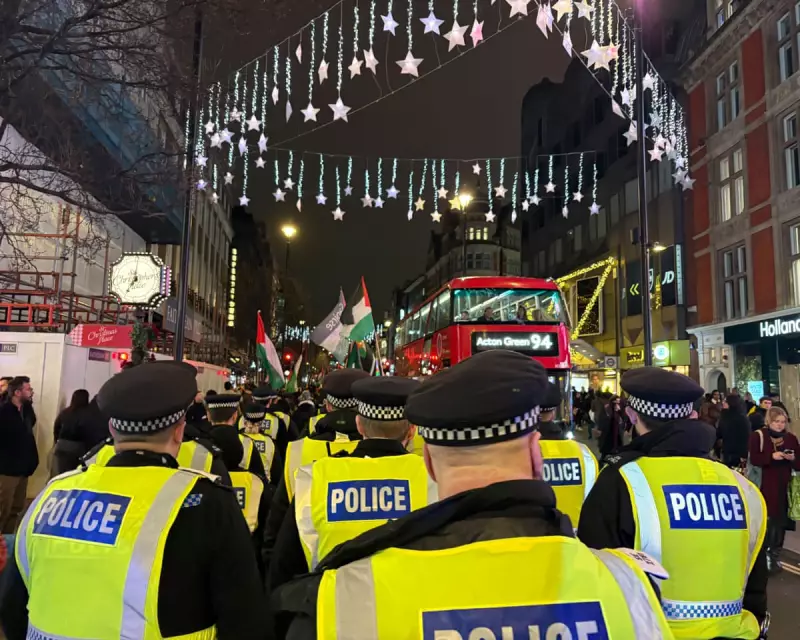
More than forty of Britain's leading civil society organisations have launched a fierce joint condemnation of what they label "dangerous" government proposals to hand police greater powers to restrict protests in England and Wales.
Coalition Warns of 'Draconian Crackdown' on Rights
The coalition, which includes major bodies like the Trades Union Congress (TUC), Greenpeace, Amnesty International UK, Liberty, and the Palestine Solidarity Campaign, published a forceful joint statement on Monday. They are opposing an amendment to the Crime and Policing Bill that would require police to consider the "cumulative impact" of repeated protests in the same area when imposing conditions on demonstrations.
The groups argue this represents a "draconian crackdown on our rights to freedom of expression and assembly". They highlight that the size of the "area" is not defined in the legislation, and officers would not need to consider whether the protests were for the same cause or involved the same participants.

"An anti-racist march could be blocked from Whitehall because of a previous farmers' protest, or a pride march restricted because a far-right demonstration was recently held in the same town," the statement warns, illustrating the potential wide-ranging consequences.
Government Cites Gaza Marches, Critics See Repression
The Home Secretary, Shabana Mahmood, announced the new powers in October 2024. She stated that repeated large-scale demonstrations concerning Gaza had caused "considerable fear" within the Jewish community, particularly following a deadly terror attack on a synagogue in Manchester.
However, critics directly link the legislative move to the ongoing national marches for Palestinian rights. Ben Jamal, Director of the Palestine Solidarity Campaign, said: "Instead of addressing its responsibilities under international law... successive governments have instead sought to repress protest through ever more draconian laws." He emphasised that the right to protest in solidarity with Palestinians is a "precious democratic principle" now under grave threat.
The coalition's statement powerfully notes that historic movements for change – from civil rights and women's suffrage to the anti-apartheid struggle – all relied on the cumulative impact of repeated protests over many years. "No protest movement has ever brought about change through a one-off demonstration," it adds.
Calls to Drop Proposals and Protect Democratic Norms
The diverse alliance, which also encompasses the National Education Union, Quakers in Britain, and numerous other trade unions, charities, and human rights NGOs, is calling on the government to "immediately drop its dangerous proposal".
Lyle Barker, a Policy and Campaigns Officer at Liberty, urged ministers to halt the introduction of new anti-protest powers pending a review of existing laws. "The government must... instead work to protect our basic human right to make our voices heard when those in power refuse to listen," Barker stated.
TUC General Secretary Paul Nowak expressed deep concern for the trade union movement, adding: "With the far right on the rise in the UK and across the globe, we must be extra vigilant in defending basic human rights and democratic norms."
In response, a Home Office spokesperson defended the plans, stating: "The right to protest is fundamental to our democracy... These new powers will not ban protests, but they will help protect communities from repeated disruption while protecting the right to peaceful protest." The political battle over the future of protest rights in Britain is now intensifying.