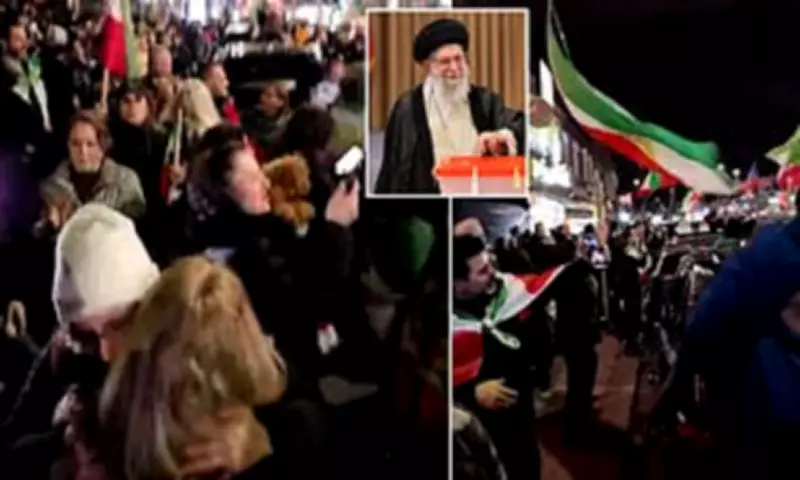
North London Street Brought to Standstill in Iranian Celebration
A major thoroughfare in North London was completely paralysed on Saturday evening as scores of Iranian expatriates erupted in spontaneous celebration following confirmation from former US President Donald Trump that Ayatollah Ali Khamenei had been killed. The Supreme Leader of Iran was reportedly eliminated in a coordinated military strike conducted by Israel and the United States, according to statements from both nations.
Scenes of Jubilation in North Finchley
Ballards Lane in North Finchley became the epicentre of emotional celebrations as members of London's Persian community waved both the pre-Islamic Iranian flag and American flags. Footage from the scene showed residents blaring music from their vehicles, cheering enthusiastically, and distributing roses to one another in a display of collective joy.
Local resident Jessica described the extraordinary scene to reporters: "It's absolute mayhem, it's pandemonium. The street is filled with literally thousands of people celebrating. There's chanting, singing, and people are handing out roses and Persian biscuits to strangers. It's just pure joy everywhere you look."
She added: "People are holding up pictures of the Shah, cars are constantly honking their horns, and a bus has been completely stuck in the middle of the road for over an hour. Families with young children are dancing in the street, their faces full of happiness."
Symbolic Gestures and Political Chants
The distribution of roses carried particular significance, as these flowers have become symbolic of peaceful protests against Iran's current government. Throughout the celebrations, participants were heard shouting "long live Israel" while Jewish residents of North Finchley joined in chanting "long live the Shah."
These extraordinary scenes unfolded against the backdrop of what Trump described as giving Iranians their "greatest chance" to "take back the country" from the Islamic regime. The assassination marks a dramatic escalation in US intervention in Iran, representing the second major attack on the country by the Trump administration within an eight-month period during nuclear negotiations.
Leadership Vacuum and Regional Implications
The reported death of Khamenei after decades of absolute power creates a significant leadership vacuum within Iran's complex political structure. As Supreme Leader, Khamenei held final authority over all major policies and led both Iran's clerical establishment and its powerful Revolutionary Guard paramilitary forces.
Israeli Prime Minister Benjamin Netanyahu stated in a nationally televised address that there were "growing signs" the 86-year-old leader had been killed when Israel struck his compound early Saturday. Shortly afterward, two anonymous Israeli officials confirmed his death, though formal announcements were still pending.
Trump's Announcement and Call to Action
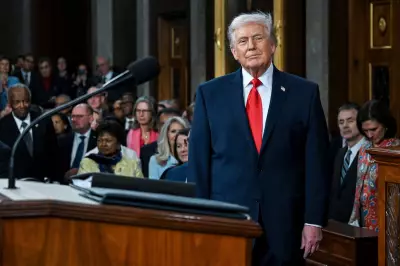
Former President Trump announced Khamenei's death on his Truth Social platform, writing: "Khamenei, one of the most evil people in History, is dead." He continued: "This is not only Justice for the people of Iran, but for all Great Americans, and those people from many Countries throughout the World, that have been killed or mutilated by Khamenei and his gang of bloodthirsty THUGS."
Trump's statement elaborated on the operation: "He was unable to avoid our Intelligence and Highly Sophisticated Tracking Systems and, working closely with Israel, there was not a thing he, or the other leaders that have been killed along with him, could do." The former president concluded by urging Iranian citizens to seize what he called "the single greatest chance for the Iranian people to take back their Country."
Historical Context and Regional Impact
Khamenei's lengthy rule witnessed the increasing Islamification of Iranian society and the expansion of Iranian proxy forces across the Middle East, including in Yemen, Lebanon, and Gaza. His staunch religious ideology consistently destabilised regional dynamics, positioning Iran in opposition to more Western-oriented neighbours such as Saudi Arabia, the United Arab Emirates, Qatar, and Bahrain.
Initial reports from Tehran suggested some residents were also celebrating the news, with witnesses describing people blowing whistles and letting out traditional ululations. The death of such a pivotal figure after decades of unchallenged authority represents a potentially transformative moment for Iran and the broader Middle East region.