Hungary's Election: Orbán Faces Historic Challenge Amid Corruption Scandals
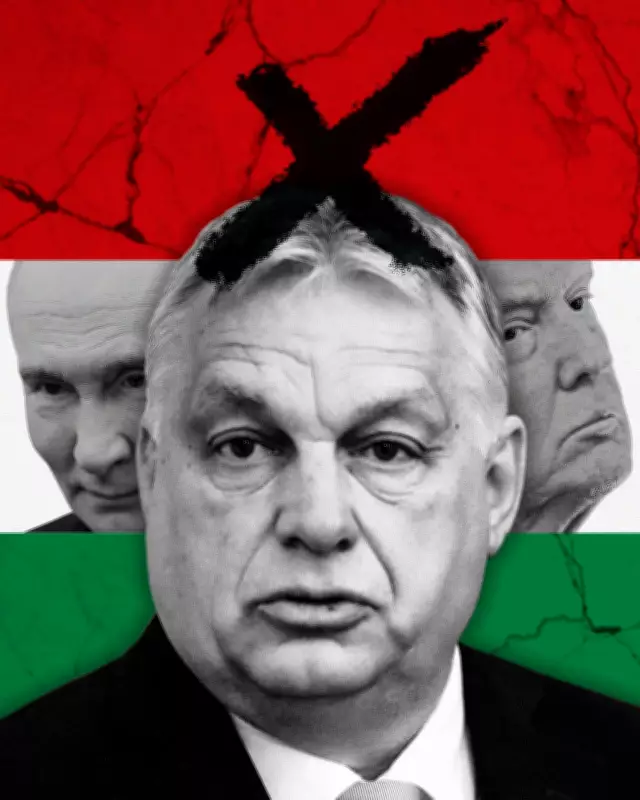
Viktor Orbán, Hungary's long-serving prime minister, faces his most significant electoral test yet as voters head to the polls on Sunday. This election, widely regarded as the most consequential since Hungary's transition to democracy in 1990, could potentially unseat Orbán after 16 years in power.
Zebras, Wealth, and Symbolic Protests
The campaign has been dominated by corruption allegations against Orbán's inner circle. Drone footage revealing a sprawling residence belonging to Orbán's father, complete with manicured gardens and an underground garage, captured national attention. Even more striking were images of zebras darting across the countryside from a neighboring property owned by Lőrinc Mészáros, Orbán's best friend and Hungary's richest man.
These zebras have become powerful symbols of perceived corruption. Plush zebra toys appeared at protests, citizens organized "safari tours" to spot the animals, and photos of zebras were plastered over government billboards in acts of defiance. "They became a symbol of the limitless corruption of the whole system," said Ákos Hadházy, an independent MP who organized protest tours to the area.

A Swelling Opposition Movement
This symbolism has fueled a growing opposition movement that has transformed the political landscape. Most polls suggest Orbán and his Fidesz party, who have transformed Hungary into what critics call a "petri dish for illiberalism," could lose power. Such an outcome would rattle global far-right movements and reshape Hungary's antagonistic relationship with the European Union.
The opposition Tisza party, led by former Fidesz insider Péter Magyar, has surged in popularity by focusing on corruption allegations. Magyar has accused Orbán's party of branding itself as a defender of Hungarians while siphoning off state funds, pushing corruption to the top of voters' concerns.
Democratic Backsliding and State Capture
Since taking power in 2010, Orbán's government has systematically dismantled democratic checks and balances. Zoltán Kész, a former Fidesz member, describes this process as nothing less than a "coup in slow motion." The government has rewritten election laws to its benefit, placed loyalists in control of approximately 80% of the country's media, and retooled the judiciary.
"We've come to the point in Hungary when we obviously can no longer talk about a real democracy," said Kész. "It's really a state capture that has been going on in Hungary with all the institutions that are supposedly independent."
Global Implications and International Alliances
The election carries significant international implications. Orbán has cultivated relationships with global right-wing leaders, including Donald Trump, Italy's Giorgia Meloni, and France's Marine Le Pen. A campaign video featured nearly a dozen right-wing leaders endorsing Orbán, with Germany's Alice Weidel declaring, "Europe needs Viktor Orbán."
This week, U.S. Vice President JD Vance campaigned with Orbán in Budapest, echoing Fidesz's campaign rhetoric against the EU and Ukraine. Donald Trump subsequently posted his support: "I AM WITH HIM ALL THE WAY!"
Daniel Freund, a German Green MEP, notes: "He is the absolute poster boy of this whole movement of the illiberal, anti-European, extreme right. He is the icon and the example that others follow."
Economic Pressures and Voter Concerns
Economic factors have intensified voter discontent. While many previously overlooked democratic erosion during economic growth, soaring inflation following Russia's invasion of Ukraine and economic stagnation have highlighted the growing disconnect between ordinary Hungarians and the ruling class.
The government has responded with aggressive campaigning, using AI-generated billboards to portray Magyar as a danger to Hungary and a stooge of both the EU and Ukrainian President Volodymyr Zelenskyy. Meanwhile, Orbán has positioned himself as the only leader capable of keeping Hungary out of the Ukraine conflict.

Uncertain Outcomes and Future Challenges
Despite Magyar's lead in polls, uncertainty persists. Opposition supporters fear polls may underestimate Fidesz support or that Orbán could retain power even if he loses the election. Undecided voters, Hungarians abroad, and allegations of vote-buying and gerrymandering could sway the outcome.
In Kecskemét, about 50 miles south of Budapest, many voters expressed anxiety about potential changes. "I'm praying to preserve a Christian Hungary," said Zsuzsi, 83. "We'll get dragged into the war in Ukraine if Péter Magyar wins and he'll also let in the migrants."
Regardless of Sunday's result, Hungary faces a significant reckoning. Kész emphasizes that even if Fidesz loses, Orbán's system may survive him, given how thoroughly the party has stacked state institutions with loyalists. "Even under the ideal circumstances, change will not happen overnight," he said. "There's a lot of work to be done by a new government."
This election represents more than a choice between political parties; it's a referendum on Hungary's direction, identity, and future relationship with European values. As Anita Orbán of the Tisza party stated: "Hungary stands at a historic crossroads once again."