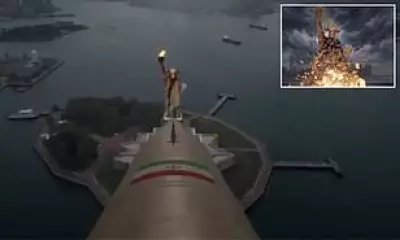
In a dramatic escalation of tensions, vehicles were seen burning in Tehran following coordinated military strikes by the United States and Israel. Video footage from Iran's capital captured flames engulfing cars and buildings reduced to rubble in the aftermath of the attack.
Trump's 'Massive' Campaign Against Iran
US President Donald Trump declared that the 'massive and ongoing' campaign against Iran aims to crush its military capabilities, eliminate its nuclear programme, and ultimately bring about a change in government. This bold statement underscores the administration's aggressive stance towards Iran, framing the strikes as part of a broader strategy to curb regional influence and nuclear ambitions.
Iran's Retaliatory Response
In response to the US-Israeli strikes, Iran's Revolutionary Guards announced they had fired missiles against US military bases located in the Gulf region. This counterattack highlights the volatile nature of the conflict, with both sides engaging in direct military actions that risk further destabilising the Middle East.

Impact on Tehran and Regional Stability
The destruction in Tehran, including burning vehicles and damaged infrastructure, illustrates the immediate human and material toll of the strikes. As the situation unfolds, live updates continue to provide details on the evolving conflict, with analysts warning of potential broader implications for regional security and international relations.
Key aspects of the US-Israeli attack on Iran remain under scrutiny, including the strategic objectives and long-term consequences. The joint operation marks a significant moment in US foreign policy under the Trump administration, emphasising a hardline approach towards Iran that prioritises military action over diplomacy.
This incident adds to ongoing tensions in the Middle East and North Africa, with stakeholders closely monitoring developments. The involvement of Israel further complicates the geopolitical landscape, as alliances and rivalries are tested in the wake of the strikes.