JD Vance Issues Stern Warning to Iran Ahead of Islamabad Peace Negotiations
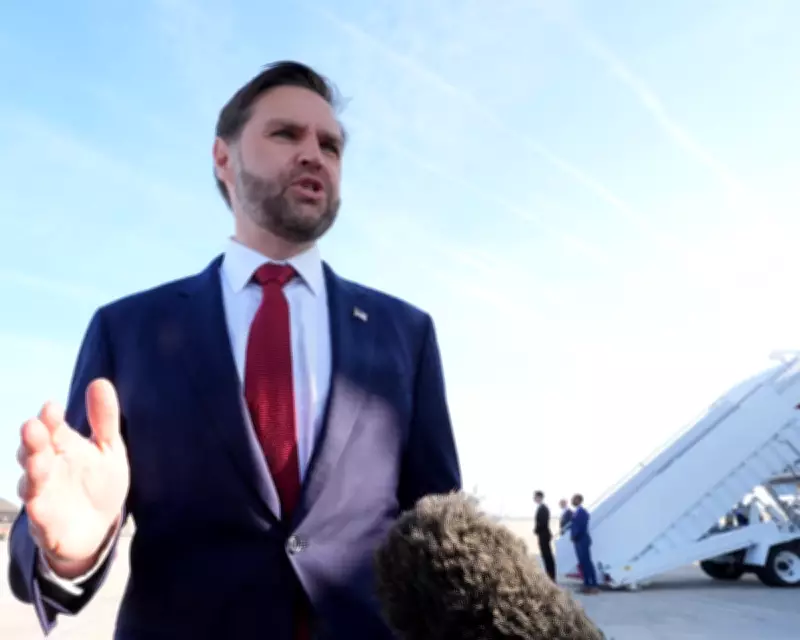
US Vice-President JD Vance delivered a firm caution to Iran on Friday, urging the nation not to "try and play" the United States during critical peace talks scheduled for Saturday in Islamabad. Vance made these remarks as he boarded Air Force Two at Joint Base Andrews near Washington DC, en route to Pakistan for high-stakes negotiations that could determine whether a fragile ceasefire holds or if conflict resumes, with severe implications for the global economy.
Doubts and Demands Cloud Negotiation Prospects
With hours remaining before the talks were set to begin, significant uncertainty persisted over whether they would proceed as planned. Iran's parliamentary speaker, Mohammad Bagher Ghalibaf, who is expected to co-lead the Iranian delegation, stated on social media platform X that two preconditions must be met: a ceasefire in Lebanon and the release of Iran's blocked assets before negotiations can commence. It remained unclear on Friday evening whether Ghalibaf and Iran's foreign minister, Abbas Araghchi, would travel to Islamabad to lead their team.
Meanwhile, it was announced that Lebanon and Israel had agreed to meet in Washington DC on Tuesday to discuss a ceasefire and set a date for talks, mediated by the US at the state department. This development followed a phone call involving ambassadors from Lebanon, Israel, and the US.

Trump's Threats and Global Economic Stakes
Adding to the tension, former US President Donald Trump fueled uncertainty by asserting that US forces were rearming and prepared to return to attacks if negotiations fail. In comments to the New York Post and on his social media site, Trump claimed Iran has "no cards" and threatened effective military action. The oil price spike, triggered by a US-Israeli attack on Iran in late February and Iran's subsequent closure of the Strait of Hormuz, poses a direct political threat ahead of congressional elections in November.
Despite the volatile backdrop, Vance struck an optimistic tone, expressing hope for positive negotiations and a willingness to extend an "open hand" if Iran engages in good faith. However, he emphasized that the US negotiating team would not be receptive to any attempts at manipulation.
Key Issues and Delegation Details
The Islamabad talks are anticipated to focus on several critical issues, including the reopening of the Strait of Hormuz, Iran's nuclear programme, sanctions relief, and reparations for war damage. The US delegation, which includes Trump's international negotiator Steve Witkoff and son-in-law Jared Kushner, also intends to demand the release of Americans detained in Iran. Advance teams from both the US and Iran reportedly began arriving at Islamabad's Serena hotel on Friday, with Pakistani officials facilitating communication between the parties.
Pakistani authorities have implemented stringent security measures, establishing a 2-mile perimeter around the hotel, locking down the city centre, and declaring a public holiday for this high-profile mediation effort. Officials from Saudi Arabia and other Gulf countries are also arriving to represent their interests.
Ongoing Conflict and Regional Dynamics
Fighting has continued in south Lebanon despite the upcoming negotiations, with Hezbollah claiming strikes on Israeli soldiers and launching rocket volleys at Israel throughout Friday. Israeli airstrikes across Lebanon killed 13 government security officers in Nabatieh, marking the highest number of Lebanese security forces killed by Israel so far. Hezbollah's leader, Naim Qassem, called on the Lebanese government to cease making "gratuitous concessions" without explicitly mentioning the talks, vowing to continue resistance efforts.
The Lebanese army has deployed additional soldiers in Beirut to enforce a ban on arms outside state control, following an Israeli attack that left at least 303 people dead earlier in the week. This conflict, while not directly involving the Lebanese government, has resulted in significant casualties and heightened regional instability.