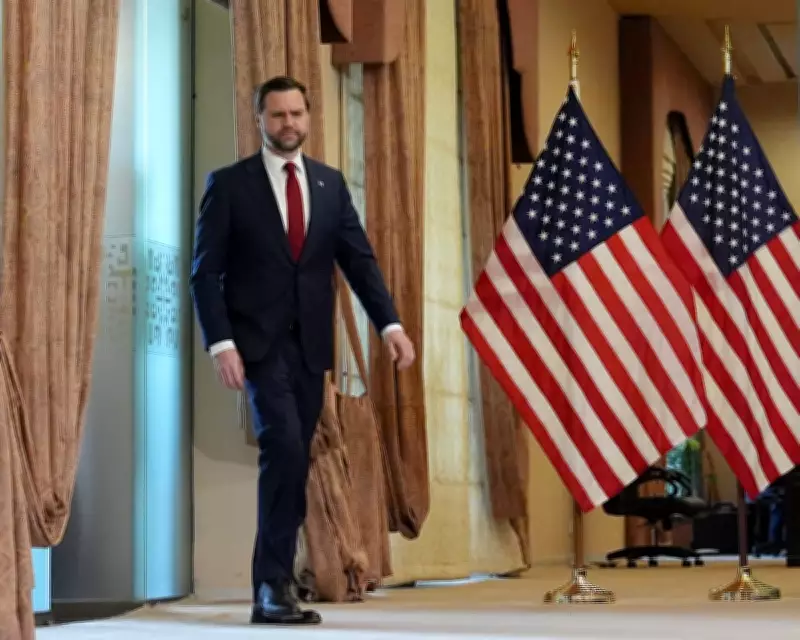
US Vice-President JD Vance has departed from Islamabad after marathon negotiations with Iranian representatives ended without an agreement, marking a significant setback in efforts to de-escalate regional tensions. The talks, which spanned over 21 hours, concluded on Sunday with Vance highlighting Iran's unwillingness to meet American demands, particularly regarding its nuclear program.
Breakdown in Negotiations
Vance explicitly stated that Iran had rejected key US terms, including a commitment to refrain from developing nuclear weapons. "The bad news is that we have not reached an agreement, and I think that's bad news for Iran much more than it's bad news for the United States of America," Vance remarked during a press conference. He emphasized that the US had clearly outlined its red lines, with the core objective being to secure an affirmative pledge from Iran not to pursue nuclear capabilities or the means to rapidly acquire them.
Iran's Response and Regional Dynamics
In contrast, Iran's foreign ministry downplayed the outcome, suggesting that expectations for a single-session agreement were unrealistic from the start. Spokesperson Esmaeil Baqaei noted that Tehran remains confident in ongoing contacts with Pakistan and other regional allies. Iranian media attributed the failure to "excessive" US demands, which included not only nuclear concessions but also control over the strategic Strait of Hormuz, payment of war reparations, and a broader regional ceasefire.

High-Stakes Discussions
These negotiations represented the first direct US-Iranian meeting in over a decade and the highest-level dialogue since the 1979 Islamic Revolution. The discussions involved Vance, special envoy Steve Witkoff, and Jared Kushner meeting with Iranian parliamentary speaker Mohammad Baqer Qalibaf and foreign minister Abbas Araqchi. According to Pakistani sources, the talks were emotionally charged, with "mood swings" and fluctuating temperatures between the delegations.
Ceasefire and Global Implications
The failure jeopardizes a fragile 14-day ceasefire initially agreed upon by the US, Iran, and Israel. Pakistani mediators have urged both parties to maintain the ceasefire, with Foreign Minister Ishaq Dar pledging to facilitate further dialogue in the coming days. The outcome also impacts the Strait of Hormuz, a critical chokepoint for approximately 20% of global energy supplies, which Iran has blocked amid the conflict, contributing to soaring oil prices and significant casualties.
Security and Diplomatic Context
During the talks, Islamabad was placed under tight security lockdown, with thousands of paramilitary and army personnel deployed. Pakistan's role as a mediator marks a notable diplomatic shift for a nation previously isolated on the international stage. Concurrently, the US military announced preparations to clear mines from the Strait of Hormuz, though Iran denied any US naval passage through the waterway.
Underlying Demands and Disputes
Iran's demands extended beyond nuclear issues to include the release of frozen assets in Qatar and other foreign banks—a point contested by US officials. Meanwhile, President Donald Trump's objectives have focused on ensuring free shipping passage through the strait and crippling Iran's nuclear enrichment program. The Iranian delegation's arrival in mourning attire, carrying items from victims of US airstrikes, underscored the deep-seated grievances complicating the negotiations.
As both sides retreat without a deal, the future of regional stability and global energy markets remains uncertain, with further diplomatic efforts anticipated in the weeks ahead.