High-level discussions between the United States and Ukraine have concluded, with both sides asserting that any meaningful advancement towards ending the conflict is contingent on Russia demonstrating a genuine willingness to engage in peace.
Third Day of Talks in Florida Concludes
Negotiators from Washington and Kyiv held a third consecutive day of meetings in Miami on Saturday. The US delegation included Donald Trump's special envoy, Steve Witkoff, and the former president's son-in-law, Jared Kushner. They met with Ukraine's lead negotiator, Rustem Umerov, and the chief of staff for the nation's armed forces, Andrii Hnatov.
A summary of the talks stated that "both parties agreed that real progress toward any agreement depends on Russia's readiness to show serious commitment to long-term peace." This commitment, they clarified, must include tangible steps towards de-escalation and an end to the violence. The officials also discussed frameworks for future security arrangements and the deterrence capabilities required to sustain a lasting peace.
Diplomatic Moves and Military Strikes Continue
The Florida talks followed a meeting earlier in the week where Witkoff and Kushner presented a US peace plan to Russian President Vladimir Putin in Moscow. Putin reportedly rejected parts of the proposal and issued a warning, stating Russia was "ready" for war if initiated by Europe.
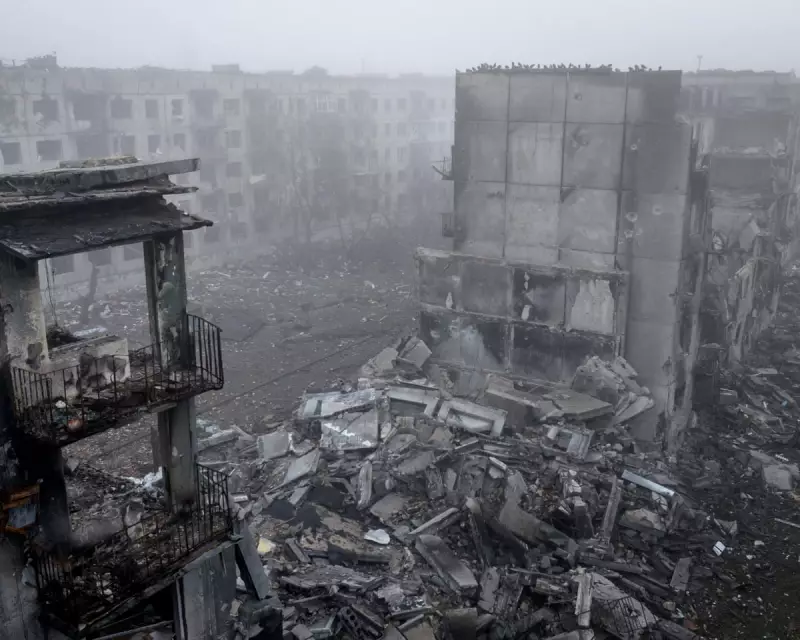
Amid the diplomacy, the war on the ground continued its grim toll. In Ukraine's central Dnipropetrovsk region, a Russian drone attack overnight into Friday destroyed a house, killing a 12-year-old boy and injuring two women, according to regional head Vladyslav Haivanenko.
Ukrainian forces, meanwhile, conducted long-range drone strikes into Russia. Attacks were reported on the Temryuk seaport in the Krasnodar region, sparking a fire, and on the city of Syzran on the Volga River. Unconfirmed reports suggested an oil refinery in Syzran was hit. Separately, Chechen leader Ramzan Kadyrov claimed a Ukrainian drone damaged a high-rise in Grozny, vowing retaliation.
EU Unity on Frozen Russian Assets
In Europe, leaders worked to maintain a united front on supporting Ukraine. French President Emmanuel Macron, during a visit to China, denied any mistrust between Europe and the US, emphasising that "unity between Americans and Europeans on the Ukrainian issue is essential."
Key discussions also focused on a European Union plan to use frozen Russian state assets to fund Ukraine's reconstruction. European Commission President Ursula von der Leyen and German Chancellor Friedrich Merz held what they called "very constructive" talks with Belgian Prime Minister Bart De Wever, whose country has yet to endorse the plan. Von der Leyen stressed that "time is of the essence given the current geopolitical situation."
Moscow's ambassador to Germany, Sergey Nechaev, issued a stark warning, labelling any use of frozen Russian assets without consent as "theft" that would have "far-reaching consequences" for the EU.
In a show of economic defiance, Russian President Vladimir Putin told Indian Prime Minister Narendra Modi that Russia stands ready for "uninterrupted" oil shipments to India, framing their ties as "resilient to external pressure" from Western nations.