
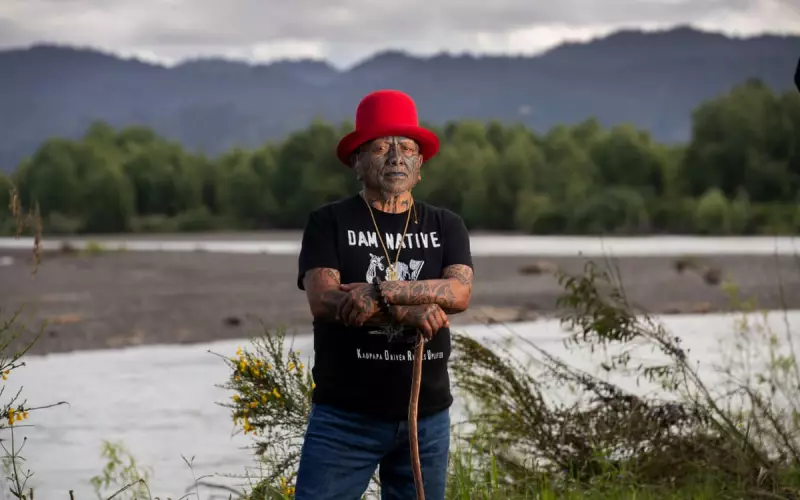
At the age of 72, Tame Iti, one of New Zealand's most prominent and controversial Māori activists, has finally published his long-awaited memoir. Titled Iti: The Biography of Tame Iti, the book offers his personal account of a life spent at the forefront of indigenous rights, a journey that saw him labelled a terrorist by the state before evolving into a figure of significant cultural respect.
A Life of Activism and the Infamous Urewera Raids
The memoir's release coincides with the 18th anniversary of the event that catapulted Iti into the national spotlight under the most severe of accusations. On 15 October 2007, over 300 police officers conducted paramilitary-style raids across Aotearoa, New Zealand. The operation, centred on the remote Urewera region, Iti's tribal homeland, resulted in the arrest of Iti and 16 others under the Terrorism Suppression Act.
Iti, a renowned Tūhoe elder and artist, was accused of participating in military-style training camps. The charges of participating in an organised criminal group and unlawful possession of firearms eventually led to a two-and-a-half-year prison sentence. However, the more serious terrorism charges were never laid, a fact that has led many to view the raids as a profound overreach and a dark chapter in the nation's history.
The raids caused widespread outrage and became a catalyst for national debate about race relations, state power, and the treatment of the Māori people. For Iti, the experience was a defining moment, cementing his status as both a villain in the eyes of the establishment and a martyr and leader for many Māori.
From Prison to Prestige: Reclaiming the Narrative
In his memoir, Iti delves into the personal cost of his activism. He writes candidly about the impact on his family and the psychological toll of imprisonment. The book is framed as an act of reclaiming his own story from media and state narratives that have dominated public perception for decades.
Co-authored with journalist and historian Margaret Mutu, the biography traces Iti's life from his childhood in the Urewera ranges to his emergence as a powerful orator and performer using his body as a canvas for protest. His full-face moko kauae (traditional chin tattoo) became an iconic symbol of Māori resistance and identity.
The transformation in how Iti is viewed by wider New Zealand society is a central theme. Where once front pages decried him as a dangerous extremist, he is now frequently described as a 'national treasure', consulted on matters of indigenous rights and reconciliation. This shift reflects a broader, albeit slow, change in the country's engagement with its colonial past and its Treaty of Waitangi obligations.
A Legacy of Resistance and the Path Forward
The publication of his memoir is more than a personal retrospective; it is a political act. Iti uses the platform to continue advocating for Tūhoe sovereignty and the return of confiscated lands. He also offers reflections on the current state of Māori-Pākehā (New Zealand European) relations, arguing that true reconciliation requires facing uncomfortable truths.
The legacy of the 2007 Urewera raids continues to resonate. A formal apology from the New Zealand Police to the Tūhoe people in 2014 was a significant step, but for Iti and his community, the wounds are deep. His story underscores the ongoing tensions between indigenous rights and state authority, not just in New Zealand, but in post-colonial societies worldwide.
By sharing his perspective, Tame Iti ensures that this pivotal chapter of New Zealand's history is remembered through the eyes of those who lived it. His journey from 'terrorist' to taonga (treasure) offers a powerful narrative about the long and difficult road towards understanding and justice.




