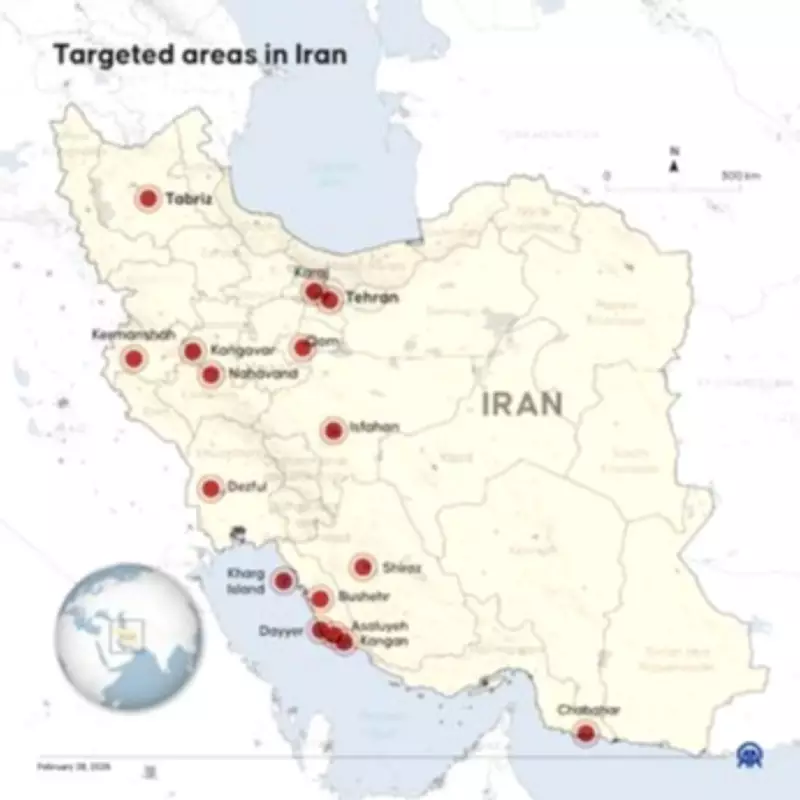
US and Israel Launch Coordinated Military Assault on Iran
The United States and Israel initiated a joint military operation against Iran on Saturday, with explosions reported in the capital city of Tehran and multiple other regions across the country. This aggressive move marks a significant escalation in regional tensions, as both nations targeted Iranian military and governmental facilities in a pre-dawn assault.
Operation Epic Fury and Initial Strikes
In a social media statement released this morning, former President Donald Trump announced the strikes, codenamed Operation Epic Fury, declaring that the objective was to "obliterate" Iranian forces. Trump emphasized that the US military was conducting a "massive and on-going operation" aimed at preventing what he described as a "very wicked, radical dictatorship" from threatening American national security interests. He further stated that the US would "annihilate" Iran's missile programme and ensure the nation does not acquire nuclear weapons.
Explosions were heard in Tehran at approximately 9:30 a.m. GMT, with social media footage showing smoke billowing across various parts of the city. According to reports, the strikes hit critical infrastructure including the Ministry of Intelligence, the Ministry of Defence, the Atomic Energy Organization of Iran, and the Parchin military facility. Additionally, missiles struck the Jomhouri district of Tehran, and at least two students were reportedly killed in an attack on a school east of the capital, as reported by Al Jazeera.

Targeted Locations Across Iran
Military sites were targeted in several key Iranian cities, including Kermanshah, Qom, Isfahan, Tabriz, and Karaj. Iranian naval facilities in Kenarak, located in the south of the country, were also struck, according to BBC reports. In a tragic incident, local media reported that an Israeli strike hit a girls' school in Minab County, with the semi-official Tasnim News Agency citing the Governor of Minab. The governor stated that "51 students have been martyred and 60 have been injured" in the attack, highlighting the civilian toll of the escalating conflict.
Iran's Retaliatory Strikes Across the Region
In response to the US-Israel assault, Iran has launched its own wave of missile and drone attacks targeting Israel and US military installations throughout the Middle East. The Tasnim News Agency confirmed that Iran is hitting American bases and interests "in the region," with blasts reported in Dubai and Abu Dhabi. Missiles struck a US naval base in Bahrain, including the US Fifth Fleet Naval Command, and explosions were heard in the Qatari capital, Doha, where Qatar reportedly intercepted two Iranian missiles.
Further retaliatory attacks have been documented in Jordan, Riyadh, and Abu Dhabi, where the UAE defence ministry confirmed via an X post that a civilian of Asian nationality was killed by debris from a "blatant attack involving Iranian ballistic missiles" in a residential area. Residents in Dubai were seen fleeing through the streets as explosions rang out across the region, underscoring the widespread panic and disruption caused by the escalating hostilities.
Regional Impact and Ongoing Developments
The joint US-Israel strikes and Iran's retaliatory actions have created a volatile situation across the Middle East, with multiple cities experiencing explosions and military engagements. NBC News reported that Iran is responding to attacks on "multiple US military facilities in the Middle East," citing a US official. This rapid exchange of fire raises concerns about a potential broader conflict, as both sides demonstrate their military capabilities and willingness to engage in direct confrontation.
As the situation continues to unfold, live updates are being provided to monitor the escalating crisis, with international observers closely watching for further developments that could impact global stability and security in the region.