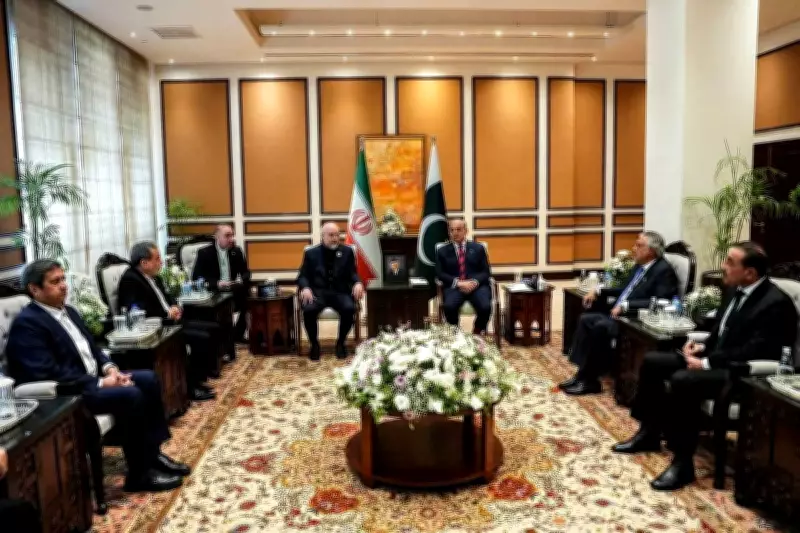
High-Stakes Diplomacy in Islamabad as Regional Tensions Escalate
Officials from the United States and Iran conducted separate, critical discussions with Pakistan's Prime Minister Shehbaz Sharif on Saturday, as renewed military action in Lebanon threatens to unravel a delicate ceasefire agreement. The diplomatic meetings in Islamabad occurred against a backdrop of deep regional divisions and unabated violence that has claimed thousands of lives across the Middle East.
Parallel Diplomatic Missions with No Direct Engagement
A high-level US delegation led by Vice President JD Vance and an Iranian delegation headed by Parliament Speaker Mohammad Bagher Qalibaf each held individual talks with Prime Minister Sharif, according to official statements from his office. Notably, no direct negotiations between American and Iranian representatives had been announced by mid-afternoon, highlighting the continued diplomatic distance between the long-standing adversaries.
The Iranian delegation reportedly reiterated elements of Tehran's earlier peace proposal during their discussions, presenting core components as non-negotiable "red lines" in conversations with the Pakistani leader. This diplomatic positioning occurred even as Israel continued military operations in Lebanon, despite Iran making a cessation of fighting there a prerequisite for further ceasefire negotiations.

Human and Economic Toll of Regional Conflict
The ongoing conflict has exacted a devastating human cost, with current estimates indicating at least 3,000 fatalities in Iran, 1,953 in Lebanon, 23 in Israel, and more than a dozen across Gulf Arab states. Lebanese state media reported that Israeli strikes on Saturday alone resulted in at least three additional deaths.
Economically, the war has effectively severed the Persian Gulf from global trade networks, triggering soaring energy prices and inflicting lasting infrastructure damage across multiple regional nations. The strategic closure of the Strait of Hormuz by Iran has proven particularly impactful, blocking the passage of oil, natural gas, and fertilizer shipments as commercial vessels avoid the crucial waterway.
Competing Proposals and Regional Posturing
Ahead of the weekend discussions, Iran and the United States outlined fundamentally different approaches to resolving the crisis. Tehran's 10-point proposal demanded a guaranteed end to hostilities, cessation of economic sanctions, Iranian control over the Strait of Hormuz, and an immediate halt to Israeli strikes against Hezbollah and other regional allies.
In contrast, the American 15-point counterproposal focused on restricting Iran's nuclear program and reopening the vital strait for international navigation. The significant divergence between these positions reflects the substantial obstacles facing diplomatic resolution.
Former President Donald Trump contributed to the pre-negotiation atmosphere through repeated social media posts asserting that Iranian officials "have no cards" to negotiate with and accusing Tehran of using the Strait of Hormuz for economic extortion. He declared the waterway would be reopened "with or without them."
Security Concerns and Diplomatic Warnings
Islamabad maintained an unusually quiet atmosphere on Saturday, with security forces sealing major roads and authorities urging residents to remain indoors, giving the normally bustling capital the appearance of being under de facto curfew during the sensitive diplomatic meetings.
Vice President Vance expressed cautious optimism about the talks while issuing a stern warning: "If they're going to try and play us, then they're going to find that the negotiating team is not that receptive." Iranian Foreign Minister Abbas Araghchi, part of Tehran's delegation in Pakistan, countered by expressing "deep distrust" stemming from previous attacks on Iran during earlier negotiation rounds and warning of potential retaliation if attacked again.

Lebanese Dimension and Sticking Points
Separate negotiations between Israel and Lebanon are scheduled to commence on Tuesday in Washington, according to Lebanese President Joseph Aoun's office. Israel continues to insist that the Lebanese government assume responsibility for disarming Hezbollah, mirroring provisions in a November 2024 ceasefire agreement, though significant questions remain about the feasibility of this demand given the militant group's historical resistance to disarmament.
Israel's insistence that the ceasefire with Iran should not include a pause in its operations against Hezbollah represents a major obstacle to broader agreement. The militant group joined the conflict in support of Iran during the opening days of fighting, and on the day the current truce was announced, Israeli airstrikes on Beirut resulted in more than 300 fatalities—the deadliest single day in Lebanon since the war began on February 28.
Economic Implications and Future Prospects
The economic ramifications of the Strait of Hormuz closure continue to reverberate globally. The spot price of Brent crude oil stood above $94 on Saturday, representing an increase of more than 30 percent since the conflict began. Prior to hostilities, approximately one-fifth of globally traded oil typically passed through the strait aboard more than 100 ships daily; with the current ceasefire in place, only 12 vessels have been recorded traversing the critical passage.
Iran has suggested implementing toll charges for ships passing through the strait as part of any peace agreement, though this proposal has been widely rejected by numerous countries including the United States and neighboring Oman. In Tehran, residents expressed mixed sentiments about the diplomatic efforts, with some emphasizing that peace alone would not address the extensive reconstruction needs following weeks of devastating airstrikes that have carved paths of destruction across their country.