Ukraine's Survival Strategy: From Invasion to Innovation in Modern Warfare
As the brutal conflict grinds into its fifth year, the world has witnessed a complete transformation in war technology and the remarkable resilience of Ukraine against its much larger Russian neighbour. World affairs editor Sam Kiley reflects on the shifting dynamics of this prolonged struggle, from the initial shock of invasion to the current stalemate defined by drone warfare and political complexities.
The Dawn of Invasion: Kharkiv Under Fire
I could hear the take-off detonation being filmed live and broadcast globally in my earpiece, accompanied by my television colleague's report of the Russian assault. That morning marked when Vladimir Putin ordered a full-scale invasion of Ukraine. Standing in the pre-dawn chill on a terrace overlooking Kharkiv's Freedom Square four years ago, less than a minute passed before I reported on those rockets as they exploded upon impact.
The skyline swelled with orange light, followed by the concussive thump and sharp cracks of detonating rockets. These projectiles had been launched from Russia directly into Ukraine's second-largest city. Among the most devastating weapons were the BM-30 Smerch systems, which scattered cluster bombs across urban areas, peppering the city with lethal golden spheres. The BM-212 Grads, reminiscent of old-fashioned Stalin's Organ multiple rocket launchers, descended in terrifying swarms, landing like spears on residential districts, killing and burning ahead of advancing Russian infantry formations.

Early Defense and Unexpected Resistance
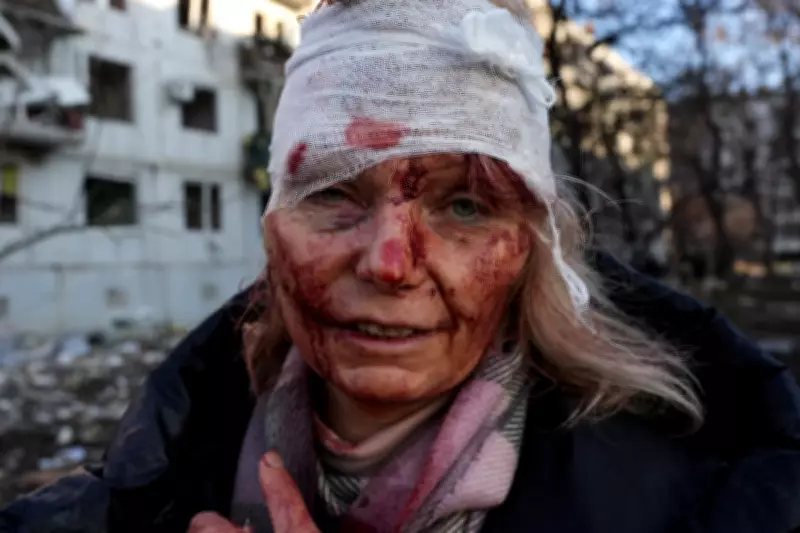
Over subsequent days, Russian troops surged north from Crimea toward Kherson and beyond, while others blasted out of Donetsk and appeared on Kharkiv's streets. The sounds of firefights filled the air—machine guns screaming like chainsaws and the crash of rocket-propelled grenades. The widespread assumption that Russians would capture this city, along with the capital, within days proved disastrously wrong, resulting in significant Russian casualties.
We learned of a reconnaissance group that ventured too close to Freedom Square and was ambushed by local police armed with RPGs and rifles. In one stark incident, a Russian soldier fell from his vehicle engulfed in flames, and a group of elderly women, likely Russian-speakers themselves, rushed forward and beat him to death with broomsticks. This moment served as a powerful metaphor for Ukraine's fierce, grassroots defense of its sovereignty.
Historical Context and Initial Vulnerabilities
Following Putin's initial invasion in 2014, which resulted in Crimea's capture, Ukraine's allies reneged on security guarantees promised to the young democracy. Nations including the UK and US prohibited Kyiv from purchasing lethal weapons at that critical juncture. British and American intelligence agencies were aware of Kremlin ambitions to conquer all of Ukraine in 2022, warning President Volodymyr Zelensky of the impending assault. However, his armed forces appeared remarkably relaxed along the border just north of Kharkiv.
"I don't see many preparations to defend against an invasion," I remarked to a colonel encountered two days before the Russian offensive. "You're not supposed to," he replied cryptically. Indeed, there were no visible defensive preparations because none existed. Ukraine was initially sent reeling, but its population quickly recovered the nation's balance.
Improvised Defense and Western Aid
Some military units scrambled to mount defenses that Western advisers considered incredible, such as the punishing defense of Hostomel airbase against mass airborne attacks by paratroopers and Spetznatz forces northwest of Kyiv. Elsewhere, young veterans from earlier combat years reformed into small teams using pickup trucks, organized their families within occupied territory to spy on invaders, and confronted Russia's massed columns of armor and infantry.

Globally circulated footage of ambushes on these columns revealed that minimal military aid from Britain and the US was having staggering effects. American Javelin and British NLAW anti-tank missiles slammed into armored columns, crippling their advance. Kharkiv, Sumy, and Kyiv were saved through swashbuckling units conducting Second World War SAS-style raids that carried greater strategic significance than early operations by Britain's nascent special forces.
Technological Adaptation and Drone Warfare
Since summer 2022, Ukraine has settled into a near stalemate characterized by grinding horror, followed by the nerve-jangling new dimension of drone conflict where both sides are reinventing modern warfare. Throughout this period, Ukraine has defended Europe's eastern flank against Russia on the ground while politically fighting to halt the doctrine that "might is right" in its tracks.
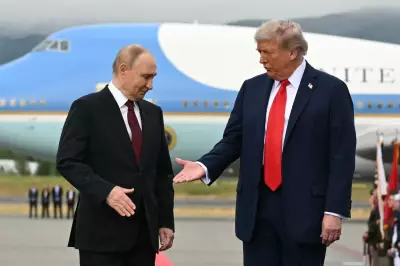
No one anticipated that Donald Trump would so enthusiastically support the Kremlin's Darwinian doctrine. His administration's termination of US military aid to Ukraine and subsequent setbacks to its defensive capabilities have undoubtedly caused more Ukrainian deaths than if support had continued. Meanwhile, the broader West has been slow to comprehend the strategic danger posed by Putin's land grab and the political horror that the Putin-Trump doctrine could unleash globally.
Grassroots Innovation and Strategic Challenges
Ukraine's allies were initially slow to agree on weapons shipments, but when anti-tank missiles finally arrived, they were immediately deployed. Remarkable individuals like "Grumpty," a former software engineer, taught himself to operate a Russian T-82 tank through YouTube tutorials. Alongside "Achilles," who was killed in summer 2022, and a small band of men, Grumpty destroyed fourteen Russian armored personnel carriers and tanks in a single night.
While such acts captured public imagination, they didn't provide Ukraine with sufficient weapons to achieve victory—barely enough to ensure survival. As Russia pounded Ukrainian forces with hundreds of artillery pieces, small donations of antiquated guns trickled slowly from democratic nations. Long-range rockets faced usage restrictions, and in Bakhmut, Ukrainians and foreign volunteers fought waves of Russian prisoners and conscripts forced into "meat attacks."
Current Realities and Future Security
Forced to adapt or perish, Ukraine has emerged as the world leader in drone warfare, controlling the Black Sea without a traditional navy of ships and sailors. With losses estimated around 1.2 million, Putin's war has proven disastrous for Moscow, while NATO has expanded with Finland and Sweden joining the alliance.
Europe has compensated for America's withdrawn military support, pledging €250 billion compared to the US total spend of $115 billion, with much allocated to air defense systems. Putin has shifted strategy toward targeting civilians, blasting Ukraine's energy infrastructure, and attempting to break national will. Externally, he has shaped diplomatic discourse, promoting narratives that Ukraine cannot win, should sue for peace, and surrender at least twenty percent of its territory.
Travelling from Nikopol to Kharkiv through territories Russia now demands for ceasefire consideration reveals that most Ukrainians desire peace. However, none suggested trading national security for that peace. Zelensky and European allies insist Ukraine requires security guarantees to prevent future Russian attacks and thwart Putin's vision of recolonization. They argue that only US protection can achieve this, yet America cannot be relied upon to monitor Ukraine, let alone deploy troops if reinvasion occurs. This responsibility must fall to Ukraine's European neighbours and broader Western allies.
Ukraine has demonstrated remarkable capability with minimal resources. One can only imagine what it might achieve with slightly more substantial support from its international friends.