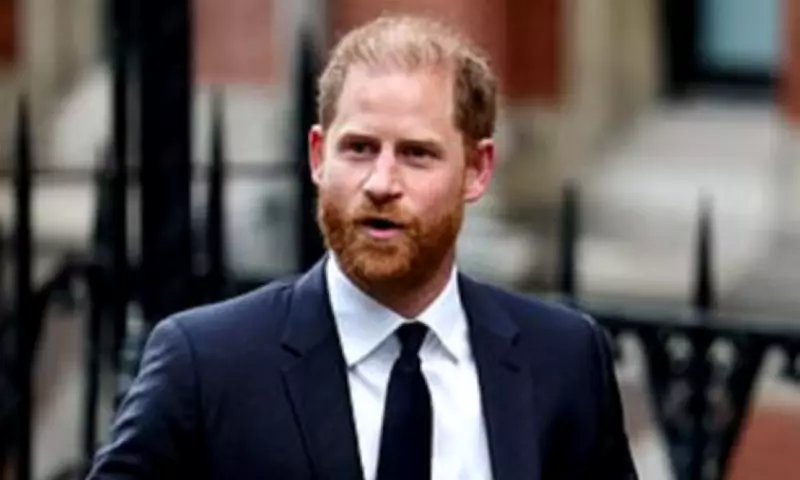
Newspapers accused of phone hacking against Prince Harry and other prominent public figures have 'established complete defences' against all claims, their legal representative informed the High Court yesterday. During closing arguments in the extensive 11-week trial, barrister Antony White KC, representing Associated Newspapers, asserted that the allegations presented by the Duke of Sussex and six other claimants were 'frankly desperate' and lacked substantive evidence.
The Core Allegations and Defence
The claimants, including Prince Harry, Baroness Doreen Lawrence, Sir Elton John, and actresses Liz Hurley and Sadie Frost, have alleged they were victims of phone hacking, landline interception, and the illicit acquisition of private information, known as 'blagging', by journalists from the Daily Mail and The Mail on Sunday. Associated Newspapers, the publisher of both titles, has consistently denied these accusations, maintaining that its journalists relied entirely on legitimate and lawful sources for their information.
Legal Arguments Presented
In his closing speech, Mr White emphasised that the defence had provided 'alternative lawful explanations' for the information contained in the articles in question. He argued that the material could have originated from confidential tips, information already available in the public domain, or, in Prince Harry's specific case, from social circles engaging in gossip. Notably, Mr White highlighted that Harry had exchanged friendly Facebook messages with Mail on Sunday journalist Charlotte Griffiths, who referred to him as 'Mr Mischief', suggesting a consensual interaction rather than unlawful intrusion.

The court was informed that Associated Newspapers had disclosed an immense volume of archival material during the trial, encompassing 20,375 boxes of documents, 1,000 journalists' notepads, and 3.5 million lines of financial records. According to Mr White, this exhaustive disclosure exercise revealed a 'dearth of documents' supporting the claimants' allegations, thereby undermining their case.
Shifts in Testimony and Evidence
A significant development in the trial occurred when a key witness, private detective Gavin Burrows, denied previously alleged confessions of phone hacking, landline tapping, and bugging on behalf of the newspapers. Mr Burrows testified that a purported confession document was untrue and that his signature had been forged, repeatedly asserting that he had never worked for the Daily Mail or The Mail on Sunday. Mr White contended that this shift in evidence left the claimants relying on 'frankly desperate allegations' repeatedly put to 'respectable journalists'.
Claimants' Position and Judicial Outlook
In contrast, David Sherborne, representing the claimants, argued that they had 'made good' their case against Associated Newspapers, stating that any finding of unlawful activity would be a 'disaster' for the publisher. The trial judge, Mr Justice Nicklin, indicated that he would commence deliberating on his ruling following the Easter weekend, though no specific timeline for the decision was provided. The outcome of this high-profile case is eagerly awaited, as it could have substantial implications for media practices and privacy rights in the United Kingdom.