UK Government Distances Itself from Sussexes' Jordan Trip Amid Royal Snub
The British Government has formally distanced itself from the Duke and Duchess of Sussex's recent two-day visit to Jordan, following revelations that the couple were apparently snubbed by the Jordanian royal family during their Middle East tour. This development comes as the Foreign Office faces mounting criticism over Harry and Meghan's presence at the British Ambassador's private residence in Amman.
Diplomatic Discomfort Over Ambassador's Reception
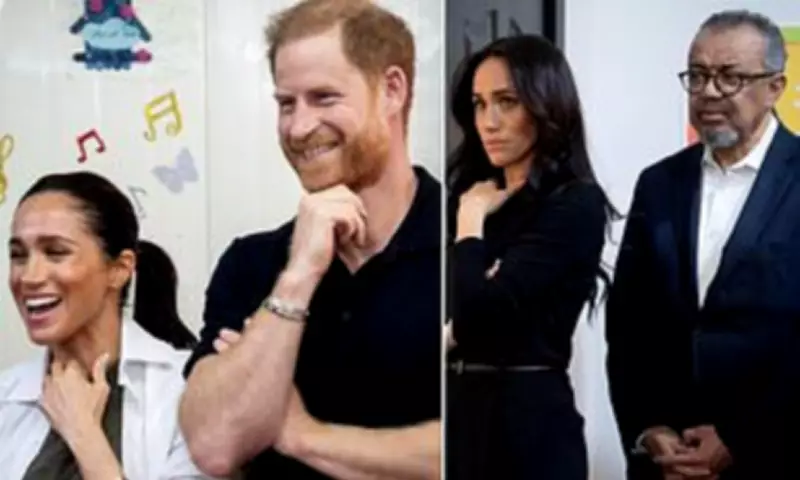
The Foreign Office has declined to comment on the Sussexes' Jordan visit, but sources with knowledge of the trip have clarified that British Ambassador Phillip Hall did not personally invite Harry and Meghan to his reception marking Iftar, the meal eaten by Muslims at sunset during Ramadan. Instead, the invitation had been extended to Dr. Tedros Adhanom Ghebreyesus, Director-General of the World Health Organization, who subsequently asked the Duke and Duchess to accompany him as his guests.
A source insisted that the British government had not been involved in arranging or facilitating their trip because they are 'private citizens'. This clarification follows criticism from former Tory minister Tim Loughton, who told the Daily Mail that it was 'entirely inappropriate' for the Sussexes to be guests at Mr. Hall's private residence given their status as private citizens who no longer represent the British monarchy or government.

Jordanian Royal Family's Notable Absence
During their time in Amman, Harry and Meghan were conspicuously absent from meetings with key members of Jordan's royal family. Despite King Abdullah II's strong ties to the British Royal Family and close relationship with King Charles, no meeting was scheduled between the Jordanian monarch and the Sussexes. Instead, King Abdullah met with Indonesian President Prabowo Subianto and WHO chief Dr. Tedros Adhanom Ghebreyesus, who was leading the Duke and Duchess's trip.
The only member of the Jordanian Royal Family whom Harry and Meghan met briefly was Princess Basma Bint Talal, an aunt of the current King, during a visit to a venture run by the Jordanian Hashemite Fund for Human Development. One royal insider described their appearance at the British Ambassador's reception as an 'intriguing' part of the trip, noting that 'once again, British diplomats are involved'.
Humanitarian Focus and Controversial Reception
The Sussexes used their Jordan visit to focus on humanitarian causes, meeting refugees from Syria and Gaza as part of their partnership with the WHO. They visited hospitals, refugee camps, and rehabilitation centers, with Harry making a plea for food and medical aid corridors to be opened to help people in Gaza, calling the situation a 'humanitarian catastrophe'.
However, their activities drew criticism from Palestinian diplomat Abdal Karim Ewaida, who accused the couple of using 'sick children as props' and branded them 'publicity seeking celebrities'. In a tweet sharing a picture of Harry and Meghan meeting a young medical evacuee, Mr. Ewaida expressed sadness that 'our sick children are being used as props for celebrities in the middle of a full-blown public relations operation'.
Political Concerns and Diplomatic Protocol
Tim Loughton raised significant concerns about the diplomatic implications of the Sussexes' visit, stating: 'They are not working royals and do not represent the British Government or UK PLC. Given their capacity to say unhelpful things which border on political, giving them an official platform could be construed as them saying something that represents official UK policy.'
He acknowledged that it would be legitimate for the embassy to assist on security issues and neutral briefing, but emphasized that they should not be given any platform that might suggest official endorsement of what should clearly be seen as a private visit by private individuals.

Rehabilitation Center Visit and Personal Messages
During their second day in Jordan, Harry and Meghan visited the National Centre for Rehabilitation of Addicts in Amman, where they listened to recovering addicts describe their experiences with substance abuse. The duke urged the men to 'use this experience and go back into your communities and help other people who are in a similar situation', adding: 'I want you guys to know there's no shame in having an addiction, it stems from something else which is an emotional pain.'
The couple left personal messages of support at the center, with Harry writing: 'It's ok to not be ok. Trust each other. Congratulations on your recovery. Now share your courage and experience.' Meghan added in italic script: 'Congratulations on your dedication to your care. Wishing you continued healing and happiness.'
Broader Implications for Royal Diplomacy
The Jordan visit highlights the ongoing challenges facing Harry and Meghan as they navigate their post-royal roles while maintaining connections to humanitarian causes. One royal insider suggested that the trip represented a 'pseudo royal visit, mimicking many of the things they or William and Kate would have done when they were part of the Firm but it seems to be lacking in the ceremonial side of things'.
With the British Government now clearly distancing itself from their activities and the Jordanian royal family avoiding formal meetings, the Sussexes' Middle East tour has underscored the complex boundaries between private humanitarian work and diplomatic protocol in their current status as non-working royals.