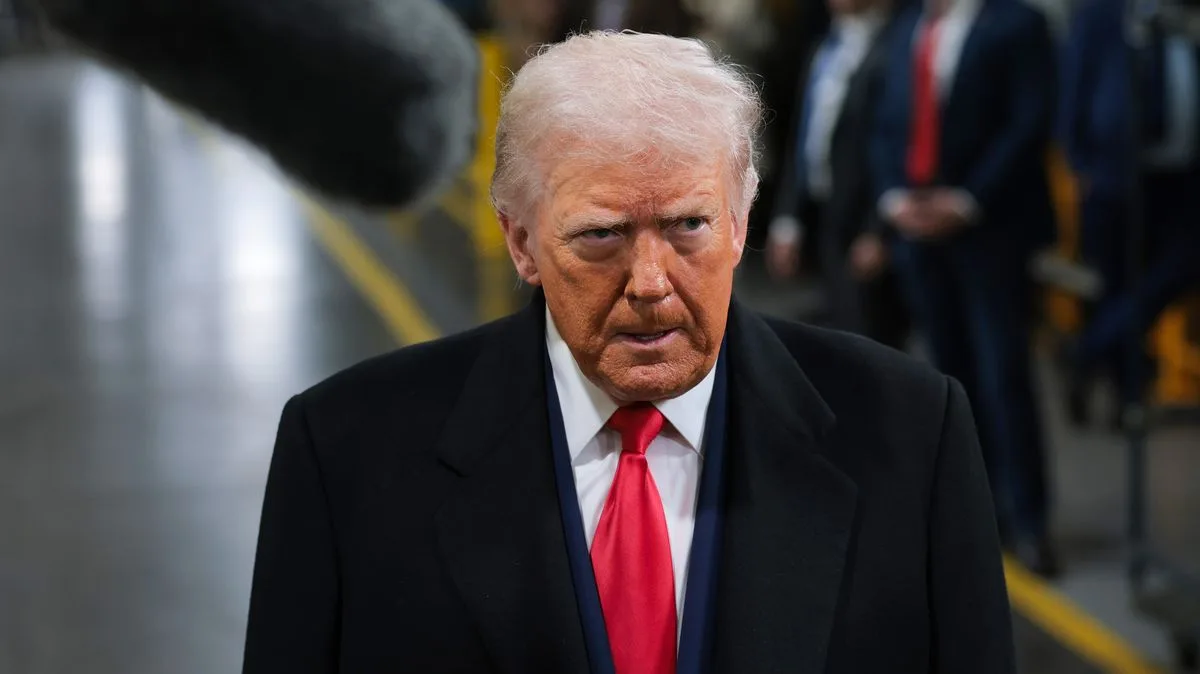
Trump's 'No Comment' on Greenland Force Sparks Diplomatic Speculation
Trump's two-word response on taking Greenland by force

Former US President Donald Trump has sparked a fresh wave of international speculation with a terse, two-word response to a question about forcibly acquiring Greenland.

The Cryptic Exchange

Speaking to NBC News on Sunday, 19 January 2026, the presidential candidate was directly asked if he would consider taking the vast Arctic territory by force. His reply was brief and enigmatic: "No comment." The exchange, lasting mere seconds, has rippled through diplomatic and political circles, reviving memories of his administration's previous interest in the autonomous Danish territory.

A History of Interest

This is not the first time Greenland has appeared on Trump's radar. During his first term in office, he publicly floated the idea of the United States purchasing the island, a proposal that was swiftly and firmly rebuffed by the Danish government, which described the notion as "absurd." The episode caused a brief diplomatic rift. His latest refusal to rule out forceful acquisition marks a significant escalation in rhetoric, moving from a commercial proposition to an implicit military one.

Wide Pickt banner — collaborative shopping lists app for Telegram, phone mockup with grocery list

The strategic importance of Greenland cannot be overstated. Its location offers significant advantages for Arctic military presence and access to rare mineral resources, factors that have long made it a point of geopolitical interest. Trump's 'no comment' is being interpreted by analysts as a deliberate non-denial, leaving the door open to a more aggressive stance should he return to the Oval Office.

Implications and Reactions

The immediate implications of this statement are primarily diplomatic. Allies in Europe, particularly within NATO, are likely to view such unilateral musings with deep concern, as they challenge established norms of territorial sovereignty. For Denmark, which handles Greenland's defence and foreign affairs, the comment is a provocative reminder of previous tensions.

Domestically, the remark serves to galvanise both his support base, who may see it as strong, America-first posturing, and his critics, who will frame it as reckless and destabilising. In the context of the 2026 political landscape, it ensures US foreign policy and America's role on the global stage remain central campaign issues.

While the comment was brief, its potential consequences are substantial. It introduces a new element of uncertainty into Arctic geopolitics and signals a possible return to the more confrontational and transactional diplomatic style that characterised Trump's first presidency. The world will be watching closely for any clarification or escalation in the coming days.

Pickt after-article banner — collaborative shopping lists app with family illustration




