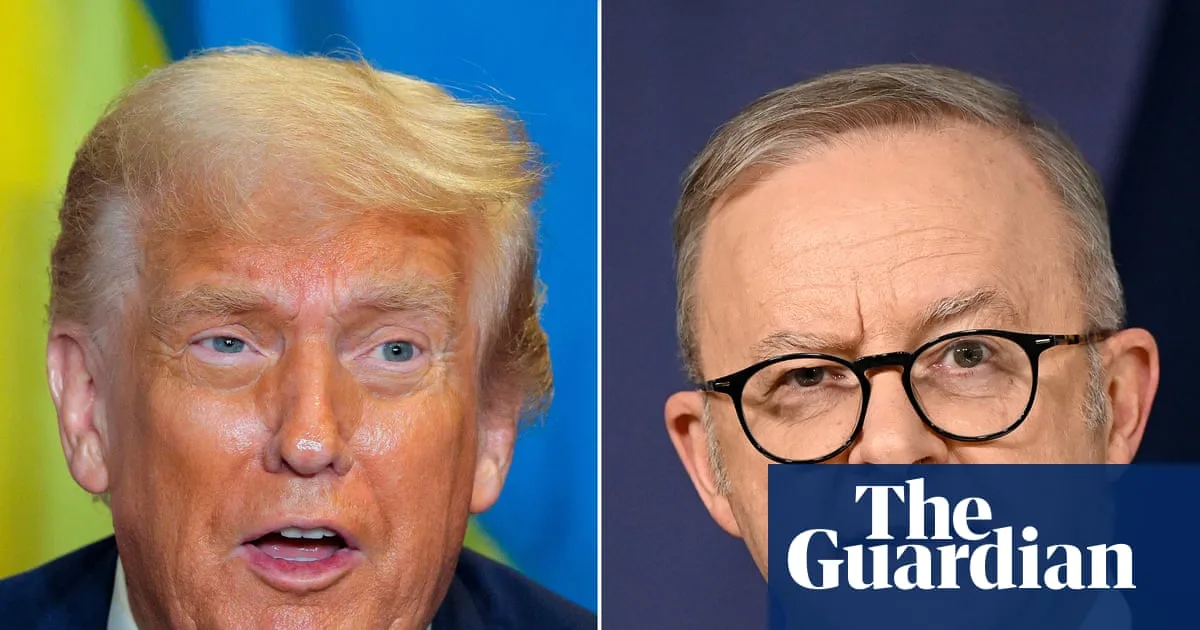
Trump's 'Godfather' Offer to Albanese: Join Gaza 'Board of Peace' or Face Repercussions
Trump's 'Offer He Can't Refuse' to Albanese on Gaza

Australian Prime Minister Anthony Albanese finds himself in a high-stakes diplomatic quandary after receiving what analysts are calling an "offer he cannot refuse" from US President Donald Trump.

The 'Godfather' Offer for Gaza Oversight

The White House has confirmed that President Trump has extended invitations to several world leaders, including Mr Albanese, to join a newly formed 'Board of Peace'. This board is tasked with executing Trump's 20-point plan for stabilising and rebuilding the Gaza Strip following the conflict between Israel and Hamas. The board's stated purpose is to provide strategic oversight, marshal international resources, and "ensure accountability as Gaza transitions from conflict to peace and development".

Other leaders invited include Canadian Prime Minister Mark Carney, Turkish President Recep Tayyip Erdogan, Russian President Vladimir Putin, and Egyptian President Abdel Fatah al-Sisi. The board would also feature US Secretary of State Marco Rubio, former British Prime Minister Tony Blair, and Trump's son-in-law, Jared Kushner.

Wide Pickt banner — collaborative shopping lists app for Telegram, phone mockup with grocery list

However, the invitation, which arrived by early Monday morning, has placed the Australian leader in a delicate position. As of Tuesday, Mr Albanese had not given a definitive response, only confirming through his office that he is "considering it respectfully and through our proper processes".

A Diplomatic Dilemma with High Stakes

Security experts have swiftly drawn parallels between Trump's invitation and a famous scene from the Hollywood film The Godfather, suggesting it is a coercive proposal where refusal carries significant risk.

Michael Shoebridge, director of the defence think tank Strategic Analysis Australia, told the Daily Mail that a rejection could provoke vindictive action from the US President. "If he says no, he's likely to have Donald Trump act vindictively against Australia," Mr Shoebridge stated. He pointed to past instances where Trump imposed tariffs on European nations and the UK after they refused to support US policy initiatives.

The financial commitment is also substantial. Reports indicate the Trump administration has asked countries to contribute at least US$1 billion to become permanent board members, a sum Mr Shoebridge suggested could rise to $1.5 billion in the first year alone.

"Accepting means avoiding trouble rather than creating good things," the analyst explained. "It's a pattern where Donald Trump wants to dictate what others do, and he knows he's put Mr Albanese in a very awkward position because a refusal will offend."

Regional Tensions and Broader Context

The initiative comes amid a fragile international backdrop. The United Nations Security Council has approved a plan that opens a pathway for an international force to enter Gaza and has signed off on the Board of Peace concept for reconstruction oversight.

However, the proposal faces immediate regional friction. The Israeli government has stated its opposition to some of the proposed board members, declaring several appointments were 'not coordinated with Israel and were contrary to its policy'. It did not specify which leaders it objected to.

This development follows a year of increased pressure from the White House on allies to boost foreign aid spending. On the first day of his second term, President Trump signed a stop-work order at USAID, the world's largest foreign aid agency, and froze its multibillion-dollar budget. In contrast, Australian Foreign Minister Penny Wong only marginally increased the nation's development assistance budget last year, an increase that did not keep pace with inflation.

For Australia, the core issue extends beyond a simple yes or no. As Michael Shoebridge concluded, "Albanese has a bigger problem than whether he says yes or no to the Board of Peace, and that is that Australia's major security partner is now coercive and unpredictable." The Prime Minister's eventual decision will be a critical test of navigating an alliance with a US administration perceived as increasingly transactional and volatile.

Pickt after-article banner — collaborative shopping lists app with family illustration




