Trump's Iran War Strategy: Goals Without a Clear End Date
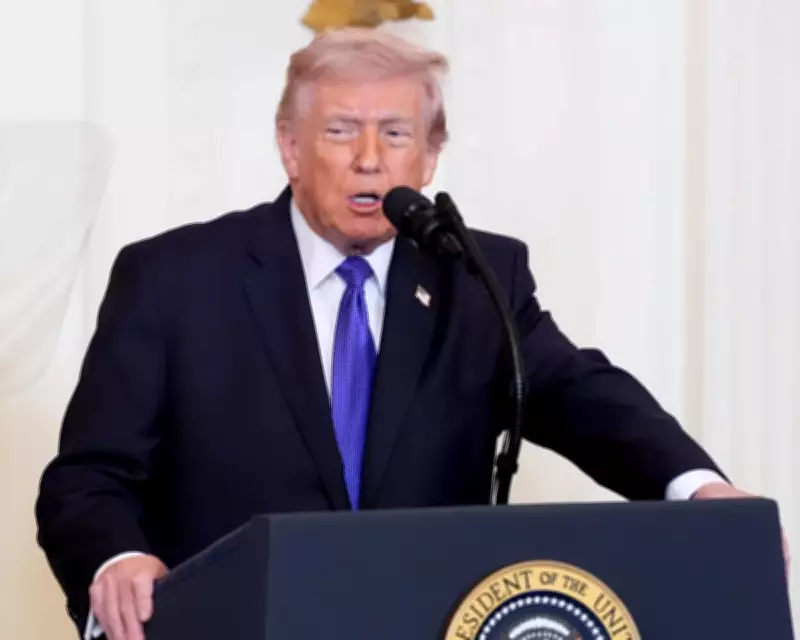
In a significant address from the East Room of the White House on Monday, former President Donald Trump provided his most detailed comments yet on the escalating military campaign against Iran. Speaking before a Medal of Honor ceremony in Washington DC, Trump laid out four specific goals for the operation but notably failed to provide a definitive end date, stating the conflict could extend well beyond initial projections.
Conflicting Justifications and Expanding Conflict
Trump asserted that the US offensive, initially projected to last four to five weeks, might "go far longer than that." He justified the attacks by claiming Iran's nuclear development and rapidly expanding ballistic missile programme posed a "colossal threat" to America and its overseas forces. However, this rationale was immediately contradicted by Secretary of State Marco Rubio, who told reporters after a closed-door congressional briefing that the decision stemmed from Israel's determination to attack Iran and the certainty of retaliatory strikes against US troops.
This discrepancy alarmed several US lawmakers, including Democratic Senator Mark Warner, vice-chair of the Senate Intelligence Committee, who warned: "There was no imminent threat to the United States of America by the Iranians. There was a threat to Israel. If we equate a threat to Israel as the equivalent of an imminent threat to the United States, then we are in uncharted territory."

Regional Escalation and International Tensions
The conflict has dramatically expanded across the Middle East, with Israeli and US warplanes launching fresh strikes across Iran. The Iranian Red Crescent Society reports over 500 fatalities since hostilities began. Israel has also intensified attacks on Lebanon following Hezbollah's retaliation for Saturday's strike that killed Iran's Supreme Leader, Ayatollah Ali Khamenei. Casualties and destruction have been reported across at least nine countries within a ten-hour period.
In a concerning development, three US fighter jets were mistakenly shot down over Kuwait in an apparent friendly fire incident early Monday. All six crew members ejected safely, according to US Central Command, which confirmed Kuwait's air defences fired on the F-15 warplanes during a combat mission.
International Diplomacy and Domestic Distractions
Trump expressed frustration with international allies, particularly criticising the UK for taking "far too long" to permit US forces to use British airbases for attacks on Iran. He also voiced disappointment in Prime Minister Keir Starmer over the Chagos Islands sovereignty deal with Mauritius, which affects the UK-US airbase on Diego Garcia.
During his remarks, Trump unexpectedly pivoted from discussing the grave military situation to boasting about plans for a new White House ballroom, claiming it would be the "most beautiful ballroom in the world" and completed "under budget" for "$400m or less." This abrupt shift underscored the president's tendency to blend serious policy discussions with personal promotional statements.
Additional Developments and Context
The White House addressed speculation about Trump's health, attributing a visible neck rash during the ceremony to "preventative" skin treatment. Meanwhile, several other significant events unfolded:

- Melania Trump became the first spouse of a sitting world leader to preside over the UN Security Council, advocating for children's education access days after an airstrike killed at least 165 people at a girls' school in southern Iran.
- Texas authorities continue investigating a weekend mass shooting at an Austin bar as a potential terrorist act, with the suspect wearing a "Property of Allah" hoodie.
- Court records reveal Florida Governor Ron DeSantis spent $1.2 million daily of taxpayer funds to operate the controversial immigration detention facility nicknamed "Alligator Alcatraz."
- Videos of Bill and Hillary Clinton discussing Jeffrey Epstein were released by a House investigative committee.
- Trump announced he will attend the White House Correspondents' Association dinner for the first time as president.
- Former Interior Secretary Ryan Zinke announced he won't seek re-election to Congress, citing health concerns.
The expanding conflict, conflicting justifications, and international tensions highlight the complex challenges facing US foreign policy as military operations continue without a clear conclusion in sight.